Windward spacing
When planting a hedge in windy sites, stagger plants in a zigzag row and increase spacing on the windward side to reduce wind tunneling and branch breakage as the trees mature.

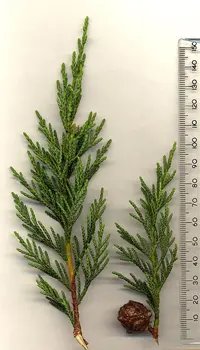
Leyland cypress (× Hesperotropsis leylandii) is a fast-growing, evergreen conifer often used for tall hedges, privacy screens, and windbreaks. It forms a dense, upright column with soft, scale-like foliage. Color ranges from rich green to blue-green, and plants can become very large in suitable conditions. This hybrid does not occur naturally in the wild; it arose from crosses between two different conifer species in cultivation. It is widely planted in mild-temperate regions, especially in suburban and rural landscapes. The species grows quickly and adapts to many soils, but size, pruning needs, and susceptibility to some diseases mean gardeners should learn how to care for Leyland cypress before planting long rows.

Care Difficulty
Moderate Care

Light Preference
Full Sun

Water Requirements
Moderate Water

Temperature Preference
Cold Hardy

Hardiness Zone
6–10

Soil Texture
Sandy, Loamy, Clay

Soil pH
Acidic (5.5–6.5), Slightly acidic (6.5–7.0)

Soil Drainage
Well-drained

Fertilization
Minimal (feed rarely)
Scan your plant to receive care tips personalized for your specific plant
Available on iOS and Android
This fast-growing conifer needs strong light to maintain dense, healthy foliage.
This plant prefers evenly moist but well-drained soil, especially during establishment.
This conifer is adapted to temperate climates and tolerates a wide range of outdoor temperatures once established.
Humidity is not a critical factor for × Hesperotropsis leylandii, which copes well with typical outdoor conditions.
× Hesperotropsis leylandii needs well-structured, free-draining soil to prevent root decline.
This species can be grown in large outdoor containers, but only with careful attention to stability and root conditions.
Nutrient needs for × Hesperotropsis leylandii are modest, but targeted feeding supports steady growth in poor or disturbed soils.
Pruning helps × Hesperotropsis leylandii maintain a stable structure, safe clearance, and a dense evergreen screen.
Transplanting young × Hesperotropsis leylandii at the right time limits stress and supports strong long-term establishment.
Propagation of × Hesperotropsis leylandii is usually done vegetatively to maintain uniform hedge and screening characteristics.
Mature × Hesperotropsis leylandii is generally cold hardy in much of the US, so winter care is usually minimal.

Plant Health Check
Not sure what's wrong with your plant? Check your plant's health inside the app.
This conifer is a naturally occurring hybrid between the North American Cupressus macrocarpa (Monterey cypress) and the Eurasian Cupressus nootkatensis (Nootka cypress), first noticed in a Welsh estate in the late 19th century. Its existence depends on these two parent species being grown together, since it very rarely sets viable seed on its own.
It is known for very rapid juvenile growth, often reaching functional hedge height in far fewer years than many other conifers. In contrast, individual trees in landscape settings are often considered relatively short‑lived for a conifer, especially in climates where disease and storm damage are common.
Most plants used in hedging are produced vegetatively from cuttings, so long stretches of hedge can be made of clones of a single original tree. This genetic uniformity helps create a very even appearance but also means whole hedges can be uniformly vulnerable to the same pests, pathogens, or environmental stresses.

In some regions, extremely tall, dense plantings of this hybrid in small residential gardens have led to high‑profile legal disputes and specific local regulations on hedge height, making it one of the few ornamental conifers to influence property law and neighborhood planning policies.
Brown foliage usually comes from drought stress, root damage, or fungal cankers. Check soil moisture, avoid waterlogged conditions, and remove dead sections. Improve air circulation and avoid heavy pruning into bare, brown wood, which rarely refoliates.
Keep your plants happy and healthy with plant identification, disease detection, and easy care guidance.