Syrian Juniper Care (Juniperus drupacea)

Syrian Juniper

About Syrian Juniper

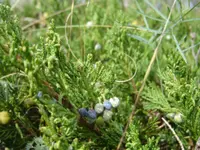
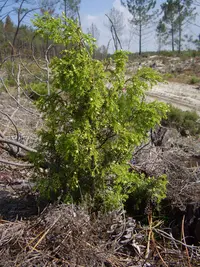
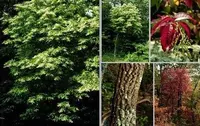
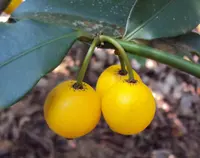
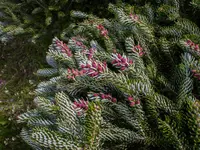
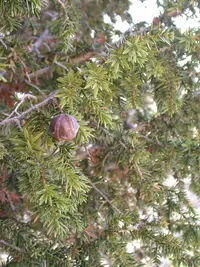
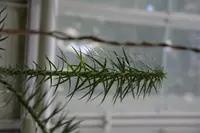
Syrian juniper (Juniperus drupacea) is a long-lived coniferous tree known for its dense, narrow crown and stiff, sharp, dark green needle-like leaves. It produces unusually large, fleshy cone-like fruits that resemble berries.

This species is native to mountainous regions of Syria, Lebanon, Turkey, and nearby areas, where it grows on rocky slopes and well-drained soils. It is slow-growing and quite hardy once established, but young plants can be sensitive to poor drainage and high humidity.

Gardeners who care for Syrian Juniper usually select sunny, open sites with freely draining, slightly alkaline soil to support healthy, long-term growth.

Main Plant Requirements

Care Difficulty

Moderate Care

Light Preference

Full Sun

Water Requirements

Low Water

Temperature Preference

Cold Hardy

Hardiness Zone

7–9

Soil Texture

Sandy, Loamy, Rocky

Soil pH

Slightly acidic (6.5–7.0), Neutral (7.0)

Soil Drainage

Well-drained

Fertilization

Minimal (feed rarely)

Get Personalized Care Plan

Scan your plant to receive care tips personalized for your specific plant

Available on iOS and Android

How to Care for the Syrian Juniper

Juniperus drupacea thrives in bright, open sites with long daily sun exposure.

  • Aim for 6–8 hours of direct sun daily; full sun promotes dense foliage and stronger branching in Syrian Juniper.
  • Plant in a position with strong morning to early afternoon sun; light afternoon shade is acceptable in hot, dry regions.
  • Avoid deep shade, which leads to sparse growth and weak shoots; in winter, ensure the site is not permanently shaded by buildings or trees.

Juniperus drupacea prefers dry to slightly moist soil and is sensitive to chronic excess water.

  • Allow the top 5–8 cm of soil to dry before watering young or newly planted trees; established plants in the ground often rely mostly on rainfall.
  • Use sharply draining soil on a slope or raised area to prevent standing water, which causes root rot and yellowing foliage.
  • In hot, dry summers, watch for dull, inward-curling scale leaves as a sign of drought stress; in cool seasons, reduce watering to only when soil has dried deeply.

This species is a hardy conifer adapted to temperate climates with cool winters and warm summers.

  • Optimal growth occurs around 60–80°F (16–27°C), with best shoot extension in mild spring and early summer conditions.
  • Mature plants tolerate cold down to about 0°F (−18°C) once established, though young plants benefit from protection during their first 2–3 winters.
  • Juniperus drupacea handles dry summer heat up to about 95°F (35°C) if soil is not waterlogged, but prolonged extremes above this can increase stress and pest issues.

Juniperus drupacea handles low humidity well, so indoor air levels are usually acceptable.

  • Target 30–50% humidity, which matches most heated and air-conditioned homes.
  • Syrian Juniper tolerates dry air, but extreme, hot drafts can desiccate foliage tips over time.
  • Humidity stress shows as browning, brittle needles; move pots away from heat vents rather than misting.

Juniperus drupacea prefers mineral, fast-draining soil that stays slightly dry between waterings.

  • Use a sandy or sandy-loam mix with coarse structure to keep pores open and prevent waterlogging.
  • Aim for slightly acidic to neutral pH around 6.0–7.5, avoiding strongly alkaline or salty substrates.
  • Combine roughly 50–60% gritty sand or fine gravel with 30–40% loam and 10–20% composted bark for structure and moderate nutrients.
  • Improve aeration by incorporating larger particles such as pumice or perlite and avoid dense peat-heavy or clay-based mixes that compact.

This species can be grown in containers, but only with careful attention to root space and stability.

  • Choose a tall, heavy container that counterbalances the plant’s eventual height and reduces tipping in strong winds.
  • Select a pot at least 40–50 cm deep so the long taproot can extend without circling tightly near the base.
  • Use a coarse, gritty mix and raise the pot slightly on feet or blocks so drainage holes release water quickly after rainfall.

This species grows slowly and usually needs only modest feeding, especially once established in the ground.

  • For young or container-grown Syrian Juniper, use a balanced slow-release fertilizer (for example 10-10-10) once in early spring.
  • Apply at 1/2 label strength and keep granules off the trunk and foliage to avoid burn.
  • Avoid feeding in late summer and winter so new growth can harden before cold weather.
  • Mature landscape trees often perform well with no added fertilizer beyond a light compost top-dressing every 1–2 years.

Juniperus drupacea benefits from light, selective pruning to maintain structure rather than heavy reshaping.

  • Carry out pruning in late winter or very early spring before new growth starts.
  • Remove dead, diseased, crossing, or storm-damaged branches back to a healthy lateral shoot or the main stem.
  • Use clean, sharp bypass pruners or loppers to make small, angled cuts that heal efficiently.
  • Limit thinning cuts to the outer canopy to preserve the natural form and avoid cutting back into bare, old wood.

This juniper is most often grown in the ground, where careful transplanting matters more than frequent repotting.

  • Transplant young Juniperus drupacea in early spring or early fall, when temperatures are mild and soil is workable.
  • Look for signs such as roots circling the pot or reduced shoot growth to decide when a container plant needs a larger root space.
  • Move up only 1 pot size, handle the root ball gently, and loosen circling roots without tearing them heavily.
  • Water thoroughly after planting, then keep soil evenly moist but not waterlogged for several weeks to limit transplant shock.

Juniperus drupacea is slow to propagate and mainly raised by semi-hardwood cuttings or seed by specialists.

  • Take semi-hardwood cuttings in late summer, 8–12 cm long, including a small heel of older wood if possible.
  • Treat the base with rooting hormone and place in a sharply drained, sandy mix under bright, indirect light.
  • Maintain high humidity and cool, stable temperatures; rooting can take several months.
  • Seed propagation requires stratification, meaning a prolonged cold, moist period, and germination is often slow and irregular.

This juniper is cold hardy and usually needs minimal winter care once established in the landscape.

  • In regions with severe freezes, apply a 5–8 cm layer of mulch around the root zone, keeping it away from the trunk.
  • Newly planted or young trees benefit from wind exposure reduction to limit desiccation of foliage.
  • Container-grown plants in colder climates can be moved to a sheltered, unheated but frost-free spot for winter.

Care Tips

Sturdy wind training

In exposed sites, gradually accustom young plants to wind by removing temporary windbreaks over 1–2 seasons so the trunk and roots strengthen instead of remaining dependent on constant shelter.

Low-branch management

When used as a landscape specimen, selectively remove only the lowest, shaded interior branches over several years to lift the canopy while preserving enough foliage for strong taper and trunk thickening.

Root flare checks

After planting and again 1–2 years later, inspect the root flare and gently remove excess soil or mulch from against the trunk so the base stays slightly exposed and less prone to rot or girdling roots.

Minimal staking approach

If staking is needed, use 2–3 loose, flexible ties placed low on the trunk and remove them within 1–2 years so the plant can sway, which promotes stronger wood and better long-term stability.

Targeted drainage improvement

On heavy soils, establish a slightly raised mound 10–20 cm high and extend coarse material like grit or crushed stone beyond the planting hole so water drains away from the root zone, which is critical for long-term success when growing Syrian Juniper.

Common Pests and Diseases

Cedar apple rust

This disease causes orange to reddish-brown leaf spots and swollen, distorted young shoots, and can weaken trees over time. Symptoms include gelatinous orange spore masses on nearby apple or crabapple hosts that complete the fungus life cycle.

Solution

Prune out and destroy infected twigs and galled tissue during dry weather, and rake up fallen, spotted foliage to reduce spores. Increase spacing and airflow around trees, remove nearby alternate hosts like crabapples if practical, and apply a registered myclobutanil- or propiconazole-based fungicide in early spring on new growth if the disease has been severe in past years.

Phomopsis tip blight

This disease causes browning and dieback of young shoot tips, often starting at the ends and moving inward while older inner foliage stays green. Symptoms include tan, brittle tips with a distinct line between dead and healthy tissue, most common on stressed or newly planted trees.

Solution

Clip off and discard blighted tips several inches below visible damage, disinfecting pruning tools between cuts. Improve vigor through proper watering and mulch, avoid overhead irrigation, and in high-risk sites use a labeled fungicide (such as thiophanate-methyl or chlorothalonil) on new growth in cool, wet spring periods according to product directions.

Juniper scale

This pest appears as tiny white or grayish bumps on needles and small twigs, leading to yellowing and thinning foliage. This pest sucks sap, which weakens the plant and can increase susceptibility to other stresses.

Solution

Prune out heavily infested branches and dispose of them, then hose down remaining foliage to dislodge some scales. For active crawler stages in late spring, apply horticultural oil or an insect growth regulator labeled for conifers, ensuring thorough coverage of twigs and the undersides of sprays while avoiding application during high heat or drought stress.

Spruce spider mite

This pest is a cool-season mite that causes fine stippling, dull gray-green foliage, and fine webbing on inner branches, with needles eventually bronzing and dropping. These insects feed mainly in spring and fall and are often worse on trees in dusty, dry, or sheltered locations.

Solution

First confirm mites by tapping a branch over white paper and checking for moving specks, then spray foliage forcefully with water 2–3 times per week for several weeks to knock populations down. If needed, use a selective miticide labeled for conifers during cool seasons, avoid broad-spectrum insecticides that kill beneficial predatory mites, and reduce dust by rinsing foliage and mulching bare soil under the canopy.

Interesting Facts

Unusually large cones

This species has some of the largest seed cones among junipers, with fleshy, olive-like cones that enclose several hard-shelled seeds instead of the single seed typical for many junipers.

Limited Mediterranean range

It occurs naturally only in a restricted part of the eastern Mediterranean, mainly in mountainous areas of southern Turkey, western Syria, and Lebanon, forming scattered stands on rocky slopes and ridges.

Primitive juniper lineage

Morphological and anatomical studies suggest that this species retains several ancestral traits within the genus, which is why botanists often highlight it as an evolutionarily distinctive juniper when discussing Juniperus drupacea care instructions.

Botan icon

Did you know?

The wood of this species is dense, durable, and strongly resinous, and in its native range it has traditionally been valued for construction and carpentry because it resists decay and insect damage better than many other local conifers.

FAQs about Syrian Juniper

Growth is generally slow. Young plants may add about 10–20 cm per year under good conditions, slowing further with age. It is a long-lived conifer, so establishment and noticeable height gain take time.

Grow Healthy Plants with Botan Care

Keep your plants happy and healthy with plant identification, disease detection, and easy care guidance.

Botan plant care app — identify plants on mobile

Explore More Plants