Windward side protection
In exposed sites, install a temporary windbreak on the prevailing-wind side for the first 2–3 years, such as a porous shade cloth fence, to reduce needle desiccation and leader breakage while the root system establishes.


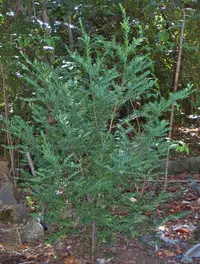
Sacred fir, Abies religiosa, is a tall, long-lived conifer known for its straight trunk, dense branches, and glossy, dark green needles. It forms a classic spire-shaped crown that stays attractive year-round.
This species is native to cool, high-elevation forests in central and southern Mexico, where it experiences mild summers, cool winters, and frequent moisture. It is slow to establish, and its need for cool, humid air and well-drained, consistently moist soil makes it challenging outside suitable climates.
Gardeners who want to learn how to care for Sacred Fir should understand that it prefers full sun in cool regions, protection from hot, dry wind, and deep, slightly acidic soil.

Care Difficulty
Hard Care

Light Preference
Full Sun

Water Requirements
Moderate Water

Temperature Preference
Cool Climate

Hardiness Zone
7–9

Soil Texture
Loamy, Silty, Organic-rich

Soil pH
Strongly acidic (4.5–5.5), Acidic (5.5–6.5)

Soil Drainage
Moist but well-drained

Fertilization
Minimal (feed rarely)
Scan your plant to receive care tips personalized for your specific plant
Available on iOS and Android
This high-elevation conifer prefers cool, bright sites with some protection from harsh sun.
This species prefers consistently moist, cool soil without prolonged saturation.
This fir is adapted to cool, high-altitude climates and dislikes prolonged heat.
This high-elevation conifer prefers cool, moist air and reacts poorly to prolonged indoor dryness.
Abies religiosa requires consistently moist, cool, well-aerated soil to establish deep, healthy roots.
This species is only marginally suitable for temporary container growing, mainly for young trees in cool outdoor conditions.
Abies religiosa grows steadily with modest feeding when planted in reasonably fertile soil.
Abies religiosa benefits from light, careful pruning to maintain structure and health.
Young Abies religiosa is usually grown in containers only until sturdy enough for permanent outdoor planting.
Abies religiosa is most often propagated from seed, which requires patience and specific conditions.
Established Abies religiosa is cold hardy in suitable climates and usually needs only basic winter care.

Plant Health Check
Not sure what's wrong with your plant? Check your plant's health inside the app.
In its native high-elevation Mexican forests, this fir forms the core overwintering habitat for millions of monarch butterflies, whose clusters use the dense canopy to buffer cold and moisture.
This species is naturally restricted to cool, humid cloud forests in central and southern Mexico at high elevations, where frequent fog and low temperatures shape its growth and distribution.
The tree has long been used in central Mexico for religious celebrations and ceremonies, which is reflected in its common name, sacred fir.

The oyamel fir forests dominated by this species are so critical for monarch butterflies that the Monarch Butterfly Biosphere Reserve in Mexico, largely composed of Abies religiosa stands, has been designated a UNESCO World Heritage Site to protect this unique migratory phenomenon.
This species grows slowly to moderately, typically 20–30 cm per year in good conditions. Young trees take many years to form a substantial trunk and layered crown, so plan long term when growing Sacred Fir.
Keep your plants happy and healthy with plant identification, disease detection, and easy care guidance.