Wind-hardening young trees
Stake young trees only loosely for the first 1–2 years and gradually reduce ties so the trunk flexes in the wind, which stimulates stronger wood formation and better long-term stability.

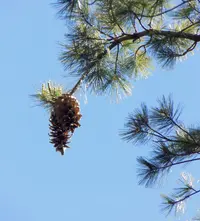
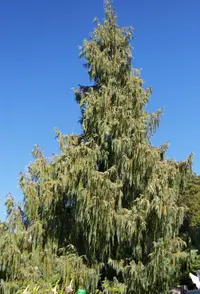
Chihuahua white pine (Pinus strobiformis) is a long-lived evergreen conifer valued for its soft, bluish-green needles and elegant, pyramidal form. It typically develops a strong central trunk with layered branches that create a light, open canopy rather than a dense screen.
This species is native to the mountains of northern Mexico and the southwestern United States, where it grows in cool, high-elevation forests. Its adaptation to rocky, well-drained soils and relatively dry air makes it fairly resilient once established.
Understanding how to care for Chihuahua White Pine starts with placing it in full sun and providing good drainage. It generally prefers slightly acidic, moderately moist soil but dislikes heavy, waterlogged conditions.

Care Difficulty
Moderate Care

Light Preference
Full Sun

Water Requirements
Low Water

Temperature Preference
Cold Hardy

Hardiness Zone
4–8

Soil Texture
Sandy, Loamy, Rocky

Soil pH
Acidic (5.5–6.5), Slightly acidic (6.5–7.0)

Soil Drainage
Well-drained

Fertilization
Minimal (feed rarely)
Scan your plant to receive care tips personalized for your specific plant
Available on iOS and Android
This high-elevation pine thrives in bright, open sites with plenty of direct sun.
This pine prefers evenly moist, well-drained soil and is drought-tolerant once established.
This species is adapted to cool to cold mountain climates with significant temperature variation.
This pine tolerates a wide humidity range and rarely needs special humidity management outdoors.
This species prefers deep, well-drained mineral soils that stay aerated but not waterlogged.
This pine can be grown in containers for several years, mainly as a young specimen or in large outdoor tubs.
This high-elevation pine usually needs minimal feeding in the ground, but light fertilization supports young or container-grown Chihuahua White Pine.
Pinus strobiformis benefits from light, targeted pruning to maintain structure and remove problem wood.
This pine is typically grown in the landscape, so transplanting young trees correctly matters more than long-term repotting.
Reproduction of Pinus strobiformis is mainly done from seed and is slow but reliable under the right conditions.
This species is cold hardy and generally needs little special winter care once established in the landscape.

Plant Health Check
Not sure what's wrong with your plant? Check your plant's health inside the app.
This species produces some of the longest cones of any North American pine, often reaching 20–40 cm and sometimes more, with distinctive long, flexible scales that give them a drooping, ornamental look.
It naturally occurs on high, isolated mountain ranges in the southwestern United States and northern Mexico, forming so-called sky-island populations that are separated by vast lowland deserts and grasslands.
Where their ranges overlap, it frequently hybridizes with limber pine (Pinus flexilis), creating intermediate forms that can complicate identification and provide material for studies of gene flow and adaptation in high-elevation conifers.

This species is part of the white pine group (subgenus Strobus) and has been studied as a potential genetic resource for breeding greater resistance to white pine blister rust, a serious fungal disease that threatens several economically important conifer species.
This species has a moderate growth rate. Young trees often add 30–45 cm per year under good conditions, then slow slightly with age. Growth is faster in deep, well-drained soil with consistent moisture and full exposure.
Keep your plants happy and healthy with plant identification, disease detection, and easy care guidance.