Wind exposure planning
Site the tree where prevailing winds are broken by a fence or larger trees, as its drooping branchlets are prone to wind burn and breakage in exposed positions.

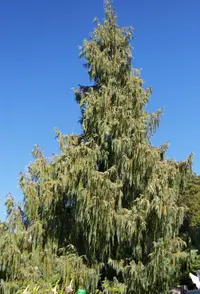
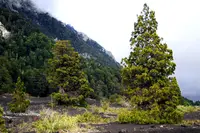
Bhutan cypress, Cupressus cashmeriana, is an evergreen conifer valued for its graceful, pendulous foliage and soft blue-green needles. It typically forms a tall, narrow tree with drooping branchlets that create a feathery, layered look.
This species is native to the eastern Himalayas, where it grows in cool, moist mountain forests. In cultivation it prefers mild climates, good light, and evenly moist but well-drained soil.
Its sensitivity to heat, drought, and poor drainage can make it challenging outside suitable regions, so planning how to care for Bhutan Cypress before planting is important.

Care Difficulty
Moderate Care

Light Preference
Full Sun

Water Requirements
Moderate Water

Temperature Preference
Warm Climate

Hardiness Zone
8–10

Soil Texture
Sandy, Loamy, Organic-rich

Soil pH
Acidic (5.5–6.5), Slightly acidic (6.5–7.0)

Soil Drainage
Well-drained

Fertilization
Minimal (feed rarely)
Scan your plant to receive care tips personalized for your specific plant
Available on iOS and Android
Cupressus cashmeriana prefers bright, gentle sun with protection from harsh afternoon exposure.
This species needs evenly moist but well-drained soil, with adjustments for season and site.
This Himalayan conifer prefers cool to mild conditions and dislikes extreme heat or severe frost.
This species prefers moderate, steady humidity but tolerates typical indoor air if watering is well managed.
Cupressus cashmeriana grows best in loose, fast-draining, slightly acidic to neutral soil that still retains some moisture.
This species can be grown in containers for several years if the pot is stable and allows controlled drainage.
This conifer grows best with light, controlled feeding rather than frequent, heavy applications.
Pruning keeps Cupressus cashmeriana structurally sound and maintains a neat outline without heavy reshaping.
This species is usually landscape-grown, so focus on thoughtful transplanting and occasional container upsizing for young plants.
New plants are produced mainly from semi-ripe cuttings, with seeds used less often for uniform landscape material.
This tree dislikes severe freezing and benefits from some winter protection in cooler climates.

Plant Health Check
Not sure what's wrong with your plant? Check your plant's health inside the app.
This species is naturally distributed in the Eastern Himalayas, especially in Bhutan and parts of northeastern India, where it grows on steep mountain slopes and in moist valleys at high elevations with cool, humid air.
Its branchlets hang in long, soft, threadlike sprays, giving a strongly weeping silhouette that is much more pronounced than in most other cypress species and easily recognizable even from a distance.
In its native range it experiences mild, cool conditions with high humidity, and it is notably sensitive to hot, dry winds and low atmospheric moisture, which limits successful long‑term cultivation in many lowland climates.

In Bhutan this tree has important cultural and spiritual value and is commonly planted near monasteries and religious sites, where its long, drooping branches are associated with calmness and reverence in the landscape.
Growth is moderate rather than truly fast. In good outdoor conditions, it often adds about 20–40 cm of height per year. Cooler summers, wind exposure, poor soil, or root disturbance can slow growth noticeably.
Keep your plants happy and healthy with plant identification, disease detection, and easy care guidance.