Rotate hanging pot
Rotate the hanging container 90° every 2–3 weeks so the stems receive light from all sides and develop an even, symmetric cascade instead of leaning heavily to one direction.

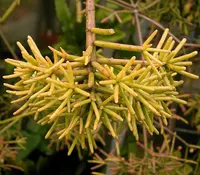
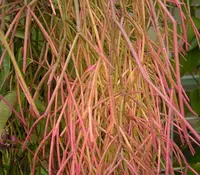
Rhipsalis teres is an epiphytic cactus with long, thin, cylindrical stems that hang or trail, giving it a soft, cascading look. It does not have the large spines typical of desert cacti.
This species is native to tropical forests of South America, where it often grows on trees in shaded, humid conditions. Its growth habit makes it suitable for hanging baskets and high shelves indoors.
Rhipsalis teres is generally considered forgiving and adaptable, so it suits beginners who want to care for Rhipsalis teres without complex routines. It prefers bright, indirect light, a loose, well-draining mix, and consistent but moderate moisture.

Care Difficulty
Easy Care

Light Preference
Bright Indirect Light

Water Requirements
Moderate Water

Temperature Preference
Tropical / Frost Sensitive

Hardiness Zone
11–12

Soil Texture
Sandy, Loamy, Organic-rich

Soil pH
Acidic (5.5–6.5), Slightly acidic (6.5–7.0)

Soil Drainage
Well-drained

Fertilization
Light (every 4–6 weeks)
Scan your plant to receive care tips personalized for your specific plant
Available on iOS and Android
This epiphytic cactus prefers bright, indirect light that mimics dappled forest shade.
Watering should keep the plant lightly moist but never saturated for long periods.
Stable, mild temperatures support steady growth and reduce stress for this forest cactus.
This epiphytic cactus prefers moderate household humidity but benefits from slightly higher levels in heated homes.
Use a loose, airy mix that drains rapidly while holding light, even moisture.
This species is very suitable for container growing, especially hanging baskets.
This epiphytic cactus benefits from light, controlled feeding during its active season.
Pruning is mainly used to tidy and shape this trailing cactus rather than to maintain its health.
This plant grows well slightly root-bound and dislikes frequent disturbance of its root system.
This species is commonly propagated from stem cuttings under warm, bright, indirect light.
In cool climates this tropical cactus needs indoor winter care since it is not frost hardy.

Plant Health Check
Not sure what's wrong with your plant? Check your plant's health inside the app.
This species naturally grows as an epiphyte on tree branches and trunks in humid forests, anchoring to bark rather than rooting in soil, which is unusual among cacti that typically inhabit arid ground habitats.
It develops long, slender, cylindrical stems that can become strongly pendent with age, forming dense, hanging curtains that increase light capture in shaded forest canopies.
The small, tubular white flowers often open in the evening or at night and are thought to be pollinated by nocturnal insects in their native Atlantic forest habitats in Brazil.

Rhipsalis teres is part of one of the very few cactus lineages that evolved in shaded, humid tropical forests, representing an evolutionary shift from desert-adapted ancestors to a rainforest epiphyte that relies on canopy microclimates rather than extreme drought tolerance.
Limited flowering usually comes from insufficient light intensity, lack of a slight cooler, drier rest in winter, or an oversized pot. Provide bright indirect light, modest winter watering, and avoid frequent repotting to encourage bud formation.
Keep your plants happy and healthy with plant identification, disease detection, and easy care guidance.