Early scaffold training
During the first 3–5 years, select 3–5 evenly spaced main branches with wide crotch angles and remove competing leaders to reduce the risk of splitting as the canopy matures.

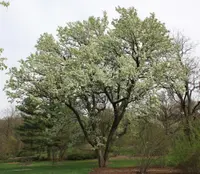
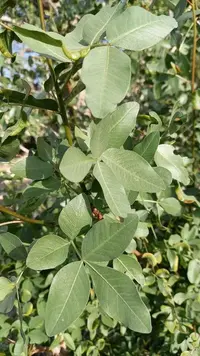
Bradford pear, Pyrus calleryana, is a fast-growing ornamental tree commonly used in streetscapes and suburban yards. It forms a dense, upright crown that becomes broadly rounded with age.
The tree is known for its white spring blossoms, glossy green summer foliage, and strong red to purple fall color. Small, hard fruits are usually not ornamental and may attract birds.
Pyrus calleryana originates from East Asia but is widely planted in North America, where it can self-seed and spread into natural areas. It adapts to many soils and urban conditions, which makes it easy to establish but sometimes structurally weak in storms.
Understanding how to care for bradford pear starts with providing full sun, moderately moist soil, and enough space for its mature canopy and root system.

Care Difficulty
Easy Care

Light Preference
Full Sun

Water Requirements
Moderate Water

Temperature Preference
Cold Hardy

Hardiness Zone
5–9

Soil Texture
Sandy, Loamy, Clay

Soil pH
Acidic (5.5–6.5), Slightly acidic (6.5–7.0)

Soil Drainage
Well-drained

Fertilization
Minimal (feed rarely)
Scan your plant to receive care tips personalized for your specific plant
Available on iOS and Android
This deciduous tree grows best with abundant direct sun and open exposure.
This species prefers deep, infrequent watering rather than frequent light applications.
This hardy ornamental pear tolerates a wide range of outdoor temperatures once established.
This species tolerates a wide humidity range and usually needs no special humidity management outdoors.
Pyrus calleryana prefers moderately fertile, well-structured mineral soils that drain freely yet retain some moisture.
This tree is generally unsuited to long-term container growing and is best planted in open ground for size and stability.
Pyrus calleryana usually grows well in average garden soil and needs only modest fertilizing support.
Pruning is important for managing structure and safety in Pyrus calleryana, which is prone to weak branch angles.
This tree is typically field-grown, so most work involves transplanting young specimens rather than long-term container culture.
Pyrus calleryana is usually propagated in professional settings, not by home growers, because seed-grown trees are variable and can be invasive.
Mature Pyrus calleryana is generally cold hardy in typical landscape use and needs little active winter care.

Plant Health Check
Not sure what's wrong with your plant? Check your plant's health inside the app.
This species naturally develops a very dense, upright crown with tight branch angles and weak wood, which makes mature trees prone to splitting and failure during storms as they age.
Originally planted widely as a street and landscape tree in North America, it has escaped cultivation, hybridizes with other Callery pear forms, and now forms dense, invasive thickets that displace native plants in many states.
The abundant white spring blossoms have a notably strong, often described as foul, odor due to volatile compounds that attract specific insect pollinators rather than appealing to humans.

In some regions of the eastern and central United States, roadside populations of Callery pear, including Pyrus calleryana cultivars, have become so widespread that several states now restrict or ban its sale to reduce further ecological impact.
Yes, this species is invasive in many parts of the eastern and central US. It escapes cultivation, forms dense thickets, displaces native plants, and spreads via birds that eat and disperse its small fruits.
Keep your plants happy and healthy with plant identification, disease detection, and easy care guidance.