Mulch For Roots
Apply a 5–8 cm layer of coarse, woody mulch over the root zone, keeping it 5–10 cm away from the trunk flare to stabilize soil moisture and temperature while reducing weed competition.

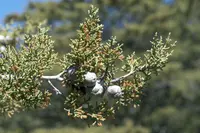
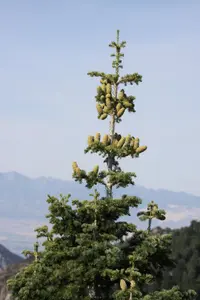
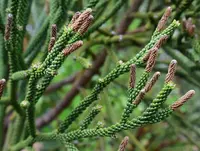
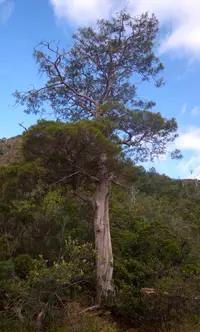
Sargent's cypress (Hesperocyparis sargentii) is a small to medium evergreen conifer native to coastal California, often found on rocky slopes and ridges. It forms a dense, upright to rounded crown with fine, scale-like foliage that ranges from rich green to bluish tones.
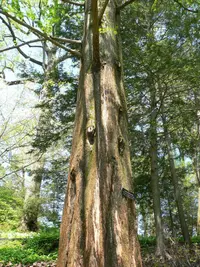
The bark becomes furrowed with age, and mature trees develop a rugged, characterful appearance suited to naturalistic or dry gardens. Its natural tolerance for wind, poor soils, and periodic drought makes it relatively low-maintenance once established.
Gardeners who want to care for Sargent's cypress should note that it prefers full sun, well-drained soil, and avoids long periods of waterlogged conditions.

Care Difficulty
Moderate Care

Light Preference
Full Sun

Water Requirements
Low Water

Temperature Preference
Cold Hardy

Hardiness Zone
7–9

Soil Texture
Sandy, Loamy, Rocky

Soil pH
Acidic (5.5–6.5), Slightly acidic (6.5–7.0)

Soil Drainage
Well-drained

Fertilization
Minimal (feed rarely)
Scan your plant to receive care tips personalized for your specific plant
Available on iOS and Android
This species thrives in open, bright sites with long daily sun exposure.
This conifer prefers deep, infrequent watering once established, with consistently well-drained soil.
This species is adapted to mild, dry-summer climates with cool to cold winters.
This species tolerates a wide humidity range and usually needs no special humidity management outdoors.
Hesperocyparis sargentii prefers lean, fast-draining mineral soils that do not stay wet.
This species can be grown in large outdoor containers for some years, though it ultimately prefers open ground.
This drought-tolerant conifer usually needs minimal feeding, especially when grown in the ground on suitable soils.
Pruning Hesperocyparis sargentii is usually light and focused on maintaining structure and plant health.
This species is usually grown in the ground, so focus on careful transplanting rather than frequent repotting.
Propagation of Hesperocyparis sargentii is typically done by semi-hardwood cuttings or seed, both requiring patience and stable conditions.
This conifer is generally cold hardy in its suitable climate range and needs only modest winter care once established.

Plant Health Check
Not sure what's wrong with your plant? Check your plant's health inside the app.
This species is naturally restricted to nutrient-poor serpentine soils in coastal northern California, a harsh substrate high in heavy metals where many other trees cannot survive.
In its native range, this cypress benefits strongly from coastal fog, which supplies extra moisture to its foliage and helps it persist on dry, rocky slopes.
Wild stands occur as small, fragmented groves on isolated ridges, reflecting a relict distribution pattern tied to patchy serpentine outcrops rather than a continuous forest.

The closed woody cones of Sargent's cypress can remain sealed on the tree for years and are often opened by the heat of wildfire, a reproductive strategy called serotiny that allows large seed release after fire has cleared competing vegetation.
This species has a moderate growth rate. Young plants often add about 20–30 cm per year, slowing as they mature. Growth speed improves in full sun, with good drainage and minimal summer irrigation stress in suitable climates.
Keep your plants happy and healthy with plant identification, disease detection, and easy care guidance.