Wind-firm training
In the first 3–5 years, stake the young tree loosely on the windward side and gradually lower the tie point each year to encourage a strong, tapered trunk rather than permanent dependence on a high stake.

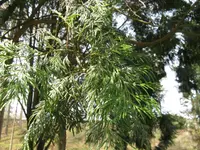
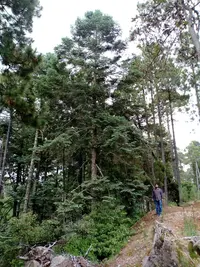
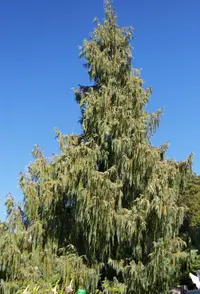
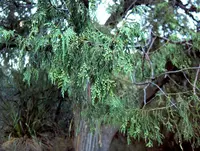
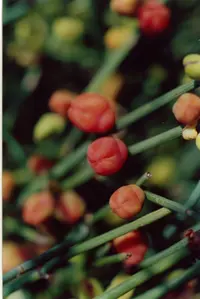
Taiwan incense-cedar (Calocedrus formosana) is an evergreen coniferous tree valued for its tall, narrow form and aromatic, resin-scented wood. It develops flattened sprays of bright green scale-like foliage and small, decorative cones, giving it a fine, textured look year-round.
This species is native to montane forests of Taiwan and parts of mainland East Asia, where it grows in cool, humid conditions. In cultivation it is generally slow to moderate in growth and prefers well-drained soil, good light, and consistent moisture, which makes it manageable for gardeners who want to care for Taiwan incense-cedar with minimal complexity.

Care Difficulty
Moderate Care

Light Preference
Full Sun

Water Requirements
Moderate Water

Temperature Preference
Warm Climate

Hardiness Zone
8–10

Soil Texture
Sandy, Loamy, Organic-rich

Soil pH
Acidic (5.5–6.5), Slightly acidic (6.5–7.0)

Soil Drainage
Moist but well-drained

Fertilization
Minimal (feed rarely)
Scan your plant to receive care tips personalized for your specific plant
Available on iOS and Android
This conifer prefers bright sites with some protection from harsh afternoon sun.
This species prefers evenly moist, well-drained soil and does not tolerate waterlogging.
This tree is adaptable but grows best in mild, temperate conditions.
This species prefers moderate ambient humidity but copes with a range of indoor and outdoor conditions.
This conifer grows best in loose, steadily moist, well-drained mineral-rich soil.
This species can be grown in containers for many years if root space and stability are managed carefully.
This species grows slowly and usually needs only modest feeding, especially when planted in the ground.
Calocedrus formosana requires light, selective pruning to maintain structure and remove problem growth.
This conifer is usually grown in the ground, so focus on careful transplanting rather than frequent repotting.
Calocedrus formosana is typically propagated by semi-hardwood cuttings or seeds, both requiring patience and stable conditions.
Mature plants are moderately cold hardy but young or container-grown specimens benefit from some winter care.

Plant Health Check
Not sure what's wrong with your plant? Check your plant's health inside the app.
This conifer is naturally restricted to mountainous areas of Taiwan, where it grows in mixed forests at mid to high elevations with cool, humid conditions.
The wood has a distinct, pleasant resin scent and fine texture, which has led to its historical use in Taiwan for joinery, interior fittings, and traditional items that benefit from decay-resistant timber.
Its foliage consists of flat sprays of overlapping scale-like leaves, and the young branchlets show a characteristic pattern where the facial and lateral leaves differ slightly in size and arrangement.

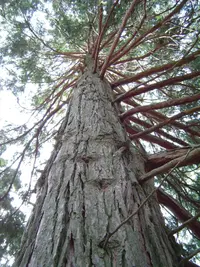
Mature trees can develop strikingly fluted, columnar trunks with reddish-brown bark that peels in thin strips, giving old specimens a textured appearance that makes them stand out in mixed montane forests of Taiwan.
Growth is generally moderate. In suitable outdoor conditions, young trees often add 20–30 cm per year, sometimes more in deep, moist, well-drained soil. Growth slows as the tree matures and canopy fills out.
Keep your plants happy and healthy with plant identification, disease detection, and easy care guidance.