sassafras Care (Sassafras albidum)

Also known as: Mitten tree, white sassafras, Poor Man's Oak, cinnamon wood, mittenleaf
sassafras

About sassafras

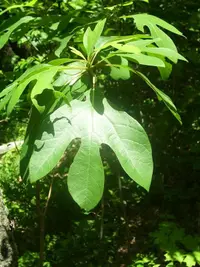
Sassafras albidum is a deciduous tree native to eastern North America, often found at woodland edges, old fields, and along roadsides. It naturally forms a small to medium tree with a rounded crown and distinctive mitten-shaped leaves.

The foliage turns bright yellow to orange in fall, and the bark and roots are aromatic when crushed. Blue-black fruits on red stalks appear on female trees and attract wildlife.

This species adapts best to full sun to light shade, moderately moist, well-drained, slightly acidic soils, and does not like heavy disturbance around its roots. Understanding how to care for sassafras starts with giving it enough space and avoiding transplanting once established.


Main Plant Requirements

Care Difficulty

Moderate Care

Light Preference

Full Sun

Water Requirements

Moderate Water

Temperature Preference

Cold Hardy

Hardiness Zone

4–9

Soil Texture

Sandy, Loamy, Organic-rich

Soil pH

Strongly acidic (4.5–5.5), Acidic (5.5–6.5)

Soil Drainage

Moist but well-drained

Fertilization

Minimal (feed rarely)

Get Personalized Care Plan

Scan your plant to receive care tips personalized for your specific plant

Available on iOS and Android

How to Care for the sassafras

This deciduous tree prefers bright conditions that mimic an open woodland edge.

  • Provide 4–6 hours of direct morning sun with light afternoon shade, or bright dappled light all day, especially in hotter climates.
  • Young sassafras tolerates partial shade, but dense shade reduces growth, fall color, and overall vigor over several seasons.
  • In hot summers, protect from intense afternoon sun to limit leaf scorch; in cooler regions, a near full-sun site boosts autumn color and sturdy branching.

Sassafras albidum grows best in evenly moist, well-drained soil without long periods of drought or standing water.

  • Aim for soil that feels slightly moist 5–8 cm down; if it is dry and crumbly at this depth, a thorough soak is due.
  • During the first 2–3 growing seasons, monitor closely after hot, dry, or windy weather; mature trees usually need extra water only during prolonged drought.
  • Yellowing leaves, dieback from the tips, or a sour smell in the root zone suggest poor drainage or overwatering, while crisp, browning leaf edges point to underwatering.

This species is a hardy temperate tree that tolerates cold winters and warm summers when established.

  • Active growth is strongest around 65–80°F (18–27°C), with good performance in typical spring and summer conditions across much of its native range.
  • Once established in the ground, trees survive winter lows near -20°F (-29°C), though young plants benefit from mulch to buffer freeze-thaw cycles.
  • Short heat spells up to about 90–95°F (32–35°C) are tolerated if soil moisture is adequate; extended extreme heat or sudden late frosts can damage tender new growth.

Humidity is not a major factor for Sassafras albidum, which adapts well to typical outdoor conditions.

Sassafras albidum prefers loose, well-aerated ground that mimics a forest edge or open woodland.

  • Use a deep, loamy mix combining native soil with 30–40% compost and some coarse sand for structure.
  • Ensure drainage is steady, not fast-draining like pure sand, so roots stay moist but never waterlogged.
  • Aim for slightly acidic soil around pH 5.0–6.5, avoiding strongly alkaline or heavily limed sites.
  • Avoid compacted clay and improve aeration by incorporating fine pine bark or leaf mold through the top 20–30 cm.

This species is only moderately suitable for containers and performs best long term in the ground.

  • Choose a tall, heavy container that resists tipping as the tree develops a woody trunk and spreading crown.
  • Provide a deep rooting zone with at least 45–60 cm soil depth to reduce stress from restricted roots.
  • Use a mineral-rich, loam-based mix rather than very peat-heavy substrates to maintain structural stability over time.

This native tree usually grows well in average garden soil and needs only light fertilization.

  • Apply a thin layer of compost or well-rotted leaf mold around the root zone once in early spring.
  • In poorer soils, use a balanced slow-release fertilizer (around 10-10-10) at half label rate in spring.
  • Avoid summer and fall feeding so new growth hardens before winter.
  • Skip winter applications; Sassafras albidum is dormant and extra nutrients are not used.

Sassafras albidum needs minimal pruning, mainly to maintain structure and remove problem wood.

  • Prune in late winter or very early spring before new growth starts.
  • Remove dead, diseased, rubbing, or storm-damaged branches using clean, sharp hand pruners or loppers.
  • Thin crowded interior branches lightly to improve air flow while keeping the natural, open form.
  • Avoid heavy structural cuts on mature trees, which can cause stress and decay entry points.

This species dislikes root disturbance, so transplanting should be infrequent and carefully planned.

  • Look for circling roots, poor vigor, or a root-bound container to decide when moving young sassafras.
  • Transplant in early spring or early fall, aiming for cooler weather and consistent soil moisture.
  • Move container plants only every 2–3 years, stepping up 1 pot size with a deep, well-drained mix.
  • Dig a wide root ball, keep soil intact, water thoroughly, and shade lightly after planting to limit shock.

Propagation of Sassafras albidum is possible but somewhat specialized and slower than many ornamentals.

  • Collect ripe drupes in fall, clean the seeds, and cold stratify at 35–40°F for 2–3 months.
  • Sow stratified seeds in a deep, well-drained, slightly acidic medium and keep evenly moist.
  • Lift and transplant root suckers in early spring, keeping a generous portion of fibrous roots attached.
  • Provide light shade, steady moisture, and minimal disturbance during the first 1–2 years of establishment.

Established Sassafras albidum trees are generally cold hardy in much of the US and need little winter care.

  • Apply 5–8 cm of mulch over the root zone in late fall, keeping it a few cm away from the trunk.
  • Young or newly transplanted trees benefit from extra mulch and consistent moisture before ground freeze.
  • Container-grown plants in cold climates should be sunk into the ground or moved to a sheltered, unheated space.

Care Tips

Root sucker management

Inspect the surrounding soil 1–2 times per year and either remove unwanted root suckers at ground level with clean pruners or dig and pot well-rooted suckers in spring if you want new plants, since unmanaged suckers can quickly form a dense thicket.

Taproot-aware transplanting

Transplant very young seedlings before they develop a deep taproot and always move them while dormant, because older trees with established taproots suffer high transplant shock and usually do not re-establish well.

Mycorrhiza-friendly mulching

Apply a 5–8 cm layer of leaf mold or shredded hardwood leaves out to the drip line and avoid disturbing the soil, which supports beneficial mycorrhizal fungi that improve nutrient uptake and overall vigor.

Wind and lean control

In exposed sites, use 1–2 low, flexible stakes and loose ties for the first 2–3 years and gradually remove them as the trunk thickens, helping the tree develop a straight, self-supporting structure without girdling the bark.

Selective wildlife protection

Use a breathable tree guard or wire mesh cylinder around young trunks in areas with deer or rabbits, and check it annually for tightness, since bark browsing and rubbing can permanently deform or kill young plants when growing sassafras.

Common Pests and Diseases

Sassafras weevil

This pest feeds on leaves and twigs, causing notching, small holes, and sometimes dieback of young shoots.

Solution

Prune and destroy heavily infested twigs to remove larvae, then shake branches over a sheet in early morning and crush or discard adult weevils. Maintain tree vigor with proper watering and mulch, and if damage is heavy on small trees, use a targeted contact insecticide labeled for weevils on ornamental trees according to label directions.

Sassafras borer

This pest is a clearwing moth larva that tunnels in the trunk and larger branches, leading to wilted foliage, frass (sawdust-like material), and branch dieback.

Solution

Remove and destroy severely infested branches and any sections showing extensive tunneling, then keep the tree unstressed with regular watering and avoiding trunk injury. For high-value landscape trees, a certified arborist can apply a systemic insecticide timed to adult moth flight to reduce new infestations.

Verticillium wilt

This disease causes one-sided branch wilting, yellowing, and dieback, often in irregular sections of the crown, and may leave dark streaks in the sapwood.

Solution

Prune out and destroy wilted branches, sterilizing tools between cuts, and keep the tree well watered but not waterlogged to reduce stress. Avoid replanting susceptible species in the same spot, and if decline is severe, consider replacing the tree with a species known to be resistant to verticillium wilt.

Leaf spot

This disease produces small tan to brown spots on leaves that may merge, causing partial blight and early leaf drop in wet, humid weather.

Solution

Rake and destroy fallen leaves to reduce fungal spores, and improve air circulation by thinning crowded branches or nearby vegetation. In seasons with repeated severe spotting on young trees, a homeowner or arborist may apply a labeled fungicide at bud break and early leaf expansion, following all label instructions.

Powdery mildew

This disease appears as a white, powdery film on upper leaf surfaces, which can cause leaf distortion and reduced vigor in shaded or crowded sites.

Solution

Increase sun exposure where possible, reduce overhead watering, and thin nearby plants to improve airflow, which usually keeps powdery mildew on sassafras at a minor level. If ornamental appearance is important and mildew is persistent, a fungicide labeled for powdery mildew on shade trees can be applied early in the season according to product directions.

Interesting Facts

Three leaf shapes

This tree often carries three different leaf shapes on the same branch: entire (oval), mitten-shaped, and three-lobed, making it easy to recognize in the field.

Root-sprouting colonies

It commonly spreads by root suckers, forming clonal thickets where many stems share the same root system and genetic individual.

Specialist spicebush swallowtail host

Its leaves are an important host food for the spicebush swallowtail butterfly (Papilio troilus), whose caterpillars have evolved to specialize on sassafras and a few related species.

Botan icon

Did you know?

Historically, its aromatic roots and bark were a major early export from North America to Europe in the 16th and 17th centuries, where the tree became famous as one of the first New World plants to be heavily traded for perceived medicinal and flavoring uses.

FAQs about sassafras

This species is moderately fast-growing when young, often adding 30–60 cm per year under good conditions. At maturity it typically reaches 9–18 m tall with a spread of 6–12 m in landscape settings.

Grow Healthy Plants with Botan Care

Keep your plants happy and healthy with plant identification, disease detection, and easy care guidance.

Botan plant care app — identify plants on mobile

Explore More Plants