Preemptive staking
Install sturdy stakes or a simple trellis when plants are 20–30 cm tall so stems can be tied loosely as they elongate, preventing fruit-laden branches from kinking or snapping later in the season.

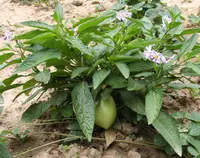
Pepino (Solanum muricatum) is a small, soft-stemmed shrub grown mainly for its sweet, melon-like fruit. It belongs to the nightshade family, along with tomato and eggplant. Plants typically have branching green stems, oval leaves, and pale flowers that develop into smooth, cream to yellow fruits with purple stripes. In suitable climates, it forms a low, bushy mound. Solanum muricatum comes from the mild, frost-free regions of the Andes in South America, where it grows as a short-lived perennial. It is considered moderately easy if given warmth, consistent moisture, and well-drained soil. Understanding how to care for pepino helps prevent problems with cold, drought stress, and low light.

Care Difficulty
Moderate Care

Light Preference
Full Sun

Water Requirements
Regular Water

Temperature Preference
Tropical / Frost Sensitive

Hardiness Zone
9–11

Soil Texture
Sandy, Loamy, Organic-rich

Soil pH
Acidic (5.5–6.5), Slightly acidic (6.5–7.0)

Soil Drainage
Moist but well-drained

Fertilization
Moderate (every 2–4 weeks)
Scan your plant to receive care tips personalized for your specific plant
Available on iOS and Android
Solanum muricatum prefers bright, direct sun in mild climates but benefits from some protection in intense heat.
Solanum muricatum needs steady moisture in well-drained soil to support fast growth and fruiting.
This species prefers mild, frost-free conditions and reacts poorly to temperature extremes.
This species prefers moderate humidity but usually adapts well to typical household levels.
Solanum muricatum grows best in loose, well-drained, fertile soil that holds moisture without becoming waterlogged.
This species is well suited to container growing when given enough root space and stable support.
This fruiting Solanum muricatum benefits from steady but moderate nutrition during active growth.
Thoughtful pruning helps manage size, light penetration, and fruiting wood on Solanum muricatum.
Container-grown plants and young field plantings benefit from careful transplanting to maintain strong Solanum muricatum growth.
New Solanum muricatum plants are most often produced from stem cuttings rather than seed for consistent fruit quality.
This tender species dislikes freezing temperatures and needs structured winter care in most climates.

Plant Health Check
Not sure what's wrong with your plant? Check your plant's health inside the app.
Solanum muricatum often sets fruit without pollination, a process called parthenocarpy, so the berries can develop with few or no seeds. This trait makes it useful in breeding and for producing consistent, seedless-like fruits.
Unlike many tropical Solanum relatives, pepino performs best in mild conditions and often fails under high heat above roughly 85°F. This cool preference shapes where commercial growers successfully cultivate it, such as coastal or high-elevation regions in South America and other subtropical areas.
Although it belongs to the nightshade family (Solanaceae), the entire ripe pepino fruit, including the thin skin, is edible and commonly eaten fresh. Its flavor is typically described as a mild mix of melon and cucumber, especially when fully ripe.

Archaeological and historical evidence indicates that pepino was domesticated in the Andean region long before European contact, making it one of the pre-Columbian domesticated crops of South America, though today it remains a minor and regionally important fruit compared with other Solanaceae like tomato or potato.
Yellowing leaves usually result from overwatering, poor drainage, or lack of nitrogen. Check that the pot drains freely, let the top layer of soil partially dry between waterings, and apply a balanced fertilizer at label rates.
Keep your plants happy and healthy with plant identification, disease detection, and easy care guidance.