Ornate-stalked bolete Care (Retiboletus ornatipes)

Ornate-stalked bolete

About Ornate-stalked bolete

Ornate-stalked bolete, Retiboletus ornatipes, is a wild mushroom-forming fungus, not a typical houseplant. It produces sturdy yellow caps on a distinctively netted, ornamented stalk. This species grows on the ground in forests, usually in association with hardwood trees, forming a mycorrhizal relationship where fungus and roots exchange nutrients.

It appears mainly in warm seasons in eastern North America, often in scattered groups rather than dense clusters. Because it depends on living tree partners and specific soil fungi, it is difficult to cultivate at home, and most people do not attempt to care for Ornate-stalked bolete beyond responsible, low-impact observation in its natural habitat.

It prefers undisturbed, well-drained woodland soils with consistent moisture and dappled shade, typical of mature mixed or deciduous forests.

Main Plant Requirements

Care Difficulty

Hard Care

Light Preference

Partial Shade

Water Requirements

Keep Soil Moist

Temperature Preference

Cool Climate

Hardiness Zone

Unknown

Soil Texture

Loamy, Silty, Organic-rich

Soil pH

Strongly acidic (4.5–5.5), Acidic (5.5–6.5)

Soil Drainage

Moist but well-drained

Fertilization

Minimal (feed rarely)

Get Personalized Care Plan

Scan your plant to receive care tips personalized for your specific plant

Available on iOS and Android

How to Care for the Ornate-stalked bolete

This mycorrhizal mushroom prefers dappled woodland light rather than direct, open sun.

  • Site it under deciduous trees where it receives 2–4 hours of gentle morning sun and bright, filtered light for the rest of the day.
  • Ensure at least partial shade (40–70% canopy cover); intense afternoon sun can dry the soil surface too quickly and stress developing fruiting bodies of Ornate-stalked bolete.
  • In summer, deeper shade helps maintain moisture, while in early spring and autumn slightly more light through sparse foliage supports mycelium activity.

This ectomycorrhizal fungus depends on consistently moist, not waterlogged, forest soil.

  • Aim for soil that stays evenly moist to 5–7 cm depth; allow only the top 1–2 cm to start drying before the next rainfall or supplemental watering.
  • Choose a site with loose, well-drained, leaf-litter-rich soil; standing water or sour, swampy smell indicates harmful overwatering conditions for Retiboletus ornatipes.
  • In hot, dry periods, monitor for cracked soil and shrinking, brittle leaf litter as signs of dryness, increasing gentle soaking instead of frequent light sprinkling.

This woodland bolete favors mild to warm conditions typical of temperate forests.

  • Optimal growth and fruiting occur around 60–77°F (16–25°C), when soil stays cool, moist, and shaded under tree canopy.
  • The mycelium usually tolerates down to about 32°F (0°C) in soil, but hard, prolonged frost without insulating leaf litter can reduce vitality.
  • Sustained air temperatures above 86°F (30°C), combined with dry soil, quickly limit fruiting; maintaining shaded, mulched ground moderates heat and moisture extremes for Retiboletus ornatipes care.

Humidity is not a meaningful factor for Retiboletus ornatipes, which grows outdoors in natural soil–air conditions.

Retiboletus ornatipes relies on specific woodland soil conditions and is not suited to typical container or garden soil preparation.

  • This mushroom forms mycorrhizal associations with tree roots, so it typically occurs in undisturbed, mature woodland soils rather than managed beds.
  • Natural substrates are usually well-drained, slightly acidic to neutral (around pH 5.5–7), with high leaf litter and decaying organic matter.
  • Soils are loose, crumbly, and rich in fungal food sources, not compacted or heavily tilled, allowing gas exchange around fine roots and fungal threads.
  • Avoid fertilized lawn soil, heavy clay, or highly amended potting mixes, which disrupt its natural symbiosis and reduce chances of fruiting.

This species is not suitable for container growing, as it depends on complex mycorrhizal relationships with trees in undisturbed ground.

This mycorrhizal fungus grows best with minimal soil disturbance and usually does not need direct fertilization.

Pruning is not applicable to Retiboletus ornatipes, since the visible fruiting body is temporary and naturally short-lived.

Transplanting focuses on preserving the associated tree roots and undisturbed soil where this mycorrhizal bolete naturally fruits.

  • Avoid moving established host trees or nearby soil unless essential, as this can disrupt the fungal mycelium network.
  • If relocation is unavoidable, transplant trees in late fall or early spring when dormant to reduce stress on roots and fungal partners.
  • Move as large a root ball and surrounding soil as practical, keeping it shaded and moist during the process.
  • After transplanting, water deeply and maintain moderate, even soil moisture to support recovery of roots and fungal activity.

Propagation of this wild mycorrhizal fungus is specialized and rarely attempted by home growers.

Outdoor populations in suitable climates generally overwinter without special attention, as the fungus persists underground while fruiting bodies disappear.

Care Tips

Spore-friendly harvesting

Cut mushrooms cleanly at the base and leave a few mature caps in place to drop spores, which helps maintain a self-renewing population when growing Ornate-stalked bolete in the same woodland patch.

Mycelium protection

Mark productive spots and avoid raking, deep digging, or heavy foot traffic around them so the underground mycelium network stays intact and continues fruiting for many years.

Host tree management

Maintain the health of associated hardwood hosts such as oaks by avoiding trunk injury, compaction near roots, and unnecessary removal of leaf litter, since the fungus depends on these trees for nutrients.

Microhabitat moisture buffering

Retain a thin, natural leaf-litter layer and add a light mulch of shredded, untreated hardwood branches nearby to buffer soil moisture without burying existing mycelium or fruiting zones.

Monitoring for disturbance

Check sites regularly for signs of disturbance such as animal digging, erosion, or trail widening, and redirect footpaths or add simple barriers like branches to keep the fruiting area stable.

Common Pests and Diseases

Fungus gnat larvae

This pest targets moist substrates rich in organic matter around the fruiting bodies and mycelium. This pest can tunnel into developing boletes, causing soft spots, deformation, and early decay.

Solution

Reduce excess surface moisture, improve drainage of the growing medium, and remove heavily damaged fruiting bodies promptly. Use fine mesh or netting to exclude adult gnats from the cultivation area and apply a biological control such as Bacillus thuringiensis israelensis (Bti) to the substrate if infestation persists.

Bolete maggots

This pest consists of fly larvae that burrow into the caps and stems, leaving tunnels, browning tissue, and rapid breakdown of the mushroom. Symptoms include spongy texture, discolored galleries, and increased susceptibility to rot.

Solution

Harvest fruiting bodies as soon as they reach usable size and discard any that show tunneling or soft, discolored tissue. To reduce egg-laying by adult flies, use physical barriers such as fine netting, harvest in cooler parts of the day, and keep surrounding leaf litter and debris managed to limit breeding sites.

Slug and snail feeding

These invertebrates are attracted to the moist, nutrient-rich tissue of the caps and stems, creating irregular holes and shredded margins. Symptoms include slime trails, missing sections of cap, and rapid cosmetic damage after rainy or humid periods.

Solution

Hand-pick slugs and snails in the evening or early morning and use copper barriers, coarse mulch, or raised platforms to make access more difficult. In outdoor settings, apply iron phosphate bait around but not directly on the fruiting area and keep dense groundcover trimmed to reduce daytime hiding places.

Bacterial soft rot

This disease affects damaged or overmature fruiting bodies, causing water-soaked patches that quickly turn slimy and foul-smelling. Symptoms include collapse of the cap or stem, discoloration, and rapid liquefaction of tissue, especially in warm, humid conditions.

Solution

Remove and discard affected boletes as soon as soft, wet spots are noticed, and avoid handling caps with dirty or contaminated tools. Encourage good air movement, limit overhead watering or splashing onto caps, and harvest promptly to reduce the time tissues remain exposed in warm, moist conditions.

Secondary mold colonization

This disease develops on overripe or insect-damaged fruiting bodies, leading to fuzzy or powdery mold growth on the cap surface and pores. Symptoms include color changes, superficial mycelial coatings, and gradual drying or collapse of affected areas.

Solution

Harvest boletes while still firm and remove any fruiting bodies that show visible mold growth, including nearby debris. Improve airflow around the fruiting zone, avoid overcrowding, and manage insect and slug damage to reduce entry points and weakened tissue that favor mold establishment, which supports more reliable Retiboletus ornatipes care instructions.

Interesting Facts

Distinctive ornamented stipe

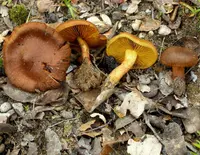
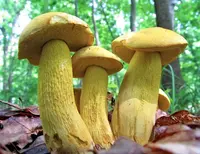
This bolete is easily recognized by its bright yellow stalk covered in fine, net-like brown reticulation, a raised pattern of ridges that looks almost carved or embroidered and gives the species its common name, ornate-stalked bolete.

Color change when bruised

The pore surface and flesh often slowly stain blue when handled or cut due to oxidation of specific fungal pigments, a reaction that helps field mycologists separate it from similar yellow-stemmed boletes.

Specialist oak associate

It forms ectomycorrhizal partnerships with oak trees, exchanging mineral nutrients and water from the soil for sugars from the tree, and is most often found in association with oaks in mixed hardwood forests in eastern North America.

Botan icon

Did you know?

Molecular studies have shown that this species, once placed in the large genus Boletus, is genetically distinct enough to warrant its current placement in the smaller genus Retiboletus, highlighting how DNA evidence has reshaped the classification of many bolete fungi.

FAQs about Ornate-stalked bolete

This mushroom is generally considered edible but is not a beginner-friendly species. Accurate identification is critical, as similar boletes can cause stomach upset. Only experienced foragers should collect and cook it, and always in moderation.

Grow Healthy Plants with Botan Care

Keep your plants happy and healthy with plant identification, disease detection, and easy care guidance.

Botan plant care app — identify plants on mobile

Explore More Plants