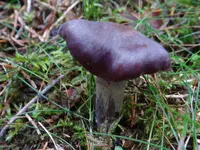
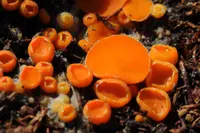
saffron webcap Care (Cortinarius croceus)

saffron webcap

About saffron webcap

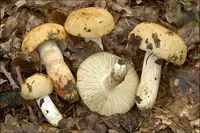
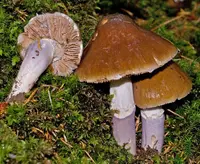
The saffron webcap, Cortinarius croceus, is a woodland mushroom, not a true plant. It forms mycorrhizal partnerships with trees, exchanging nutrients with their roots. Caps are usually orange to saffron-brown, with a slender stem and a delicate cobweb-like veil when young.

This species occurs mainly in conifer and mixed forests in temperate regions of Europe and North America, often in mossy or moist leaf-littered soils. It is not suitable for typical home cultivation, since it depends on living tree roots and natural forest conditions. For those learning how to care for saffron webcap, it is mostly about conserving its habitat rather than growing it indoors or in pots.

Main Plant Requirements

Care Difficulty

Hard Care

Light Preference

Partial Shade

Water Requirements

Regular Water

Temperature Preference

Cool Climate

Hardiness Zone

Unknown

Soil Texture

Loamy, Sandy, Organic-rich

Soil pH

Strongly acidic (4.5–5.5), Acidic (5.5–6.5)

Soil Drainage

Moist but well-drained

Fertilization

Minimal (feed rarely)

Get Personalized Care Plan

Scan your plant to receive care tips personalized for your specific plant

Available on iOS and Android

How to Care for the saffron webcap

This mycorrhizal fungus prefers cool, dappled woodland light rather than open sun.

  • Provide bright shade or filtered light under trees, with 2–4 hours of gentle morning sun and full protection from strong afternoon sun to prevent drying of the forest floor.
  • Site saffron webcap where surrounding vegetation casts broken shade; avoid exposed lawn or field edges where direct sun exceeds 4–5 hours per day.
  • In summer, favor deeper shade to limit soil heating, while in spring and autumn slightly more light through sparse canopy supports host tree vigor.

This woodland fungus depends on consistently moist, never waterlogged, soil around its tree hosts.

  • Aim for soil that feels moist 3–5 cm down but not soggy; if the surface is cracked or dusty, conditions are too dry for stable mycelium development.
  • Ensure excellent drainage with loose, humus-rich forest-type soil; standing water or sour, swampy smells indicate excess moisture that can damage Cortinarius croceus associations.
  • During hot, dry spells, supplemental irrigation of the host tree root zone may be needed every few days, while in cool, rainy seasons natural precipitation is usually sufficient.

This species fruits best in cool to mild conditions typical of temperate woodlands.

  • Optimal temperature for fruiting is about 50–65°F (10–18°C), often in late summer to autumn when days cool and soil remains evenly moist.
  • The underground mycelium tolerates down to about 25°F (-4°C) in dormant periods, but repeated freeze–thaw near the surface can reduce visible fruiting.
  • Prolonged heat above 80°F (27°C), especially with dry soil, suppresses mushroom formation, so shaded, north-facing or forested locations buffer extreme summer temperatures.

Humidity is not a practical care factor for Cortinarius croceus, which fruits outdoors in natural forest conditions rather than in controlled home environments.

Cortinarius croceus relies on natural forest soil rather than prepared mixes, as it forms a mycorrhizal partnership with tree roots.

  • Favor loose, well-aerated, organic-rich forest soil with abundant leaf litter and decayed wood rather than compacted or heavily tilled ground.
  • Ensure water drains freely through the upper soil layer; avoid sites that stay waterlogged, puddled, or heavily trampled after rain.
  • Aim for slightly acidic conditions around pH 4.5–6.0, commonly found under conifers and mixed woodland in temperate regions.
  • Maintain an undisturbed surface layer of needles, leaves, and twigs to support fungal networks and prevent surface sealing or erosion.

This species is not suitable for container growing, because it depends on complex root and soil relationships that containers cannot realistically provide.

Cortinarius croceus is a wild mycorrhizal fungus that should not be fertilized, since added nutrients can disrupt its tree-root partnership and natural soil balance.

Pruning is not applicable to Cortinarius croceus, because it is a wild mushroom that completes its life cycle naturally without structural management.

This fungus is not suited to normal repotting or transplanting because it lives in symbiosis with tree roots in undisturbed soil.

  • Avoid digging up fruiting bodies or underlying soil, as this can damage the hidden mycelium network.
  • If studied in culture, move colonized substrate only with sterile tools and minimal disturbance.
  • Keep associated host tree roots intact when managing surrounding soil or vegetation.
  • Maintain stable moisture and avoid compaction so the underground fungus remains functional.

Cortinarius croceus is not typically propagated by home growers, as it relies on complex mycorrhizal relationships with host trees and natural spore dispersal.

Specific winter care is not needed for this cold-hardy woodland fungus, which survives as underground mycelium while fruiting bodies disappear.

Care Tips

Substrate inoculation

Mix colonized sawdust or grain spawn thoroughly into a deep layer of moist, low-nutrient woodchip and leaf-litter substrate to give the fungus a strong starting advantage over competing fungi.

Host root pairing

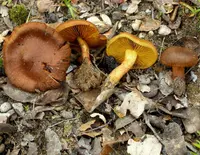
Establish the fungus near compatible tree hosts, such as pine or birch seedlings in containers or beds, so the mycorrhizal partnership can form and sustain regular fruiting.

Moisture buffering layer

Apply a loose top layer of leaf litter or fine bark over the colonized zone to reduce evaporation, keep the mycelium insulated, and stabilize surface moisture after irrigation or rainfall.

Low-disturbance management

Avoid raking, digging, or compacting the soil in the colonized area, and harvest mushrooms by cutting at the base rather than pulling, to protect the fine mycelial network.

Seasonal monitoring

During main fruiting seasons, check moisture levels in the upper 5–10 cm of substrate every few days and adjust irrigation in small, even doses, which is particularly important when caring for saffron webcap in containers or controlled beds.

Common Pests and Diseases

Mycophagous springtails

These insects feed on fungal tissue and can graze caps and gills, especially in damp, organic-rich substrates. Symptoms include small pits, surface scarring, and clusters of tiny jumping insects around the fruiting bodies.

Solution

Reduce excessive moisture and standing water, improve drainage, and keep fruiting areas well ventilated. Remove and discard heavily damaged mushrooms, then use fine mesh or physical barriers over outdoor beds to limit access, avoiding chemical controls around edible fungi.

Fungus gnat larvae

This pest lives in moist, organic substrates and can feed on developing mycelium and young primordia, reducing or deforming fruiting. Symptoms include slow or irregular mushroom development and small black adult gnats flying above the substrate.

Solution

Allow the upper layer of the substrate to dry slightly between misting, use yellow sticky traps to catch adults, and cover colonized substrates with breathable fabric to block egg-laying. Discard any badly infested blocks or beds rather than trying to treat them chemically near mushrooms.

Slugs and snails

These mollusks are strongly attracted to moist fungal tissue and can remove large bites from caps and stems overnight. Symptoms include ragged holes, slime trails on or near mushrooms, and missing fruiting bodies in outdoor patches.

Solution

Hand-pick slugs and snails in the evening, use copper tape or rough barriers around beds, and keep dense ground cover slightly trimmed to reduce hiding places. If bait is used, select pet-safe formulations and position it away from the main fruiting area to avoid contact with mushrooms.

Parasitic Hypomyces

This disease is caused by parasitic fungi that overgrow fruiting bodies, forming discolored crusts or powdery coatings that distort or arrest development. Symptoms include patches of white, yellow, or orange over the cap and gills and a loss of normal spore production.

Solution

Promptly remove and discard any affected mushrooms and nearby debris to limit spore spread. Avoid overwatering and overcrowding in cultivated or research beds, and rotate or rest contaminated sites to reduce inoculum before attempting to grow Cortinarius croceus again.

Bacterial blotch

This disease develops under persistently wet conditions when bacteria colonize the mushroom surface, leading to slimy, discolored spots and softening tissue. Symptoms include yellow-brown watery lesions, surface slime, and rapid collapse of affected fruiting bodies.

Solution

Limit direct overhead watering and prolonged surface wetness by using fine misting and good air movement. Remove and dispose of affected mushrooms immediately, clean tools and containers, and keep substrate and surrounding litter free of decaying organic buildup to reduce bacterial populations.

Interesting Facts

Distinct saffron veil

Young fruiting bodies show a fine, cobweb-like partial veil with a strong saffron to orange hue, which later leaves colored remnants on the stem and cap margin. This veil is a key character used by mycologists to separate it from similar brownish webcaps.

Mycorrhizal with conifers

This species forms ectomycorrhizae, a mutual partnership with roots of conifer trees such as pine and spruce, where fungal hyphae exchange mineral nutrients and water for plant sugars. It typically appears in nutrient-poor, acidic forest soils where this association improves tree nutrient uptake.

Rusty-brown spore print

The gills start yellowish to saffron but turn brown as the spores mature, eventually producing a rusty-brown spore print. This color change in the gills is a practical field feature for distinguishing it from yellow-gilled look-alike species in the same habitat.

FAQs about saffron webcap

This species is considered poisonous and should never be eaten. Some related Cortinarius species cause severe, delayed kidney damage. Avoid handling with bare hands when damaged, and always prevent children or pets from touching or ingesting wild mushrooms.

Grow Healthy Plants with Botan Care

Keep your plants happy and healthy with plant identification, disease detection, and easy care guidance.

Botan plant care app — identify plants on mobile

Explore More Plants