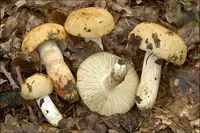
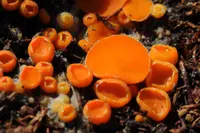
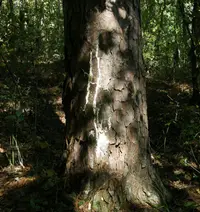
wrinkled webcap Care (Cortinarius elatior)

wrinkled webcap

About wrinkled webcap

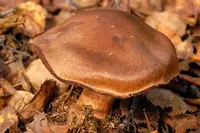
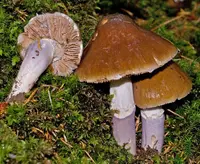
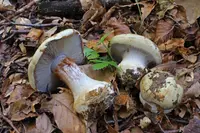
Wrinkled webcap, Cortinarius elatior, is a woodland mushroom rather than a leafy houseplant. It forms fleshy caps with a folded, wrinkled surface and a slender stem, typically appearing in damp, shaded forests. The fungus grows in soil rich in decaying organic matter and often associates with tree roots, forming mycorrhiza, a nutrient-sharing partnership between fungus and plant. It is not commonly cultivated, and attempts to care for wrinkled webcap at home are usually unsuccessful because it depends on specific tree partners and stable forest conditions. In nature it prefers cool, moist, shaded sites with undisturbed soil.

Main Plant Requirements

Care Difficulty

Hard Care

Light Preference

Partial Shade

Water Requirements

Regular Water

Temperature Preference

Cool Climate

Hardiness Zone

Unknown

Soil Texture

Loamy, Silty, Organic-rich

Soil pH

Acidic (5.5–6.5)

Soil Drainage

Moist but well-drained

Fertilization

Minimal (feed rarely)

Get Personalized Care Plan

Scan your plant to receive care tips personalized for your specific plant

Available on iOS and Android

How to Care for the wrinkled webcap

This woodland fungus prefers low to moderate light that mimics a shaded forest floor for stable fruiting.

  • Provide dappled or filtered light under shrubs or trees, with no more than 2–4 hours of gentle morning sun and full shade in the afternoon.
  • Avoid direct midday or strong afternoon sun, which can dry the substrate quickly and scorch emerging wrinkled webcap fruiting bodies.
  • Select a site with consistent shade patterns across seasons; in winter, when trees are leafless, protect the area from harsh sun using leaf litter, logs, or shade cloth.

Cortinarius elatior needs steadily moist, well-drained soil that never stays waterlogged.

  • Maintain soil that feels moist 3–6 cm below the surface, allowing only the top 1–2 cm to dry lightly between natural rains or supplemental watering.
  • Improve drainage with leaf litter or loose organic matter so water soaks in and drains freely, preventing standing water and root-zone suffocation.
  • Watch for signs of stress: pale, sparse, or absent fruiting after dry spells suggests underwatering, while sour smell, algae crust, or persistent puddling indicate overwatering.

This species fruits best in cool to mild conditions typical of shaded, temperate woodlands.

  • Aim for an active growth and fruiting range of 50–68°F (10–20°C), where soil stays cool and does not dry rapidly.
  • Tolerate down to about 32°F (0°C) in dormancy, but protect the site from repeated hard freezes below 25°F (-4°C) that can damage fine fungal threads.
  • Limit exposure to prolonged heat above 77–82°F (25–28°C) by maintaining deep mulch and shade, as hot, dry soil suppresses fruiting and can kill delicate mycelium.

Humidity is not a primary controllable factor for Cortinarius elatior in typical cultivation settings, so active humidity management is generally unnecessary.

Cortinarius elatior relies on naturally formed forest soil conditions rather than a standard horticultural mix.

  • Prefers a loose, friable, organic-rich soil layer over mineral subsoil, similar to mixed deciduous or conifer woodland litter.
  • Requires free-draining but consistently moist ground; avoid compacted, waterlogged, or heavily disturbed sites that restrict gas exchange around fungal hyphae.
  • Thrives in slightly acidic to neutral conditions, roughly pH 5.0–7.0, often under compatible host trees where leaf litter decomposes slowly.
  • To encourage establishment, mimic forest floor structure with layered leaf litter, well-rotted wood fragments, and minimal soil disturbance rather than conventional potting amendments.

This species is not suitable for container growing because it depends on complex mycorrhizal associations with tree roots in undisturbed soil.

Cortinarius elatior is a mycorrhizal woodland fungus that does not benefit from direct fertilization in gardens or containers.

Pruning is not relevant for Cortinarius elatior because it is a mushroom, not a woody or leafy plant.

Transplanting or repotting this mycorrhizal fungus is not practical, as it depends on living tree roots and specific soil fungi networks.

  • Leave established host trees and surrounding soil undisturbed to maintain the underground mycelium connections.
  • Avoid digging, tilling, or removing leaf litter where fruiting bodies appear, to reduce stress on the fungal network.
  • Do not attempt container culture; this species does not adapt to potting substrates or frequent disturbance.

Propagation of Cortinarius elatior is highly specialized and not suitable as a home project.

This woodland fungus is naturally cold hardy in its native range and needs no specific winter care in gardens.

Care Tips

Inoculate With Host

Introduce spawn only near compatible tree roots (such as birch or conifer hosts) in undisturbed soil, since this species depends on forming a mycorrhizal partnership with living trees to establish and fruit well.

Mimic Forest Litter

Apply a 3–5 cm layer of mixed, untreated hardwood leaf litter and a small amount of well-rotted wood chips over the colonized area to recreate the loose, humus-rich forest floor Cortinarius species prefer.

Protect Fungal Mat

Mark and fence off inoculated patches so people and pets do not compact or disturb the soil surface, as trampling breaks mycelial strands and sharply reduces the chance of mushrooms appearing when growing wrinkled webcap.

Manage Moisture Gradients

Shape the bed with a very slight slope or shallow depressions so parts of the patch stay moist longer than others, giving the fungus microzones to tolerate short dry spells without full desiccation.

Avoid Root Disturbance

Do not till, double-dig, or plant deep-rooted ornamentals in the inoculated zone; instead, add only shallow-rooted groundcovers so the tree–fungus association can develop without repeated mechanical damage.

Common Pests and Diseases

Mycophagous springtails

These insects feed on fungal mycelium and developing fruiting bodies, sometimes tunneling through caps and stems and causing malformed or aborted mushrooms. This pest is most common in humid, organic-rich substrates where Cortinarius elatior develops.

Solution

Limit heavy organic debris directly around fruiting bodies, avoid overwatering nearby vegetation, and keep leaf litter slightly drier at the surface while maintaining normal soil moisture deeper down. Where infestations are obvious, remove and discard heavily damaged mushrooms and, in cultivation settings, use fine-mesh barriers or physical covers over colonies to reduce access by springtails.

Fungus gnat larvae

These insects inhabit moist soil and leaf litter, feeding on fungal tissue and sometimes hollowing out stems and caps of mushrooms. Symptoms include weak, collapsing fruiting bodies and visible small larvae when cut open.

Solution

Reduce standing moisture and improve drainage in surrounding soil and litter, since constantly saturated conditions favor gnats. In managed or semi-cultivated situations, use yellow sticky traps to reduce adult populations and gently disturb the upper litter layer to break larval habitat while avoiding direct disturbance of the mycelium.

Parasitic Hypomyces infection

This disease is caused by parasitic fungi, such as Hypomyces species, that overgrow Cortinarius fruiting bodies with a whitish to colored mold-like layer. Symptoms include distorted caps, loss of normal gill structure, and a powdery or crusty coating that replaces the mushroom surface.

Solution

Promptly remove and discard any parasitized mushrooms, including nearby debris that shows the same coating, to reduce spore spread. In sites managed for observing or attempting to grow Cortinarius elatior, avoid piling fresh infected material in the same area and maintain good air movement by not allowing dense, compacted litter mounds around fruiting zones.

Slugs and snails

These pests chew irregular holes in caps and stems, often consuming large portions of young fruiting bodies overnight. Symptoms include slime trails on or near mushrooms and ragged bite marks on soft tissue.

Solution

Hand-pick slugs and snails in the evening or early morning and relocate them away from the site. To protect developing fruiting bodies in gardens or semi-managed woodland edges, use physical barriers such as copper tape around small log or bed sections, and limit heavy ground cover that offers daytime hiding spots right next to mushrooms.

Interesting Facts

Specialist forest partner

This species forms ectomycorrhizal associations with broadleaf trees, especially beech and oak in temperate European forests, exchanging mineral nutrients from the soil for sugars from the host tree.

Autumn fruiting window

It typically produces fruiting bodies in late summer to autumn, with most observations from August to October, reflecting adaptation to cooler temperatures and increased soil moisture in that season.

Rusty spore print

Its spores produce a distinctly rust-brown to ochre spore print, a key microscopic and macroscopic trait used by mycologists to separate it from similar lilac or brown Cortinarius species when documenting Cortinarius elatior care in field conditions.

FAQs about wrinkled webcap

This species is not considered edible and may be dangerously toxic. Several Cortinarius species contain potent kidney-damaging toxins that are difficult to distinguish visually. It should never be eaten and is best treated strictly as a fungus to observe, not consume.

Grow Healthy Plants with Botan Care

Keep your plants happy and healthy with plant identification, disease detection, and easy care guidance.

Botan plant care app — identify plants on mobile

Explore More Plants