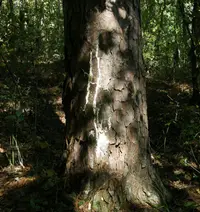
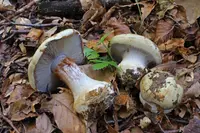
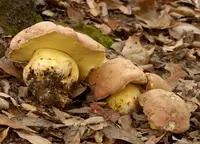
Slimy-Girdled Cort Care (Cortinarius glutinosoarmillatus)

About Slimy-Girdled Cort

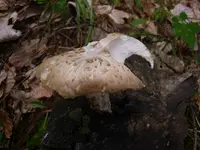
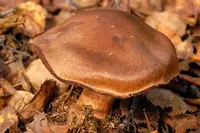
Slimy-girdled cort (Cortinarius glutinosoarmillatus) is a forest mushroom, not a houseplant, known for its very slimy cap and ring-like band on the stem. It belongs to a large and complex genus that contains many visually similar species, so correct identification is difficult and requires experience.

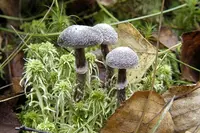
This species typically appears in conifer or mixed woodlands in Europe, emerging from the soil in mossy or damp leaf-littered areas. It forms mycorrhiza, a partnership between fungus and tree roots, so it cannot be cultivated like a normal ornamental plant.

Due to its specialized life cycle and uncertain safety, guides do not recommend attempts to grow or care for Slimy-Girdled Cort at home.

Main Plant Requirements

Care Difficulty

Hard Care

Light Preference

Partial Shade

Water Requirements

Regular Water

Temperature Preference

Cool Climate

Hardiness Zone

Unknown

Soil Texture

Loamy, Peaty, Organic-rich

Soil pH

Strongly acidic (4.5–5.5), Acidic (5.5–6.5)

Soil Drainage

Moist but well-drained

Fertilization

Minimal (feed rarely)

Get Personalized Care Plan

Scan your plant to receive care tips personalized for your specific plant

Available on iOS and Android

How to Care for the Slimy-Girdled Cort

This ectomycorrhizal mushroom prefers woodland light conditions rather than direct open sun.

  • Provide bright, dappled shade under trees, mimicking forest canopies; 1–3 hours of weak morning sun is acceptable, but avoid direct midday and afternoon sun.
  • Site Slimy-Girdled Cort where leaf litter and low vegetation lightly filter light, preventing caps from drying and substrate from overheating.
  • In summer, choose shadier, north- or east-facing woodland edges; in cooler seasons it tolerates slightly more open light as long as the ground stays moist.

This fungus depends on consistently moist, not waterlogged, soil in association with host tree roots.

  • Aim for evenly moist soil; surface should feel damp but not sticky, and the top 1–2 cm should not fully dry between natural rains or supplemental watering.
  • Increase watering only during extended dry periods, letting excess drain freely to avoid standing water that can cause anaerobic, sour-smelling soil and decline of Cortinarius glutinosoarmillatus.
  • Reduce supplemental water in cool, rainy seasons; signs of underwatering include cracked soil and brittle leaf litter, while persistent puddles or mossy slime indicate excess moisture.

This woodland species fruits best in cool to mild conditions typical of temperate forests.

  • Optimal fruiting usually occurs around 50–65°F (10–18°C), with mycelium growth possible over a broader cool range when soil moisture is stable.
  • The fungus tolerates short drops near 32°F (0°C) in soil but is sensitive to hard, prolonged frosts that freeze the upper soil layer solid.
  • Prolonged heat above 77–82°F (25–28°C) with dry soil suppresses fruiting; partial shade, leaf litter, and steady moisture buffer the mycelium from temperature spikes.

Humidity is not a controllable or relevant factor for this wild mycorrhizal mushroom in typical cultivation settings.

This ectomycorrhizal fungus relies on natural forest soil conditions rather than constructed mixes.

  • Cortinarius glutinosoarmillatus associates with tree roots in undisturbed, moist, humus-rich forest soil rather than potting substrates.
  • Ideal ground is a loose, well-structured top layer of leaf litter and decaying wood over mineral soil, providing both aeration and stable moisture.
  • Soil should drain freely yet never remain powder-dry; avoid compacted, waterlogged, or heavily tilled areas that disrupt fungal mycelium.
  • Avoid adding lime or strong fertilizers that shift pH or salt levels sharply, since these can damage the existing fungal network.

This species is not suitable for container growing, as it depends on complex tree-root and forest soil relationships that containers cannot replicate.

This ectomycorrhizal fungus depends on its tree host for nutrients and generally does not need direct fertilization when growing Slimy-Girdled Cort.

Pruning is not applicable for Cortinarius glutinosoarmillatus, as it is a wild, fleshy mushroom rather than a managed garden plant.

This fungus is rarely managed in containers; any handling should focus on preserving its relationship with the host tree and soil mycelium network.

  • Avoid disturbing soil where fruiting bodies appear; extensive mycelium threads below the surface are the true organism.
  • Do not attempt frequent transplanting; the fungus depends on stable ectomycorrhizal association with specific tree roots.
  • If soil or site must be disturbed, leave undisturbed root zones and leaf litter around host trees to maintain habitat.
  • Treat the area gently, avoiding compaction and heavy digging, to reduce stress on the hidden mycelium.

Intentional propagation of Cortinarius glutinosoarmillatus is rarely attempted and is technically complex, so it is not recommended for typical home cultivation.

No special winter care is normally required, as this woodland fungus persists as underground mycelium and is adapted to natural seasonal cycles in its native range.

Care Tips

Use host trees

Establish this mycorrhizal fungus only near suitable host trees, such as birch or spruce, and avoid soil disturbance around their root zones so the underground fungal network can develop undisturbed.

Minimize soil disturbance

Once a site is chosen, avoid rototilling, deep digging, or frequent transplanting of nearby plants so the fungal mycelium and fine tree roots stay intact and continue supporting fruiting bodies.

Maintain leaf litter

Leave a thin, patchy layer of fallen leaves and small twigs in the fruiting area to help conserve soil moisture, buffer temperature swings, and provide a more natural forest floor structure for the fungus.

Protect fruiting patches

When mushrooms appear, flag or mark the area and restrict foot traffic, raking, and pet activity there so the delicate fruiting bodies and underlying mycelium are not compacted or broken.

Monitor site moisture

Use a simple soil probe or trowel to check moisture 5–10 cm deep near host roots and adjust irrigation of the trees rather than the mushrooms themselves, since caring for Slimy-Girdled Cort is mainly about keeping a stable, evenly moist woodland-type environment.

Common Pests and Diseases

Mycophagous springtails

These insects feed on fungal tissues, especially young caps and gills, leaving pitted, scarred, or partially eaten fruiting bodies. This pest is common in moist substrates and mushroom cultivation setups.

Solution

Reduce excessive surface moisture, improve ventilation, and remove heavily damaged fruiting bodies to lower the local population. If needed, use sticky traps around the growing area and adjust watering or misting so the substrate stays moist but not waterlogged while growing Slimy-Girdled Cort.

Fungus gnat larvae

This pest lives in moist substrate and can chew on mushroom primordia and bases, causing deformed, stunted, or collapsing fruiting bodies. Adults are the small black gnats flying around the growing area or substrate surface.

Solution

Allow the top layer of substrate to dry slightly between waterings, use fine mesh or covers to limit adult access, and place yellow sticky traps to catch flying gnats. Removing highly infested substrate zones and improving air circulation also helps break the life cycle.

Mucor contamination

This disease appears as fast-growing, fluffy gray or white mold that can overrun developing fruiting bodies and substrate. Symptoms include smothered pins and reduced or aborted mushroom formation.

Solution

Promptly remove and discard contaminated areas and any heavily overgrown material. Improve hygiene, reduce excess humidity, increase fresh air exchange, and avoid overcrowding to limit spread and give Cortinarius glutinosoarmillatus a competitive advantage.

Trichoderma green mold

This disease starts as white mycelium that turns bright green and powdery, often covering substrate patches and suppressing mushroom development. Symptoms include localized green patches, reduced pinning, and malformed or absent fruiting bodies in affected zones.

Solution

Physically cut out and discard contaminated sections with tools cleaned in alcohol, then reduce humidity slightly and boost air flow. Clean surrounding equipment and surfaces, and avoid reusing contaminated substrate to prevent reinfection in future Cortinarius glutinosoarmillatus care setups.

Interesting Facts

Distinctive slimy girdle

The species is characterized by a thick, slimy, bracelet-like ring zone on the upper part of the stem, formed by remnants of the cortina, which is unusually conspicuous compared with most other Cortinarius species.

Colour-changing flesh

Its flesh can show an orange to reddish discoloration when cut or bruised, a diagnostic feature mycologists use alongside spore and cap traits to separate it from visually similar webcaps.

Conifer forest specialist

This fungus is typically associated with coniferous trees such as spruce in cool, moist forests, where it forms ectomycorrhizal partnerships that help trees absorb water and nutrients in exchange for sugars.

FAQs about Slimy-Girdled Cort

This is an inedible wild mushroom with a slimy cap and girdled ring zone. It is not recommended for consumption, and misidentification with dangerously toxic Cortinarius species is easy. Treat all similar species as strictly not edible.

Grow Healthy Plants with Botan Care

Keep your plants happy and healthy with plant identification, disease detection, and easy care guidance.

Botan plant care app — identify plants on mobile

Explore More Plants