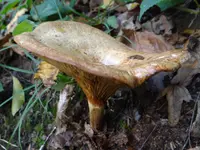
frosty webcap Care (Cortinarius hemitrichus)

frosty webcap

About frosty webcap

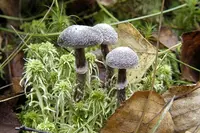
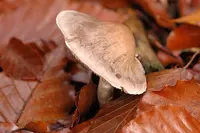
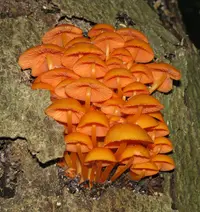
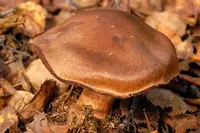
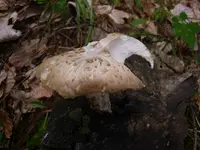
Cortinarius hemitrichus, commonly called frosty webcap, is a small woodland mushroom, not a houseplant. It forms slender, pale brown caps dusted with a whitish, frosted coating, especially when young. The gills mature to rusty brown as spores develop.

This species typically appears on the ground in coniferous and mixed forests across cooler regions of the Northern Hemisphere, often in leaf litter or moss. It grows in mycorrhizal partnership with trees, exchanging nutrients through the roots.

Because it depends on this complex root relationship, it is not practical to cultivate at home or in pots. Information on how to care for frosty webcap is therefore limited to protecting its natural woodland habitat.


Main Plant Requirements

Care Difficulty

Hard Care

Light Preference

Shade

Water Requirements

Keep Soil Moist

Temperature Preference

Cool Climate

Hardiness Zone

Unknown

Soil Texture

Loamy, Peaty, Organic-rich

Soil pH

Strongly acidic (4.5–5.5), Acidic (5.5–6.5)

Soil Drainage

Moist but well-drained

Fertilization

Minimal (feed rarely)

Get Personalized Care Plan

Scan your plant to receive care tips personalized for your specific plant

Available on iOS and Android

How to Care for the frosty webcap

This forest-dwelling fungus prefers cool, shaded conditions rather than direct sun exposure.

  • Site Cortinarius hemitrichus in dappled or filtered light under deciduous or coniferous trees, avoiding direct midday and afternoon sun that can dry the soil surface too quickly.
  • Allow only brief morning sun if present, aiming for 1–3 hours at most, with the rest of the day in partial to full shade typical of woodland edges or understory.
  • In summer, leaf canopy usually provides sufficient shade; in early spring or late fall, protect developing mycelium from sudden full-sun exposure with leaf litter or natural debris.

This species depends on consistently moist, not waterlogged, forest soil to support its mycelium.

  • In natural settings, rely on rainfall but ensure the soil stays evenly moist; the top 2–5 cm should feel damp rather than soggy or dusty-dry.
  • Good drainage is essential; waterlogged sites with standing water promote rot, while cracked, shrinking soil indicates underwatering and stress to Cortinarius hemitrichus.
  • During dry spells, supplemental moisture may be needed every few days, applied gently so water soaks in without pooling, and reduced once cool, wet weather returns.

This fungus is adapted to cool to mild temperate conditions and fruits best in moderate temperatures.

  • Optimal activity usually occurs around 50–65°F (10–18°C), common in fall forests where soil stays cool and evenly moist under leaf litter.
  • It tolerates cold down to around 32°F (0°C) in the soil, but repeated freeze–thaw at the surface can damage delicate fruiting bodies.
  • Sustained heat above 77–82°F (25–28°C) with dry conditions reduces fruiting; maintaining shaded, mulched ground helps buffer temperature swings through the season.

Humidity is not a major controllable factor for this outdoor woodland fungus and is dictated mostly by site climate and soil moisture.

This ectomycorrhizal woodland mushroom requires undisturbed, naturally developed forest soil rather than a prepared horticultural substrate.

  • Cortinarius hemitrichus associates with tree roots in humus-rich, well-structured forest soil containing deep leaf litter and decaying wood.
  • The substrate should be loose, friable, and consistently moist but never waterlogged, with water draining freely through the organic layer into underlying mineral soil.
  • A slightly acidic reaction around pH 5.0–6.0 is typical of its native habitats dominated by conifers and mixed woodland.
  • Avoid compacted, tilled, fertilized, or containerized mixes; disrupting the natural soil profile usually prevents successful fruiting and long-term establishment.

This woodland fungus is not suitable for container growing, as it depends on complex root and soil relationships that cannot be replicated in pots.

Cortinarius hemitrichus is a wild mycorrhizal fungus that does not benefit from direct fertilization in garden or container culture.

Pruning is not applicable for Cortinarius hemitrichus, as it is a wild mushroom forming seasonal fruiting bodies rather than a persistent plant structure.

Transplanting this mycorrhizal fungus is rarely successful, because Cortinarius hemitrichus depends on a stable partnership with host tree roots.

  • Only consider transplanting undisturbed native soil blocks that already contain the fungus, rather than moving visible mushrooms alone.
  • Carry out any soil relocation in cool, moist weather to reduce stress on the fine fungal threads, called mycelium.
  • Minimize disturbance: move soil gently, keep it shaded, and maintain moisture before, during, and after relocation.
  • Avoid frequent moves; the fungus establishes slowly and may not re-colonize if the tree or soil community changes too much.

Practical home propagation of Cortinarius hemitrichus is difficult and rarely done outside research or specialized cultivation.

This woodland fungus is naturally cold hardy and needs no specific winter care in outdoor settings.

Care Tips

Substrate rotation

Rotate your outdoor woodchip or leaf-litter patches every 2–3 years by adding fresh, partially decomposed hardwood material at the edges while leaving the central area undisturbed, which supports long-term mycelium health without shocking existing colonies.

Host tree pairing

Establish this ectomycorrhizal fungus near compatible young trees such as birch or spruce and avoid disturbing their fine roots, since the fungus depends on a stable root partner to fruit reliably.

Low-disturbance access

When checking for fruiting bodies, lay down simple stepping stones or boards so foot traffic stays on defined paths, protecting the mycelium network in the soil from repeated compaction.

Leaf-litter management

Allow a thin, continuous layer of natural leaf litter to accumulate under host trees, then gently redistribute it by hand each autumn instead of raking everything away, maintaining the moist, shaded interface where the fungus develops.

Monitoring site chemistry

If fruiting declines, test soil pH and avoid liming or high-phosphorus fertilizers within the fungal zone, since relatively undisturbed, mildly acidic soil chemistry is important when caring for frosty webcap in a long-term site.

Common Pests and Diseases

mycophagous springtails

These insects feed on fungal tissue and can graze the surface of caps and stems, especially in moist, organic-rich habitats. Symptoms include pitted, roughened surfaces and small clusters of tiny, jumping white or gray insects around the fruiting bodies.

Solution

Limit heavy disturbance of the surrounding leaf litter and avoid constant waterlogging that favors high springtail populations. If fruiting bodies are being studied or displayed, gently brush or blow the insects off and temporarily lower surface moisture by improving drainage and airflow around the colony.

fungus gnat larvae

This pest lives in the soil and organic debris and can tunnel into young fungal fruiting bodies, causing collapse or malformed caps. Symptoms include soft, water-soaked stems and small black adult gnats flying low over the substrate.

Solution

Reduce excess surface moisture and standing water to make conditions less favorable for larvae. For collections maintained in containers or controlled beds, allow the top layer of substrate to dry slightly between waterings and use fine mesh or covers to limit adult gnats from laying eggs near developing mushrooms.

slugs and snails

These mollusks feed directly on the caps and stems, often overnight. Symptoms include irregular holes, missing sections of the fruiting body, and slime trails on nearby leaf litter or wood.

Solution

Hand-pick slugs and snails during damp evenings and remove hiding places such as dense debris immediately adjacent to key fruiting spots. In managed beds, copper barriers or rough, dry mulches can reduce grazing pressure while still maintaining the cool, moist microclimate needed for growing frosty webcap.

mold colonization

This disease occurs when fast-growing molds overtake aging or damaged fruiting bodies in persistently damp, stagnant air. Symptoms include fuzzy white, gray, or green growth on caps and stems, often followed by rapid decay.

Solution

Improve air movement and avoid heavy overhead watering that keeps fruiting bodies constantly wet. Remove and discard heavily colonized mushrooms to reduce local spore load, and keep surrounding organic material loosely arranged rather than packed, so it dries slightly between rains or waterings.

Interesting Facts

Distinct frosty coating

Young caps are covered with dense white fibrils that give a frosted or hoary look, especially in cool, humid weather, which is the origin of the common name frosty webcap.

Bog and heath specialist

This species is strongly associated with wet, acidic habitats such as Sphagnum bogs and heaths, where it forms mycorrhizal partnerships with birch and other trees in nutrient-poor soils.

Short-lived cap colors

The cap surface often starts pale gray-brown with a frosty sheen and quickly becomes darker and more uniformly brown as the fibrils wear off and the spores mature.

Botan icon

Did you know?

The species is considered part of a complex of closely related small webcaps, and accurate identification usually requires examining microscopic features such as spore shape and the structure of the cap surface, in addition to habitat and macroscopic traits.

FAQs about frosty webcap

This species belongs to a mushroom genus that includes many seriously toxic members. It must be treated as poisonous to humans and animals. Do not eat it, and prevent children and pets from handling or ingesting fruiting bodies.

Grow Healthy Plants with Botan Care

Keep your plants happy and healthy with plant identification, disease detection, and easy care guidance.

Botan plant care app — identify plants on mobile

Explore More Plants