


Host tree selection
Establish this ectomycorrhizal fungus near young but well-rooted alder trees in low-compaction, undisturbed soil, as stable alder hosts greatly improve long-term colony establishment.

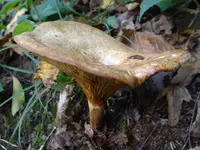
Alder rollrim, Paxillus rubicundulus, is a wild gilled fungus rather than a typical garden plant. It forms medium-sized brown to reddish caps with rolled-in margins and yellowish to brown gills that run slightly down the stem.
This mushroom usually grows in damp soil near alder trees, often along riversides, lakeshores, and wet woodland edges in temperate regions. It forms mycorrhizal associations, meaning it lives in close partnership with alder roots.
Because it depends on this tree partner and specific soil conditions, it is not practical to grow or care for alder rollrim in a home garden. It generally prefers moist, organic, slightly acidic soils and partial shade in its natural habitat.

Care Difficulty
Hard Care

Light Preference
Partial Shade

Water Requirements
Keep Soil Moist

Temperature Preference
Cool Climate

Hardiness Zone
Unknown

Soil Texture
Loamy, Silty, Organic-rich

Soil pH
Acidic (5.5–6.5)

Soil Drainage
Moist but well-drained

Fertilization
Minimal (feed rarely)
Scan your plant to receive care tips personalized for your specific plant
Available on iOS and Android
This ectomycorrhizal fungus prefers moderate light typical of open woodland edges near alder.
This fungus relies on consistently moist but not waterlogged soil in association with alder roots.
This species favors cool to mild conditions typical of temperate woodlands.
This fungus forms outdoor mycorrhizal associations and does not require managed air humidity in cultivation.
Paxillus rubicundulus relies on moist, organic-rich ground around alder roots rather than conventional potting soil.
This species is not suitable for standard container growing because it depends on mycorrhizal association with live alder roots in the ground.
This ectomycorrhizal fungus lives with alder roots and usually needs no direct fertilization when soil is moderately fertile.
Paxillus rubicundulus does not need pruning in the usual horticultural sense, but fruiting bodies can be managed for hygiene and monitoring.
This ectomycorrhizal fungus is not suited to standard container culture, so care focuses on transplanting its alder hosts and soil rather than repotting.
Propagation of this fungus is specialized and usually left to natural spore spread and mycelial growth in association with alder roots.
Established mycelium in soil is generally cold hardy in temperate climates, so Paxillus rubicundulus needs little intentional winter care.

Plant Health Check
Not sure what's wrong with your plant? Check your plant's health inside the app.
This mushroom forms ectomycorrhizal associations almost exclusively with alder trees (Alnus species), exchanging mineral nutrients for sugars from the roots and showing a strong habitat preference for wet alder stands.
It commonly occurs along rivers, floodplains, and waterlogged alder woods, reflecting a high tolerance for periodically saturated, low-oxygen soils that many other ectomycorrhizal fungi avoid.
The cap, gills, and overall form closely resemble the better-known Paxillus involutus, and even experts rely on subtle microscopic and ecological traits to separate these species reliably.
This mushroom is considered poisonous and should not be eaten. It can cause serious gastrointestinal symptoms and may lead to delayed immune-related reactions. For safety, do not taste, cook, or experiment with consuming it.
Keep your plants happy and healthy with plant identification, disease detection, and easy care guidance.

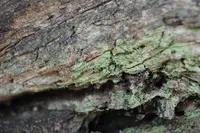
needle lichen
Chaenotheca chlorella
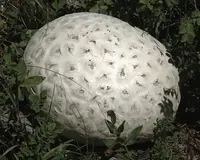
Western Giant Puffball
Calvatia booniana
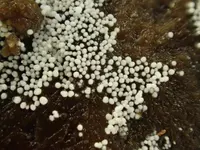
couscous crust
Bulbillomyces farinosus
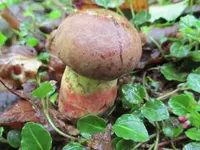
Butyriboletus brunneus
Butyriboletus brunneus
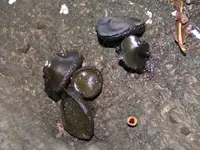
Poor Man's Licorice
Bulgaria inquinans
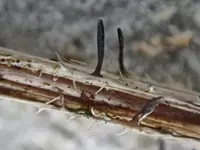
Acrospermum compressum
Acrospermum compressum
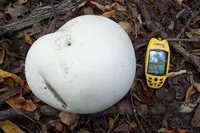
giant puffball
Calvatia gigantea
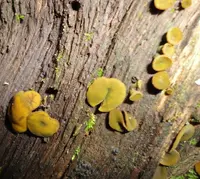
olive-brown cup
Chlorencoelia versiformis