


Site hygiene
Remove spent fruiting bodies and any heavily decomposed wood around them at the end of the season to reduce pathogen buildup and encourage healthier future flushes when caring for silky webcap.

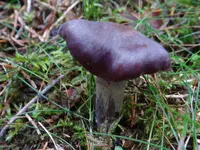
The silky webcap, Cortinarius evernius, is a woodland mushroom rather than a leafy houseplant. It forms small to medium brownish caps with a silky surface and a slender stem. A fine cobweb-like veil, called a cortina, often leaves faint traces on the stem as the cap opens.
This species typically occurs in moist coniferous forests in temperate and boreal regions, growing on the ground among moss, needles, and leaf litter. It is considered difficult to identify correctly and not suitable for casual cultivation, so most information focuses on field recognition rather than how to care for silky webcap.
In nature, it prefers cool, moist, shaded sites and nutrient-poor, often acidic soils, forming mycorrhizal partnerships with trees.

Care Difficulty
Hard Care

Light Preference
Partial Shade

Water Requirements
Keep Soil Moist

Temperature Preference
Cool Climate

Hardiness Zone
Unknown

Soil Texture
Loamy, Peaty, Organic-rich

Soil pH
Strongly acidic (4.5–5.5), Acidic (5.5–6.5)

Soil Drainage
Moist but well-drained

Fertilization
Minimal (feed rarely)
Scan your plant to receive care tips personalized for your specific plant
Available on iOS and Android
This woodland mushroom prefers low to moderate light that mimics a shaded forest floor.
This species depends on consistently moist, not waterlogged, soil around its tree partners.
This fungus thrives in cool to mild conditions typical of temperate forests.
Humidity plays almost no practical role for Cortinarius evernius, which naturally fruits in cool, moist forest floors rather than controlled indoor conditions.
This mycorrhizal fungus relies on living tree roots, so soil preparation focuses on supporting a suitable forest-like environment rather than a standalone potting substrate.
This species is not suitable for container growing because it depends on complex, long-term associations with tree roots in natural soil ecosystems.
This forest-dwelling fungus forms mycorrhizal partnerships with trees and usually needs no direct fertilization when left in natural soil.
Cortinarius evernius is not a plant and does not require pruning, since fruiting bodies are temporary and decompose naturally.
This mycorrhizal mushroom is not suited to conventional container culture, so repotting or routine transplanting is generally not recommended.
This species is difficult to propagate intentionally because it depends on complex mycorrhizal associations with host tree roots.
In natural settings this fungus is fully cold hardy and requires no active winter care from the grower.

Plant Health Check
Not sure what's wrong with your plant? Check your plant's health inside the app.
The young fruitbodies have a fine, silky cortina, a cobweb-like veil, with lilac to violet shades that gradually disappear as the cap expands and the spores darken.
This species typically grows in wet coniferous forests, especially in sphagnum bogs and peat-rich soils, where it forms mycorrhizal associations with spruce and pine.
Mature gills turn from pale lilac to brown as the spores develop, and the mushroom produces a distinctly rusty-brown spore print that helps separate it from similar purple cortinarii.
This species is considered inedible and potentially poisonous. Identification within the Cortinarius genus is difficult, and several related species contain dangerous toxins that can damage kidneys. It should never be collected or eaten as food.
Keep your plants happy and healthy with plant identification, disease detection, and easy care guidance.


Slimy-Girdled Cort
Cortinarius glutinosoarmillatus
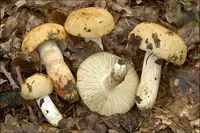
Almond-scented Russula
Russula grata
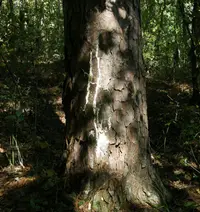
Butyrea luteoalba
Butyrea luteoalba
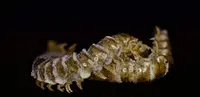
Arthrophaga myriapodina
Arthrophaga myriapodina
Byssonectria terrestris
Byssonectria terrestris
wrinkled webcap
Cortinarius elatior
frosty webcap
Cortinarius hemitrichus
Cortinarius anserinus
Cortinarius anserinus