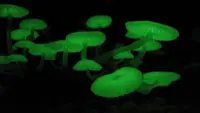
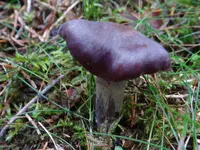
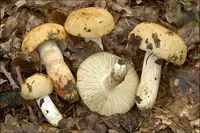
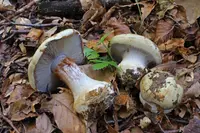
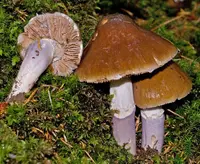
sepia webcap Care (Cortinarius decipiens)

sepia webcap

About sepia webcap

The sepia webcap, Cortinarius decipiens, is a small to medium woodland mushroom, not a leafy houseplant. It forms rounded to slightly conical caps in brown to sepia tones with a fine web-like veil on young specimens. Stems are usually slender and pale, creating a delicate overall look on the forest floor.

This species occurs mainly in temperate forests, often in association with broadleaf or conifer trees, where it forms mycorrhizal relationships that support tree root health. It is not suited to regular home cultivation, since it depends on complex soil fungi and living tree partners. For those studying how to care for sepia webcap, it is best viewed as a wild fungus rather than a practical garden or indoor species.

Main Plant Requirements

Care Difficulty

Hard Care

Light Preference

Partial Shade

Water Requirements

Keep Soil Moist

Temperature Preference

Cool Climate

Hardiness Zone

Unknown

Soil Texture

Loamy, Silty, Organic-rich

Soil pH

Acidic (5.5–6.5)

Soil Drainage

Moist but well-drained

Fertilization

Minimal (feed rarely)

Get Personalized Care Plan

Scan your plant to receive care tips personalized for your specific plant

Available on iOS and Android

How to Care for the sepia webcap

This forest-dwelling fungus prefers cool, shaded conditions rather than direct sun exposure.

  • Provide dappled or filtered light under deciduous trees, with no more than 1–2 hours of weak, early-morning sun reaching the forest floor.
  • Choose sites with partial to full shade; sepia webcap fruiting bodies decline quickly under strong midday or afternoon sun and exposed, open ground.
  • In temperate regions, canopy cover from spring to fall helps maintain low light levels, while winter leaf drop is acceptable because the fungus is largely dormant.

This mycorrhizal fungus depends on stable, moist, but not waterlogged forest soil rather than direct surface watering.

  • Aim for soil that stays evenly moist 5–10 cm below the surface; the top 1–2 cm may dry slightly between rains without harming Cortinarius decipiens.
  • Ensure excellent drainage with loose, leaf-litter-rich soil; standing water, sour smell, or slimy caps indicate excess moisture and poor aeration.
  • During hot, dry spells, supplemental irrigation to mimic steady woodland moisture is useful, but allow brief breaks so the soil does not stay saturated for many days.

This species favors cool to mild woodland temperatures and is sensitive to prolonged heat and hard frost at the fruiting stage.

  • Optimal fruiting occurs around 50–65°F (10–18°C), typical of cool autumn conditions in temperate forests with moderate day–night fluctuation.
  • The underground mycelium tolerates brief drops near 25–30°F (-4– -1°C), but visible mushrooms are easily damaged by hard frost at 30–32°F (-1–0°C).
  • Sustained heat above 77–82°F (25–28°C) dries the soil surface, shortens cap life, and may delay or prevent seasonal fruiting until temperatures fall.

Humidity is not a significant controllable factor for this soil-dwelling fungus in typical outdoor conditions.

This ectomycorrhizal fungus relies on undisturbed, natural forest soil rather than prepared mixes.

  • Prefers loose, humus-rich forest soil with abundant leaf litter and decaying wood fragments.
  • Requires consistently moist but not waterlogged conditions; avoid compacted, trampled, or heavily mulched areas that stay soggy.
  • Thrives in slightly acidic soil, roughly pH 5.0–6.5, often under conifers or mixed woodland canopies.
  • Do not amend or till the soil for Cortinarius decipiens; maintain a natural litter layer and avoid added fertilizers or lime.

This species is not suitable for container growing, as it depends on complex mycorrhizal relationships with tree roots in natural soil.

Cortinarius decipiens is a wild ectomycorrhizal fungus that does not need direct fertilization when left in its natural woodland habitat.

Pruning is not applicable to Cortinarius decipiens, as it is a wild mushroom forming seasonal fruiting bodies rather than a woody or leafy plant.

Transplanting this ectomycorrhizal fungus is generally unreliable, as Cortinarius decipiens depends on complex associations with host tree roots and native soil microbes.

  • Avoid attempting container culture; this species is not suited to pot growth or standard repotting methods.
  • If relocation is necessary for research, move intact soil plugs containing associated tree roots rather than the fruiting body alone.
  • Carry out any soil plug transfer during the tree’s dormant season, minimizing disturbance and desiccation.
  • Keep soil structure, moisture level, and orientation as similar as possible between original and new sites to reduce stress on the mycorrhizal network.

Propagation of Cortinarius decipiens is not a routine horticultural practice because it spreads naturally via spores and mycelium linked to suitable host trees.

This woodland fungus is naturally cold hardy in its native range and does not require active winter care in situ.

Care Tips

Spore-friendly layout

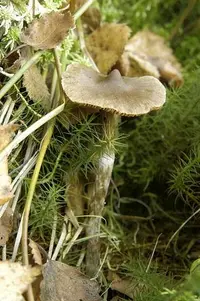
When arranging your woodland bed, leave small gaps of undisturbed leaf litter and avoid raking in a radius of 30–50 cm around colonized spots so spores can settle and the mycelium network can expand naturally.

Minimal soil disturbance

Plan paths and stepping stones before growing sepia webcap and always walk on those fixed routes, since compaction and digging near host tree roots can break mycelium strands and reduce future fruiting.

Host tree selection

Favor mixed plantings with compatible ectomycorrhizal hosts such as birch, oak, or pine, and avoid heavy use of lawn grasses directly over the root zone, which can outcompete tree seedlings and indirectly limit mushroom development.

Chemical-free zone

Establish a no-spray buffer of at least 2–3 m around the fruiting area and avoid fungicides, broad-spectrum insecticides, and high-salt fertilizers that can damage the fungal partner and disrupt caring for sepia webcap.

Microclimate mulching

Use a thin, loose layer of hardwood leaf litter and semi-rotted wood chips rather than thick bark mulch to stabilize moisture, protect mycelium near the surface, and support a more natural forest-floor microclimate.

Common Pests and Diseases

parasitic bolete

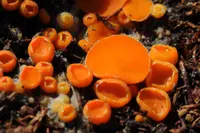
This disease involves fruiting bodies of parasitic bolete species such as Pseudoboletus parasiticus developing on or from Cortinarius decipiens, weakening or deforming its caps. Symptoms include distorted mushrooms, abnormal tissue, and secondary decay on the affected fruiting body.

Solution

Remove and discard any parasitized mushrooms promptly to limit spread, and avoid disturbing or transporting contaminated soil or litter. In natural or woodland settings, management is mainly observational; do not attempt chemical control and instead reduce site disturbance so that the native fungal community can balance over time.

mycophagous springtails

These insects feed on fungal tissues, including developing Cortinarius decipiens fruiting bodies, sometimes causing pitting, surface scarring, or collapse of very young mushrooms. This pest is most active in very moist, organic-rich substrates with thick leaf litter.

Solution

Keep moisture at a stable but not waterlogged level and avoid heavy overwatering or constant saturation of leaf litter if the fungus is being observed in a managed bed. If damage is severe in a display or research setting, gently remove heavily infested litter, replace with fresh, slightly drier material, and use fine mesh barriers around key observation spots to limit insect access.

fungal gnat larvae

These insects lay eggs in moist organic substrates, and the larvae tunnel through developing fruiting bodies, causing internal chambers, soft spots, and rapid decay. Symptoms include mushrooms that collapse quickly, show small entry holes, or host visible larvae when cut open.

Solution

Reduce excess moisture and standing water near observation sites and improve airflow around the fruiting area. For controlled settings, use fine insect netting over key patches and place yellow sticky cards nearby to lower adult gnat numbers without disturbing the mycelium.

Interesting Facts

Variable cap coloration

The fruiting bodies can show a surprising range of brownish tones, from warm sepia to darker chestnut, which historically contributed to confusion with other Cortinarius species in field identification.

Mycorrhizal forest partner

This fungus forms ectomycorrhizal associations with trees, exchanging mineral nutrients from the soil for carbohydrates from the host, and is typically recorded in coniferous and mixed woodlands in Europe.

Taxonomic identification challenges

Microscopic features such as spore shape and size are important for confirming this species, because its macroscopic appearance overlaps with several related brown webcaps and has led to past misapplications of its name.

FAQs about sepia webcap

This species is considered inedible and potentially poisonous. It belongs to a genus that includes dangerously toxic mushrooms causing severe kidney damage. It should never be eaten or tasted, and foraging mistakes can be life‑threatening.

Grow Healthy Plants with Botan Care

Keep your plants happy and healthy with plant identification, disease detection, and easy care guidance.

Botan plant care app — identify plants on mobile

Explore More Plants