Spore print monitoring
Collect a small spore print from mature caps on white paper each season to confirm the rust-brown spore color and help avoid confusing this species with toxic look-alikes in mixed forest settings.

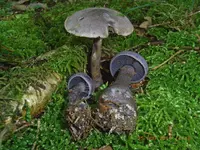
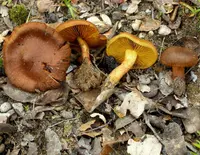
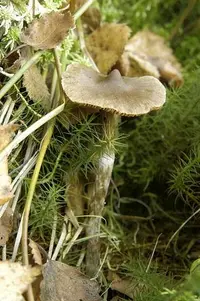
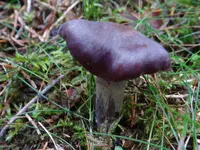
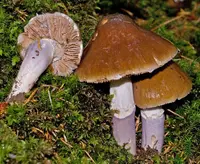
Cortinarius harcynicus is a woodland mushroom, not a traditional houseplant, belonging to a large and complex genus of gilled fungi. It typically forms medium-sized, brownish to violet-brown caps with a web-like veil on the young fruiting bodies.
This species is found in temperate forests, often in association with coniferous or mixed woodland trees, where it grows on the ground in leaf litter or moss. Because its identification is difficult and closely related species can be toxic, attempts to care for Cortinarius harcynicus at home or use it as an edible organism are strongly discouraged.

Care Difficulty
Hard Care

Light Preference
Shade

Water Requirements
Keep Soil Moist

Temperature Preference
Cool Climate

Hardiness Zone
Unknown

Soil Texture
Loamy, Organic-rich

Soil pH
Acidic (5.5–6.5)

Soil Drainage
Moist but well-drained

Fertilization
Minimal (feed rarely)
Scan your plant to receive care tips personalized for your specific plant
Available on iOS and Android
This forest fungus relies on stable, shaded light conditions rather than direct sun exposure.
This mycorrhizal fungus depends on consistently moist, well-drained forest soil rather than surface watering alone.
This species prefers cool, temperate woodland conditions with moderate seasonal shifts.
Humidity is not a meaningful care factor for Cortinarius harcynicus kept in typical outdoor conditions.
This ectomycorrhizal fungus relies on specific forest soil conditions rather than standard horticultural substrates.
This species is not suitable for container growing, as it depends on complex ectomycorrhizal relationships with tree roots in natural soil ecosystems.
This species is a wild ectomycorrhizal fungus and should not be fertilized directly in cultivation attempts.
Cortinarius harcynicus is not a pruning subject because it is a forest mushroom, not a woody or leafy plant.
This fungus forms symbiotic associations with tree roots and is not suited to standard repotting or transplanting practices.
Propagation of this ectomycorrhizal mushroom is specialized and not recommended for home growers.
No active winter care is appropriate, as this is a wild forest fungus adapted to its native climate.

Plant Health Check
Not sure what's wrong with your plant? Check your plant's health inside the app.
This species is described primarily from the Harz Mountains in central Europe and is considered regionally restricted, making it of particular interest for mycologists studying montane beech and conifer forests.
It forms ectomycorrhizal associations with trees, especially Fagus (beech) and Picea (spruce), exchanging mineral nutrients from the soil for sugars provided by the host roots.
Its spore deposit is distinctly rusty brown, a key diagnostic feature in the field and underpins many formal Cortinarius harcynicus care instructions in identification literature rather than horticulture.
This mushroom is not recommended for consumption. The genus Cortinarius contains many dangerously toxic species that are difficult to distinguish safely. Treat it as inedible and avoid tasting, cooking, or experimenting with it in any form.
Keep your plants happy and healthy with plant identification, disease detection, and easy care guidance.