Select cold-hardy stock
Choose nursery trees grown from locally adapted seed or regional ecotypes to reduce transplant shock and improve long‑term survival in the specific winter and summer conditions of your area.

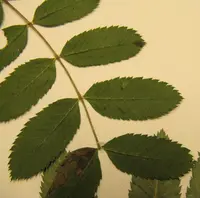
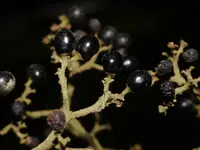
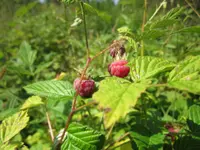
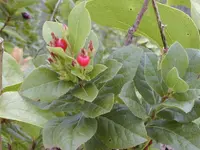
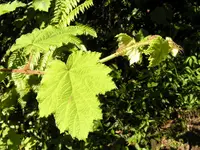
California mountain ash, Sorbus californica, is a small deciduous tree or large shrub native to mountain regions of California and parts of the western United States. It typically forms an upright, open canopy with feathered, compound leaves and clusters of white spring flowers. Later in the season it produces orange to red berry-like fruits that attract birds and add seasonal color. This species prefers cool summers, moist but well-drained soil, and exposure from full sun to light shade. In suitable climates, it is moderately easy to grow, but heat, drought, and poor drainage can make care for California mountain ash more challenging.

Care Difficulty
Moderate Care

Light Preference
Full Sun

Water Requirements
Moderate Water

Temperature Preference
Cold Hardy

Hardiness Zone
6–8

Soil Texture
Sandy, Loamy, Rocky

Soil pH
Acidic (5.5–6.5), Slightly acidic (6.5–7.0)

Soil Drainage
Well-drained

Fertilization
Minimal (feed rarely)
Scan your plant to receive care tips personalized for your specific plant
Available on iOS and Android
This species prefers bright conditions that mimic open mountain slopes.
Watering should support deep rooting while avoiding prolonged soil saturation.
This tree is adapted to cool to moderate climates with marked seasonal change.
This species is adapted to relatively dry mountain air, so humidity is rarely a concern in cultivation.
Sorbus californica prefers loose, well-aerated mineral soils that shed excess water quickly.
This species can be grown in containers for several years, though it ultimately prefers open ground.
This native tree typically needs minimal feeding in open ground but benefits from light support on poor soils or in containers.
Pruning Sorbus californica focuses on safety, structure, and light, rather than heavy shaping.
Sorbus californica is usually grown in the ground, with transplanting of young trees more common than long-term container culture.
Propagation of Sorbus californica is usually done from seed and is moderately specialized for home growers.
This species is generally cold hardy in suitable climates and needs only modest winter care once established.

Plant Health Check
Not sure what's wrong with your plant? Check your plant's health inside the app.
This mountain ash is native only to California, where it occurs in scattered populations in the Sierra Nevada and adjacent mountains, typically on rocky slopes and open forest edges at mid to high elevations.
Its orange to red pomes (berry-like fruits) are an important late-season food source for native birds, which in turn disperse the seeds across steep mountain habitats.
The species often grows on thin, rocky soils and exposed slopes, indicating good adaptation to high light, temperature fluctuations, and periodic drought compared with many other ash relatives.

Genetic and morphological studies suggest that Sorbus californica is closely related to other North American mountain ashes yet distinct enough to warrant recognition as its own species, reflecting a relatively localized evolutionary history tied to California’s montane environments.
This species has a moderate growth rate, typically adding about 20–40 cm per year once established. Growth is slower in dry or exposed sites and faster in cool, moist, well-drained mountain or foothill conditions.
Keep your plants happy and healthy with plant identification, disease detection, and easy care guidance.