purple beautyberry Care (Callicarpa dichotoma)

Also known as: Early Amethyst
purple beautyberry

About purple beautyberry

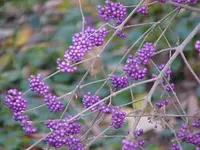
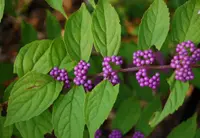
Purple beautyberry (Callicarpa dichotoma) is a deciduous shrub grown mainly for its striking clusters of glossy purple berries in fall and early winter. It has a graceful, arching habit with small leaves that turn yellowish in autumn, making the fruit stand out strongly.

This species is native to East Asia, especially China, Korea, and Japan, but is widely used in ornamental landscapes in temperate climates. It is generally considered easy to grow, as it adapts to many garden soils and tolerates both sun and light shade.

Gardeners who want to care for purple beautyberry should know it prefers moderately moist, well-drained soil and benefits from a sunny position for the best berry display.

Main Plant Requirements

Care Difficulty

Easy Care

Light Preference

Full Sun

Water Requirements

Moderate Water

Temperature Preference

Cold Hardy

Hardiness Zone

5–8

Soil Texture

Sandy, Loamy, Clay

Soil pH

Acidic (5.5–6.5), Slightly acidic (6.5–7.0)

Soil Drainage

Moist but well-drained

Fertilization

Minimal (feed rarely)

Get Personalized Care Plan

Scan your plant to receive care tips personalized for your specific plant

Available on iOS and Android

How to Care for the purple beautyberry

Callicarpa dichotoma forms the best berry display when given consistent, direct light outdoors.

  • Provide 6–8 hours of sun daily; morning sun with light afternoon shade is ideal, especially in hotter regions.
  • Tolerates partial shade (around 3–4 hours of direct sun), but purple beautyberry will have fewer berries and looser growth in deeper shade.
  • In hot summers, protect from harsh west-facing afternoon sun to reduce leaf scorch and drought stress, especially on young or newly transplanted shrubs.

This shrub prefers steadily moist, well-drained soil rather than extremes of wet or dry.

  • Water when the top 3–5 cm of soil feels dry, giving a slow, deep soak to wet the root zone instead of frequent light splashes.
  • During the first 1–2 growing seasons, monitor closely in hot, dry weather; drooping new leaves signal thirst, while yellowing, soft leaves can indicate overwatering.
  • Ensure soil drains freely; Callicarpa dichotoma dislikes standing water, especially in winter, so avoid low spots where puddles persist after rain.

This deciduous shrub is hardy outdoors and tolerates a broad range of garden temperatures once established.

  • Optimal growing temperatures in the active season are about 65–85°F (18–29°C), with strong shoot growth and good berry set in this range.
  • Mature plants are typically hardy to about -10°F to -20°F (-23 to -29°C), though young shrubs benefit from mulch around the root zone in cold climates.
  • In hot regions, plants tolerate brief spells near 95°F (35°C) if soil moisture is maintained; prolonged heat plus drought can cause leaf scorch and early leaf drop.

Callicarpa dichotoma grows well in typical outdoor humidity and usually does not need special humidity management.

Callicarpa dichotoma prefers moderately fertile, well-drained soil that still retains some moisture.

  • Use a loamy soil with plenty of organic matter, such as composted bark or garden compost, to support steady growth.
  • Aim for slightly acidic to neutral pH, around 6.0–7.0, as strongly alkaline soils can reduce nutrient availability.
  • Improve drainage and aeration in heavy clay by incorporating coarse sand or fine gravel plus organic matter through the top 20–30 cm.
  • Avoid waterlogged spots or compacted ground, which increase root disease risk and reduce berry production.

This species is suitable for container growing in patios or small gardens.

  • Choose a deep, wide container to allow the woody root system and spreading canopy to develop without becoming quickly root-bound.
  • Select a heavy, stable pot material such as ceramic or concrete to prevent tipping when the shrub is in full leaf and fruit.
  • Ensure generous drainage holes and keep the container raised on pot feet or blocks so excess water clears rapidly after rain.

This shrub benefits from light feeding but does not need heavy fertilizer to perform well.

  • Use a balanced slow-release fertilizer or well-rotted compost once in early spring to support growing purple beautyberry shrubs.
  • Apply at about half the label rate for woody shrubs and water in well to avoid root burn.
  • In mid-summer, a light top-dressing of compost can maintain nutrients without stimulating overly lush growth.
  • Do not fertilize in late fall or winter, as the plant is dormant and excess nutrients may weaken cold resilience.

Thoughtful pruning keeps Callicarpa dichotoma compact and encourages heavy berry production.

  • Prune in late winter or very early spring before new growth starts, so flower and fruiting wood can develop on fresh stems.
  • Remove dead, diseased, or crossing branches first, using clean, sharp bypass pruners or loppers.
  • Thin crowded interior stems to improve light and air movement, which supports healthy foliage and better berry display.
  • Shorten overly long shoots to shape the shrub, keeping a naturally arching, open form rather than tight shearing.

This shrub is typically grown in the ground, so focus on transplanting rather than frequent repotting.

  • Plan transplanting for early spring or fall, when weather is cool and soil moisture is moderate.
  • Move plants that show poor vigor, are outgrowing their space, or sit in waterlogged or compacted soil.
  • Dig a wide root ball, disturb roots minimally, and replant at the same depth in a hole twice as wide as the root mass.
  • Water deeply after transplanting, then keep soil evenly moist and apply 5–7 cm of mulch to limit stress while roots re-establish.

This species is commonly propagated from softwood cuttings or seeds.

  • Take softwood cuttings in late spring to early summer, 10–15 cm long, from non-flowering shoots.
  • Remove lower leaves, dip the cut end in rooting hormone, and place in a sterile, moist, well-draining medium under bright, indirect light.
  • Maintain high humidity and temperatures around 70–75°F until roots form, usually in several weeks.
  • For seeds, stratify if recommended, then sow in a free-draining mix and keep lightly moist until germination.

This shrub is generally cold hardy in suitable climates and needs only modest winter care in the landscape.

  • Tolerates typical winters in USDA zones 5–8 once established, with stems usually remaining intact.
  • Apply 5–7 cm of organic mulch around the root zone in late fall to buffer soil temperature and moisture.
  • In very cold or exposed sites, add a windbreak or burlap wrap around young shrubs to reduce stem dieback.
  • Grow Callicarpa dichotoma in containers only in milder zones or move pots into an unheated but frost-free space for winter.

Care Tips

Bird-friendly placement

Plant shrubs where birds can easily access the berries, such as near hedges or mixed borders, since light bird feeding encourages natural seed dispersal without harming the plant.

Selective cane renewal

Every 2–3 years, remove a few of the oldest, thickest stems at ground level in late winter to stimulate vigorous new growth that carries heavier berry clusters.

Cluster-heavy shaping

After flowering finishes, lightly shorten only the tips of overly long shoots to keep an arching, fountain-like habit that shows off the fruit and reduces branch breakage in wind or snow.

Moisture-conserving mulch

Apply a 5–8 cm layer of shredded bark or leaf mold over the root zone, keeping mulch a few cm away from stems, to stabilize soil moisture and protect shallow feeder roots from heat and cold.

Simple berry clean-up

If unwanted seedlings are a concern when growing purple beautyberry, rake or collect fallen berries in autumn before they soften, which limits self-seeding while keeping the planting tidy.

Common Pests and Diseases

Aphids

These insects cluster on tender shoots and the undersides of leaves, sucking sap and causing distorted new growth and sticky honeydew deposits. Symptoms include curling foliage and reduced vigor, especially on young stems and flower clusters.

Solution

Spray affected shoots with a strong stream of water to dislodge colonies, then use an insecticidal soap or neem oil, coating the undersides of leaves and repeating every 7–10 days as needed. Encourage natural predators such as lady beetles by avoiding broad-spectrum insecticides and keeping nearby vegetation diverse.

Spider mites

These pests thrive in hot, dry conditions and feed on leaf cells, leading to fine stippling, bronzing, and eventual leaf drop. Symptoms include very fine webbing on the undersides of leaves and between stems.

Solution

Increase humidity around the shrub with regular hose-sprays that rinse both upper and lower leaf surfaces, focusing on inner branches. If mite activity remains high, apply horticultural oil or insecticidal soap, ensuring thorough coverage and repeating treatments while monitoring with a hand lens for moving mites.

Scale insects

These insects appear as small, immobile bumps on stems and older wood, feeding on sap and weakening the plant over time. Symptoms include yellowing leaves, reduced berry production, and sticky honeydew that can attract sooty mold.

Solution

Prune out and discard heavily infested twigs, then gently scrape or rub off remaining scales on light infestations. For larger populations, use horticultural oil as a dormant or early-season spray to smother overwintering stages, and follow with targeted oil or insecticidal soap applications when crawlers (young mobile scales) emerge.

Leaf spot

This disease causes scattered brown or purplish lesions on leaves, sometimes with yellow halos, leading to premature defoliation in wet summers. Symptoms include more severe spotting on interior foliage where air circulation is low.

Solution

Remove and dispose of fallen leaves to reduce inoculum, and thin crowded stems in late winter to improve airflow and faster drying of foliage. In locations with repeated severe outbreaks, consider a preventive copper or chlorothalonil fungicide at leaf-out and during extended wet periods, following label directions and focusing on thorough coverage.

Powdery mildew

This disease appears as white, powdery patches on the upper surfaces of leaves and young stems, more common in late summer when days are warm and nights are cool. Symptoms include distorted new growth and reduced photosynthesis but rarely plant death in beautyberry shrubs.

Solution

Improve sun exposure and air movement by spacing plants properly and selectively thinning dense interior branches. At first signs of infection, remove the most affected shoots if practical and consider applying a labeled fungicide such as sulfur or potassium bicarbonate, repeating as needed during favorable weather while monitoring for new growth infection and adjusting other purple beautyberry care instructions such as overhead watering that prolongs leaf wetness.

Interesting Facts

True pastel berries

Among beautyberries, this species is known for its softer lilac to light purple fruit color, which often appears more pastel than the intense violet of other Callicarpa species, making it popular for subtle autumn color in temperate gardens.

Graceful arching habit

The shrub develops slender, arching stems that often bend under the weight of ripe berries, creating a distinctive fountain-like silhouette that differs from the more upright habits of related beautyberry species.

Compact landscape choice

Compared with many other beautyberries, this species typically remains lower and more compact, which has led to the development and selection of dwarf cultivars such as 'Early Amethyst' for use in smaller gardens and urban plantings.

Botan icon

Did you know?

In regions where it is fully hardy, this species often produces its berries on first-year wood, so even if cold or pruning removes older stems, the plant can still set a strong crop of fruit on new growth in a single season.

FAQs about purple beautyberry

Poor flowering usually comes from insufficient light, heavy pruning at the wrong time, or excess nitrogen fertilizer. Avoid cutting back new wood in spring, reduce high‑nitrogen feeding, and ensure the shrub gets enough sun exposure for bud formation.

Grow Healthy Plants with Botan Care

Keep your plants happy and healthy with plant identification, disease detection, and easy care guidance.


Botan plant care app — identify plants on mobile

Explore More Plants