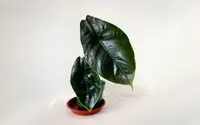
Controlled access zone
Install a rigid barrier or mesh enclosure around the plant so no one can accidentally brush against it, and post clear warning labels at eye level on all accessible sides when caring for gympie gympie.

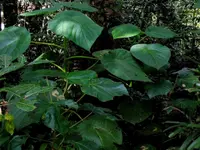
Gympie gympie (Dendrocnide moroides) is a fast-growing rainforest shrub known for its large heart-shaped leaves covered in dense stinging hairs. It belongs to the nettle family and can reach the size of a small understory tree in warm, humid climates.
This species is native to tropical rainforests of northeastern Australia and parts of Indonesia, where it grows in disturbed edges, clearings, and along tracks. The plant is notorious for its extremely painful sting, which makes it difficult and unsafe to handle.
In cultivation it demands warm temperatures, high humidity, and consistently moist, well-drained soil, similar to a shaded rainforest floor. Only highly experienced growers with secure setups should attempt to care for gympie gympie due to its severe contact hazard.

Care Difficulty
Hard Care

Light Preference
Partial Shade

Water Requirements
Keep Soil Moist

Temperature Preference
Tropical / Frost Sensitive

Hardiness Zone
11–12

Soil Texture
Loamy, Silty, Organic-rich

Soil pH
Acidic (5.5–6.5)

Soil Drainage
Moist but well-drained

Fertilization
Minimal (feed rarely)
Scan your plant to receive care tips personalized for your specific plant
Available on iOS and Android
This rainforest shrub prefers bright, filtered light and protection from harsh direct sun.
This species requires consistently moist but not waterlogged soil to mimic its rainforest habitat.
This plant is adapted to warm, frost‑free rainforest conditions and reacts poorly to cold extremes.
This species prefers moderately humid, sheltered conditions that prevent leaf desiccation.
This plant favors moist, well-aerated, organic-rich soil that stays evenly damp but never stagnant.
This species can be grown in containers mainly for controlled handling and safety rather than display.
This highly toxic rainforest shrub is usually self-sufficient in native soil, so additional fertilizer for gympie gympie is minimal and mainly for container-grown or stressed plants.
Pruning Dendrocnide moroides is rarely needed and should only be done for safety, structure, or plant health, always with full protective gear.
Transplanting or potting on this species demands extreme caution due to its severe stinging hairs, but the root system itself is not difficult to manage.
Practical propagation of Dendrocnide moroides is uncommon outside research or conservation, and any attempt requires strict protective measures due to intense contact toxicity.
This tropical rainforest shrub is highly frost-sensitive and has very limited tolerance to temperatures below about 40°F.

Plant Health Check
Not sure what's wrong with your plant? Check your plant's health inside the app.
This species has hollow silica-rich hairs that break on contact and inject a potent cocktail of neurotoxic and inflammatory compounds, causing pain that can recur for months when the skin is cooled or touched.
In its native Australian rainforests, it behaves as a pioneer shrub, quickly colonizing disturbed, high-light gaps created by storms, logging, or tree falls and helping stabilize the understory microclimate.
The stinging hairs remain active on fallen leaves and even on dried herbarium specimens for many years, which is why botanists handle collected material with extreme caution and protective equipment.

Historical reports describe severe reactions including temporary paralysis and shock-like symptoms in people who brushed against this plant, leading some Australian military training manuals to explicitly warn personnel to avoid it in rainforest environments.
This species is extremely toxic to humans and animals. Hollow stinging hairs inject persistent neurotoxic compounds that cause intense pain, allergic reactions, and possible hospitalization. Direct contact, inhalation of hairs, and contaminated tools or clothing are all hazardous.
Keep your plants happy and healthy with plant identification, disease detection, and easy care guidance.

_(49532732922)-2-200x133.webp)