arroyo willow Care (Salix lasiolepis)

arroyo willow

About arroyo willow

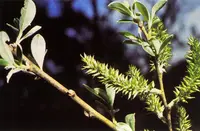
Arroyo willow, Salix lasiolepis, is a fast-growing deciduous shrub or small tree native to streambanks and wet areas of western North America. It typically forms dense thickets with upright, flexible stems and narrow, gray-green leaves. In early spring it produces soft catkins, which provide an important early nectar and pollen source for insects. This species naturally occurs along creeks, rivers, and wetlands, where soils stay moist or seasonally flooded. It is generally easy to grow if given ample water, full sun to light shade, and space for its vigorous root system. Understanding how to care for arroyo willow starts with matching its need for constant moisture and cool roots.

Main Plant Requirements

Care Difficulty

Moderate Care

Light Preference

Full Sun

Water Requirements

Aquatic

Temperature Preference

Cold Hardy

Hardiness Zone

7–10

Soil Texture

Sandy, Loamy, Clay

Soil pH

Slightly acidic (6.5–7.0), Neutral (7.0)

Soil Drainage

Waterlogged tolerant

Fertilization

Minimal (feed rarely)

Get Personalized Care Plan

Scan your plant to receive care tips personalized for your specific plant

Available on iOS and Android

How to Care for the arroyo willow

This riparian shrub thrives with abundant direct light but tolerates some shade, especially in hotter regions.

  • Provide 6–8 hours of direct sun daily for strongest growth; in hot inland areas, prioritize morning sun with light afternoon shade.
  • Young arroyo willow plants benefit from filtered or partial shade (3–4 hours sun) their first season to reduce leaf scorch and water stress.
  • In summer, monitor for leaf crisping or yellowing on exposed sides as a sign of excessive hot afternoon sun; in dense shade, expect lanky, weak shoots.

This species is adapted to consistently moist conditions and is often found along streams and seeps.

  • Aim for soil that stays moist to wet, letting only the top 1–2 cm feel slightly less saturated between water inputs in well-drained sites.
  • Increase water during hot, dry periods so Salix lasiolepis leaves stay firm and do not droop or curl by midday, especially on sandy or gravelly soils.
  • Watch for underwatering signs such as browning leaf edges and premature leaf drop, and for overwatering symptoms like foul-smelling, mushy roots in poorly drained spots.

This willow tolerates a wide climate range but performs best in moderate temperatures with cool to mild winters.

  • Optimal growth occurs around 60–80°F (16–27°C), with strong shoot production in spring and early summer when temperatures are mild.
  • Mature plants typically survive brief drops near 10–15°F (-12 to -9°C), though young shoots can be damaged by sudden hard frosts in exposed positions.
  • Heat tolerance is good up to about 95°F (35°C) if soil moisture remains high; extended hotter periods with dry soil increase leaf scorch and stress.

This willow prefers moderate humidity but mainly relies on consistent soil moisture rather than air moisture.

  • Target 40–60% humidity, which matches most outdoor conditions in its native range.
  • Dry air is usually tolerated if roots stay evenly moist and the plant is not exposed to strong drying winds.
  • Humidity stress shows as crisp leaf edges and premature leaf drop; shelter from wind and keep soil from fully drying to reduce stress.
  • In very dry, windy sites, use nearby shrubs or windbreaks to create a slightly more humid, sheltered microclimate for arroyo willow.

Salix lasiolepis thrives in moist, deep, nutrient-rich soils with ample organic matter.

  • Use a loamy or silty soil enriched with compost to mimic streambank conditions and hold steady moisture.
  • Ensure drainage is slow but not stagnant; the soil should stay evenly moist and never bake hard or crack deeply.
  • Aim for slightly acidic to neutral pH (6.0–7.0), which supports nutrient availability and healthy root function.
  • Avoid shallow, very sandy, compacted, or highly alkaline soils; improve structure and aeration by mixing in compost and a small amount of coarse sand only where drainage is excessively slow.

This species can be grown in containers for short to medium periods, but it is naturally better suited to open ground.

  • Choose a very large, deep, and heavy container to provide root volume and reduce tipping from vigorous top growth and wind.
  • Use a moisture-retentive yet draining mix, such as 2 parts loam, 1 part compost, and 1 part coarse sand, to keep roots damp but aerated.
  • Position the container where runoff can drain freely away, since frequent heavy watering is needed to keep the root zone consistently moist.

This riparian native usually needs minimal feeding in the ground, but containers and young plantings benefit from light, targeted nutrition.

  • Use a balanced slow-release fertilizer (around 10-10-10) or a thin layer of compost in early spring as growth begins.
  • Feed during the growing season every 6–8 weeks for container arroyo willow, using fertilizer at 1/2 label strength.
  • Stop feeding in late summer so new growth hardens before cold weather and avoid fertilizing during winter dormancy.
  • Water well after each application to move nutrients into the root zone and reduce salt buildup in pots.

Pruning helps keep Salix lasiolepis structurally sound, prevent breakage, and manage size in landscapes.

  • Carry out main pruning in late winter to very early spring, before buds break and sap flow is strong.
  • Remove dead, diseased, crossing, or storm-damaged branches first, cutting back to healthy wood with clean bypass pruners or a sharp saw.
  • Thin crowded interior shoots to open the canopy, improving light penetration, airflow, and branch strength.
  • Shorten long, weak shoots to a strong lateral branch to maintain a balanced form and reduce wind damage risk.

This willow is usually grown in the ground, so focus on correct site planting and occasional transplanting of young specimens.

  • Transplant in late fall or very early spring when the plant is dormant and soil is moist but workable.
  • Look for slowed growth, frequent wilting, or roots circling inside a nursery container as signals it has outgrown its pot.
  • Replant at the same depth in a larger hole, loosening circling roots gently and spreading them outward into the surrounding soil.
  • Water deeply after transplanting, then maintain consistent moisture and a 5–8 cm mulch layer to limit stress and encourage new root growth.

Salix lasiolepis is commonly propagated from cuttings, which root fast under the right moisture conditions.

  • Take hardwood cuttings in late winter or softwood cuttings in late spring, selecting straight, pencil-thick shoots.
  • Cut sections 15–25 cm long, remove lower leaves, and place the base into water or a moist, well-drained sand/compost mix.
  • Keep cuttings in bright, indirect light with consistently moist conditions until strong roots form, usually within several weeks.
  • Sow seeds in spring on the surface of moist, fine substrate soon after collection, as willow seed viability declines quickly.

Established plants are cold hardy in much of their native range and usually need little special winter care.

  • Tolerates light to moderate frost once established, though young plants are more sensitive to severe freezes.
  • Apply a 5–8 cm mulch layer around the root zone in late fall to buffer soil temperature and conserve moisture.
  • For container-grown plants in cold regions, move pots into an unheated garage or sheltered area to prevent root freeze damage.

Care Tips

Streamside-style mulching

Apply a 5–8 cm layer of coarse wood chips or shredded bark in a wide ring, leaving a bare collar around the trunk, to mimic natural riparian leaf litter and stabilize soil moisture while reducing weed competition.

Sacrificial stem strategy

When establishing young plants in windy or flood-prone sites, allow a few extra stems to grow the first 1–2 years and remove the weakest later, so early breakage does not damage the main framework.

Flood and drought buffer

On properties with variable water levels, create a very shallow swale or depression downslope of the trunk to catch runoff during storms and slowly release it, reducing stress from rapid swings between saturation and drying.

Targeted coppicing rotation

For dense screening or basket-making rods, cut back one-third of the oldest stems close to the base every 2–3 years in late winter to stimulate vigorous straight new shoots while keeping the plant structurally balanced.

Root-zone pest monitoring

In late spring and midsummer, gently scrape back a small section of mulch and upper soil near the drip line to check for chewing larvae or tunneling, then spot-treat early rather than waiting for visible canopy decline when caring for arroyo willow.

Common Pests and Diseases

Willow leaf beetle

This pest feeds on young willow leaves, creating shot holes and sometimes skeletonizing foliage. Heavy infestations can cause significant defoliation in spring and early summer.

Solution

Prune and destroy heavily infested twigs early in the season and encourage birds and predatory insects by maintaining diverse nearby vegetation. For ongoing problems, knock beetles and larvae into soapy water, and if needed use a targeted foliar spray containing spinosad or pyrethrin, applied according to label directions and timed to early larval stages.

Willow scab

This disease causes black, olive, or dark brown lesions on young leaves and shoots, often leading to blighted, curled foliage and twig dieback. Symptoms include rapid browning of new growth soon after leaf-out in wet, cool weather.

Solution

Remove and destroy infected shoots and fallen leaves to reduce fungal spores, and avoid overhead watering that keeps foliage wet. In high-value plantings, a copper-based fungicide or other labeled fungicide applied at bud break and repeated during extended wet periods can help protect new growth, combined with pruning to improve airflow through the canopy.

Black canker

This disease produces elongated, dark, sunken lesions on stems and branches, often following or combining with willow scab infections. Symptoms include progressive dieback beyond the canker and rough, cracked bark around affected areas.

Solution

Cut out infected branches several inches below visible cankers and destroy the prunings, disinfecting pruning tools between cuts. Maintain overall vigor with adequate water and avoid mechanical injury to bark; in plantings with a history of both willow scab and canker, coordinated fungicide treatments at spring leaf-out can reduce new infections.

Aphids

These insects cluster on tender shoots and leaf undersides, sucking sap and causing curled, distorted leaves and sticky honeydew that can attract sooty mold. Infestations are often heaviest on new spring growth.

Solution

Spray colonies off with a strong stream of water and prune heavily infested shoot tips if practical. For persistent infestations, apply insecticidal soap or horticultural oil thoroughly to leaf undersides and young stems, repeating at 5–7 day intervals while aphids are present, and support natural predators such as lady beetles by limiting broad-spectrum insecticides.

Crown gall

This disease causes rough, corky galls or swellings at the base of stems, on roots, or along lower branches, which can disrupt water flow and weaken plants over time. Symptoms include reduced vigor, stunted new growth, and increased sensitivity to drought and other stresses.

Solution

Remove and destroy severely affected plants, and avoid planting new willows in the same exact spot where galled plants grew. For mildly affected specimens, carefully prune out small galls without girdling stems, disinfect tools after each cut, and focus on strong general Salix lasiolepis plant care such as proper watering and mulching to limit stress and slow disease impact.

Interesting Facts

Native riparian specialist

This willow is native to western North America and is especially characteristic of streambanks, canyon bottoms, and seeps, where it helps stabilize soil and reduce erosion along watercourses.

Early wildlife resource

Its catkins open very early in the season, providing some of the first pollen and nectar for native bees and other insects, and its dense thickets offer shelter and nesting sites for many bird species.

High sprouting capacity

Branches of this species root readily when in contact with moist soil, so it is widely used in stream restoration projects as live stakes that can quickly establish new plants along damaged banks.

Botan icon

Did you know?

Arroyo willow is one of the primary natural host plants for larvae of several western North American butterfly and moth species, including the western tiger swallowtail, making it an important foundation species in riparian food webs.

FAQs about arroyo willow

This species is typically fast-growing, often adding 60–120 cm of height per year in favorable, moist conditions. Growth slows in dry, compacted, or nutrient-poor soils, and after the tree reaches structural maturity.

Grow Healthy Plants with Botan Care

Keep your plants happy and healthy with plant identification, disease detection, and easy care guidance.


Botan plant care app — identify plants on mobile

Explore More Plants