Multi-stem renewal
Every 2–3 years, remove 1–3 of the oldest, thickest stems right to the base in late winter to keep the shrub vigorous and dense rather than tall and woody.

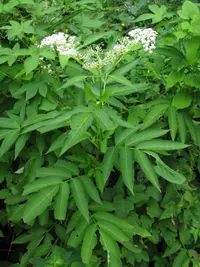
Chinese elder, Sambucus javanica, is a deciduous shrub or small tree known for its compound leaves, clusters of small white flowers, and dark berry-like fruits. It has a bushy, multi-stemmed habit and is often used in naturalistic or wildlife-friendly plantings.
This species is native to parts of East and Southeast Asia, where it grows in forest edges, thickets, and moist mountain slopes. It is generally adaptable and fairly fast-growing, which can make it rewarding for gardeners.
Sambucus javanica prefers light to moderate sun, consistent moisture, and well-drained, fertile soil. Understanding these basic needs helps clarify how to care for Chinese elder in a home garden setting.

Care Difficulty
Moderate Care

Light Preference
Partial Sun

Water Requirements
Regular Water

Temperature Preference
Cool Climate

Hardiness Zone
6–9

Soil Texture
Loamy, Silty, Organic-rich

Soil pH
Acidic (5.5–6.5), Slightly acidic (6.5–7.0)

Soil Drainage
Moist but well-drained

Fertilization
Minimal (feed rarely)
Scan your plant to receive care tips personalized for your specific plant
Available on iOS and Android
This shrub prefers bright outdoor conditions with protection from harsh extremes.
This species prefers consistently moist but not saturated soil, especially during active growth.
This hardy shrub tolerates a wide range of outdoor temperatures but grows best in mild conditions.
This species handles a fairly wide humidity range and rarely needs special humidity management outdoors.
This shrub prefers consistently moist, structurally stable soil with both organic matter and reliable drainage.
This species can be grown in containers if the pot is chosen and managed to support its vigorous root system and top growth.
This shrub grows reasonably well in average soil, but moderate feeding supports fuller growth and flowering in Chinese elder.
Pruning Sambucus javanica keeps the shrub compact, encourages strong flowering wood, and maintains plant health.
This elder is usually grown in the ground, so focus on careful transplanting rather than frequent repotting.
Propagation of Sambucus javanica is commonly done from cuttings, with seeds used mainly for breeding or larger projects.
This species is generally cold hardy in temperate climates and needs only modest winter care once established outdoors.

Plant Health Check
Not sure what's wrong with your plant? Check your plant's health inside the app.
This elder species occurs from the eastern Himalayas through southern China and Southeast Asia to New Guinea, reflecting strong adaptation to warm, humid montane and subtropical habitats.
Unlike some temperate elder species that form larger woody trees, it usually grows as a semi-woody shrub in the wild, often regenerating quickly after disturbance along forest edges and clearings.
Its dark berries are a food source for many frugivorous birds, which disperse the seeds over long distances and help maintain populations across fragmented forest landscapes.
Poor flowering usually comes from too much shade, heavy pruning at the wrong time, or nutrient imbalance. Avoid cutting stems that formed last season, maintain moderate fertility, and ensure adequate light and moisture to support bud formation.
Keep your plants happy and healthy with plant identification, disease detection, and easy care guidance.