Tank water hygiene
Empty and refill the central rosette with fresh, low-mineral water every 5–7 days, rinsing it through once, to prevent bacterial buildup and mosquito larvae.

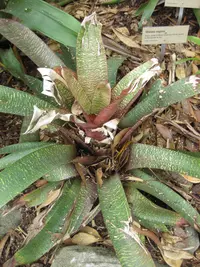
Vriesea vagans is an epiphytic bromeliad, meaning it often grows on trees rather than in soil, using its roots mainly for anchoring. It forms a loose rosette of arching, strap-like leaves that can create a small central tank to catch water.
This species is native to tropical forest regions, where it receives bright filtered light, frequent moisture, and good air movement. Its growth is generally compact, which can make it suitable for indoor display in homes and offices.
Hybrid vigor is not involved here; instead, its natural tolerance of variable humidity and light makes it moderately easy to grow. Understanding how to care for Vriesea vagans mainly comes down to providing soft, indirect light, evenly moist but airy substrate, and avoiding waterlogged conditions.

Care Difficulty
Moderate Care

Light Preference
Bright Indirect Light

Water Requirements
Moderate Water

Temperature Preference
Tropical / Frost Sensitive

Hardiness Zone
11–12

Soil Texture
Sandy, Peaty, Organic-rich

Soil pH
Acidic (5.5–6.5)

Soil Drainage
Well-drained

Fertilization
Light (every 4–6 weeks)
Scan your plant to receive care tips personalized for your specific plant
Available on iOS and Android
This bromeliad prefers bright, filtered light that mimics a lightly shaded forest canopy.
This species likes consistent moisture in both its leaf tank and root zone, but not waterlogged conditions.
This bromeliad prefers consistently warm, frost-free conditions with only mild seasonal variation.
This species prefers consistently humid air and reacts quickly to very dry rooms.
Use a loose, airy, organic-rich mix that drains quickly but holds light, even moisture around the roots.
This species is well suited to container growing due to its compact root system and rosette form.
This bromeliad benefits from light, controlled feeding during the warm growing season.
Pruning for this species is minimal and focuses on cleanliness rather than shaping.
This bromeliad prefers a snug pot and only needs infrequent repotting to refresh its mix and manage offsets.
Propagation is usually done by separating offsets, which form around the base of a mature rosette.
This tropical bromeliad is frost sensitive and needs indoor or greenhouse conditions in cold climates.

Plant Health Check
Not sure what's wrong with your plant? Check your plant's health inside the app.
This species is native to Brazil’s Atlantic forest, where it usually grows as an epiphyte on tree trunks and branches rather than rooted in soil, relying on its rosette to capture water and organic debris.
The stiff, overlapping leaves form a central water-holding tank that supports small aquatic communities of insects and microorganisms in its natural habitat, contributing to local biodiversity.
Each mature rosette flowers only once, then slowly declines while producing offsets around its base, an example of a semelparous life cycle in bromeliads.
This bromeliad usually blooms once at maturity, then the rosette slowly declines while pups develop. Lack of flowering is often due to immaturity or stress from low humidity, temperature extremes, or recent repotting rather than light alone.
Keep your plants happy and healthy with plant identification, disease detection, and easy care guidance.