


Understory placement
Plant or place it beneath taller shrubs or trees to mimic its natural forest understory habitat, which helps protect the foliage from wind stress and midday sun scorch.

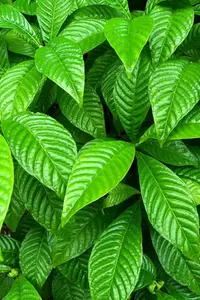
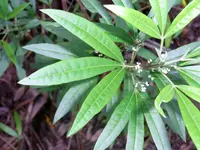
Seminole balsamo (Psychotria nervosa) is an evergreen shrub native to South Florida, the Caribbean, and parts of Central America. It typically grows dense and bushy, with glossy, textured leaves and small white flowers followed by bright red berries.
In the landscape it is often used as an understory shrub in partial shade, where it provides structure and color year-round. Its natural preference for warm, humid, and sheltered conditions influences how to care for Seminole balsamo.
This species is moderately easy to grow if its basic needs are met. It prefers filtered light, consistent moisture without waterlogging, and a well-drained, organic-rich soil that mimics its native forest habitat.

Care Difficulty
Moderate Care

Light Preference
Partial Shade

Water Requirements
Keep Soil Moist

Temperature Preference
Tropical / Frost Sensitive

Hardiness Zone
10–11

Soil Texture
Loamy, Sandy, Organic-rich

Soil pH
Acidic (5.5–6.5)

Soil Drainage
Moist but well-drained

Fertilization
Light (every 4–6 weeks)
Scan your plant to receive care tips personalized for your specific plant
Available on iOS and Android
Psychotria nervosa prefers bright, filtered light similar to an understory shrub in subtropical woodland.
This shrub prefers consistently moist but not waterlogged soil throughout the growing season.
This species thrives in warm, frost-free conditions typical of subtropical climates.
This species prefers fairly moist air and reacts quickly to dry indoor conditions.
This understory shrub prefers loose, moisture-retentive but well-drained soil.
This species adapts well to container growing when moisture and stability are managed carefully.
Psychotria nervosa grows in relatively lean, organic soils but benefits from light, consistent feeding in containers or managed landscapes.
Psychotria nervosa responds well to light structural pruning that maintains a dense, bushy form and healthy stems.
This species is more often used in the landscape than in containers, so transplanting timing and technique are important.
Psychotria nervosa is commonly propagated by semi-hardwood cuttings and, less often, by seeds collected from ripe berries.
This subtropical shrub is frost sensitive and needs protection in regions that experience cold winters or hard freezes.

Plant Health Check
Not sure what's wrong with your plant? Check your plant's health inside the app.
This species is native to Florida and the Caribbean and naturally grows in the shaded understory of hardwood hammocks, where it forms dense thickets that help stabilize soil and create sheltered microhabitats for wildlife.
The bright red berries are an important food source for many native birds, including mockingbirds and catbirds, which disperse the seeds after eating the fruit and help maintain populations in native forests.
Its small, glossy, evergreen leaves are adapted to low light in forest understories, reflecting and redistributing limited light while reducing water loss in warm, humid habitats.

Psychotria nervosa is one of the host plants used in studies of tropical and subtropical Rubiaceae evolution, because its close relatives include both understory shrubs and canopy trees, allowing researchers to compare how growth form and habitat preferences have changed over time within the group.
Yellowing leaves often result from overwatering, poor drainage, or nutrient depletion. Check that the pot drains freely, let the top soil layer dry between waterings, and consider a balanced fertilizer if older leaves yellow first.
Keep your plants happy and healthy with plant identification, disease detection, and easy care guidance.

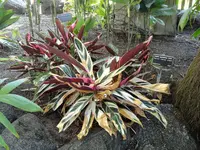
Never-Never Plant
Ctenanthe oppenheimiana 'Tricolor'
Coral Creeper
Barleria repens
Delicate violet orchid
Ionopsis utricularioides
 POPULAR
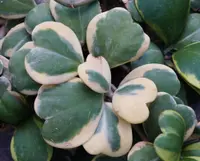
Hoya Hearts
Hoya kerrii
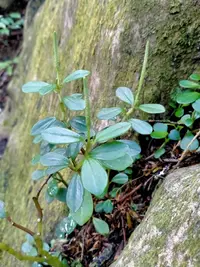
Peperomia urvilleana var. fijiana
Peperomia urvilleana var. fijiana
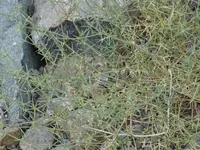
Zygophyllum bruguieri
Zygophyllum bruguieri
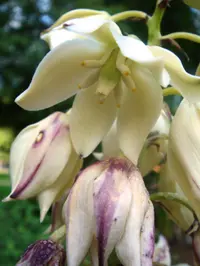
Spanish bayonet
Yucca aloifolia
Stinkwood
Zieria arborescens