


Rotate For Even Color
Turn the pot 90° every 1–2 weeks so all sides receive similar light, which helps maintain even variegation and prevents one-sided, stretched growth when growing Never-Never Plant.

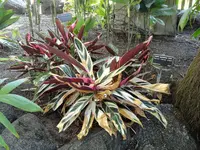
The Never-Never plant, Ctenanthe oppenheimiana 'Tricolor', is a tropical evergreen grown mainly for its patterned foliage. It belongs to the prayer plant group, with leaves that may slightly move with light changes. Its long, lance-shaped leaves show cream and pink variegation over green, with purple undersides, forming a dense, bushy clump. In indoor conditions it usually stays compact and decorative. This species is native to the understory of Brazilian rainforests, where it grows in warm, shaded, and consistently moist environments. Its need for stable humidity and dislike of cold drafts make it moderately challenging for beginners. Understanding how to care for Never-Never Plant focuses on providing soft, filtered light, evenly moist but not waterlogged soil, and protection from temperature extremes.

Care Difficulty
Moderate Care

Light Preference
Bright Indirect Light

Water Requirements
Keep Soil Moist

Temperature Preference
Tropical / Frost Sensitive

Hardiness Zone
11–12

Soil Texture
Loamy, Peaty, Organic-rich

Soil pH
Acidic (5.5–6.5), Slightly acidic (6.5–7.0)

Soil Drainage
Moist but well-drained

Fertilization
Light (every 4–6 weeks)
Scan your plant to receive care tips personalized for your specific plant
Available on iOS and Android
This plant prefers bright, indirect light that mimics a lightly shaded tropical forest floor.
Watering should keep the root zone evenly moist but never waterlogged.
Stable warm conditions are important for healthy growth and leaf color.
This species needs consistently high humidity to keep foliage healthy.
Use a loose, airy, organic-rich medium that stays lightly moist but never waterlogged.
This species is well suited to container growing when moisture and stability are managed carefully.
Ctenanthe oppenheimiana 'Tricolor' responds well to light, consistent feeding during active growth.
Pruning is mainly used to keep Ctenanthe oppenheimiana 'Tricolor' tidy and encourage fresh foliage.
Repotting supports healthy roots and steady growth for this shallow-rooted plant.
Division is the most reliable way to increase Ctenanthe oppenheimiana 'Tricolor' plants.
This tropical species needs warm, frost-free conditions over winter.

Plant Health Check
Not sure what's wrong with your plant? Check your plant's health inside the app.
This cultivar comes from a species native to Brazil’s Atlantic Forest, where it grows in the shaded understory of warm, humid tropical woodlands rather than in full sun.
Its leaves show stable genetic variegation with three main color zones—green, cream, and pink to magenta—distributed along the veins and between them in irregular patches unique to each leaf.
Like other prayer plant relatives in the Marantaceae family, it shows nyctinasty, a daily movement where leaf blades lift and partially fold upward at night due to changes in specialized joints called pulvini at the base of the leaf stalk.
Brown, crispy edges usually come from low humidity, underwatering, or excess fertilizer salts. Increase humidity, water evenly once the top layer dries, and flush the pot occasionally to remove built-up salts. Avoid direct drafts from heaters or AC.
Keep your plants happy and healthy with plant identification, disease detection, and easy care guidance.

Giant Spider Lily
Crinum × amabile
 POPULAR
Alocasia cuprea
Alocasia cuprea

Upright Elephant Ear
Alocasia 'Sarian'
Cattleya loddigesii
Cattleya loddigesii
 POPULAR
Japanese bird's-nest fern
Asplenium antiquum
Trailing Velvet Plant
Ruellia makoyana
 POPULAR
Caladium lindenii
Caladium lindenii
Tillandsia deppeana
Tillandsia deppeana