Syagrus flexuosa Care

Syagrus flexuosa

About Syagrus flexuosa

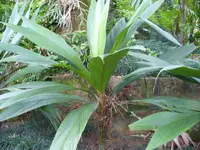
Syagrus flexuosa is a clustering palm species native to the savannas and dry woodlands of central and eastern Brazil. It forms groups of slender, cane-like stems topped with graceful, feathery fronds.

This palm is adapted to seasonal drought and high light, which makes it relatively resilient once established but less suited to very dark or constantly wet locations. Understanding how to care for Syagrus flexuosa starts with providing bright conditions, warmth, and well-drained soil, similar to other sun-loving, dry-tolerant palms.

Main Plant Requirements

Care Difficulty

Moderate Care

Light Preference

Full Sun

Water Requirements

Moderate Water

Temperature Preference

Warm Climate

Hardiness Zone

9–11

Soil Texture

Sandy, Loamy, Rocky

Soil pH

Acidic (5.5–6.5), Slightly acidic (6.5–7.0)

Soil Drainage

Well-drained

Fertilization

Minimal (feed rarely)

Get Personalized Care Plan

Scan your plant to receive care tips personalized for your specific plant

Available on iOS and Android

How to Care for the Syagrus flexuosa

This palm prefers strong light in warm climates but benefits from some protection during the hottest hours.

  • Provide 6–8 hours of direct sun daily, with best performance in full morning sun and light afternoon shade, especially in hotter regions.
  • It tolerates light partial shade, but dense shade causes sparse fronds, slower growth, and a lanky trunk over time.
  • In young Syagrus flexuosa plants, intense midsummer afternoon sun can scorch new fronds, so use temporary shade cloth or nearby taller plants for filtered light.

This species prefers evenly moist but not saturated soil, with drier periods between deeper waterings once established.

  • Outdoors in the ground, water when the top 3–5 cm of soil feels dry, applying a slow, deep soak that moistens the root zone, then allow excess to drain fully.
  • Use well-drained, sandy or loamy soil; persistent puddling, sour smell, or yellowing, limp fronds indicate overwatering and poor aeration around the roots.
  • Increase frequency in hot, dry weather when leaf tips begin to lose gloss, and reduce watering in cool seasons while preventing the soil from becoming bone dry for extended periods.

This palm thrives in warm, frost-free conditions and does best in climates with hot summers and mild winters.

  • Optimal growth occurs around 70–90°F (21–32°C); growth slows noticeably below about 60°F (16°C) but resumes as temperatures rise in spring.
  • It tolerates brief drops to 28–30°F (-2 to -1°C) with possible leaf damage; repeated frosts or hard freezes can kill the crown and should be avoided.
  • In very hot periods above 100°F (38°C), ensure soil moisture is adequate and provide some afternoon shade to limit heat stress and leaf scorch.

This palm prefers moderate ambient humidity but usually adapts to typical indoor levels.

  • Aim for 40–60% humidity to balance leaf health and disease risk.
  • It tolerates short dry spells, but prolonged air below 30% can cause brown leaflet tips and edges.
  • Increase humidity with a nearby open tray of water and stones or by grouping plants, rather than misting the fronds.

This species favors loose, fast-draining, sandy or loamy soil that does not stay wet.

  • Use a mix of roughly 50–60% coarse sand or grit, 20–30% loam, and 10–20% organic matter such as composted bark.
  • Ensure rapid drainage; water should drain from the pot or bed within seconds, not pool on the surface.
  • Target a slightly acidic to neutral pH around 6.0–7.0, which supports nutrient uptake without excess micronutrient toxicity.
  • Improve aeration by incorporating chunky materials like pine bark and pumice, and avoid heavy clay or compacted ground that holds water.

This species can be grown in containers, especially in cooler climates or where in-ground planting is not practical.

  • Select a deep, heavy container to counterbalance the developing palm canopy and reduce tipping in wind.
  • Choose a pot material with moderate porosity, such as thick-walled clay or composite, to avoid rapid moisture swings in hot weather.
  • Raise the container slightly on pot feet so drainage holes clear the ground and excess water escapes quickly after rain or irrigation.

This palm benefits from light, steady nutrition but adapts to lean soils once established.

  • Use a slow-release granular palm fertilizer or balanced NPK such as 10-10-10 formulated for palms in spring.
  • Feed young Syagrus flexuosa 2–3 times during the warm growing season, following label rates.
  • Apply at half-strength on sandy or nutrient-poor soils to avoid salt burn and root stress.
  • Reduce or stop feeding in fall and winter when growth slows.

Pruning is mainly hygienic for this species and should focus on maintaining a clean, structurally sound crown.

  • Carry out pruning at the end of winter or early spring, before strong new growth starts.
  • Remove only dead, diseased, or badly damaged fronds from Syagrus flexuosa, cutting close to the trunk without nicking it.
  • Avoid removing green fronds, as this weakens the palm and can distort its natural form.
  • Use clean, sharp loppers or a pruning saw, disinfected between cuts to limit disease spread.

This palm is usually grown in the ground, so management focuses on careful transplanting of young specimens.

  • Look for circling roots, root-bound containers, or stalled growth as signals a young plant needs a larger pot or planting site.
  • Transplant Syagrus flexuosa in late spring or early summer, when soil is warm and recovery is fastest.
  • Move up only 1 pot size or plant into a well-drained, sandy soil hole wider than the root ball.
  • Keep the original soil level, water deeply, and shade lightly for 1–2 weeks to reduce root stress.

This species is almost always propagated from seed and demands patience and warm conditions.

  • Collect fresh, fully ripe seeds from Syagrus flexuosa and clean off all fruit pulp to lower fungal risk.
  • Sow in late spring to early summer in a sterile, very well-drained mix kept at 77–86°F.
  • Maintain constant moisture but not waterlogging, and provide bright, indirect light for even germination.
  • Expect slow, uneven germination and avoid disturbing seedlings until roots are well established.

This palm prefers warm climates but can handle light, brief chills with minimal damage when established.

  • In regions below about 28–30°F, site Syagrus flexuosa in a sheltered microclimate with good drainage.
  • Apply a 5–8 cm mulch layer around the root zone in late fall, keeping it away from the trunk base.
  • Wrap small trunks and the crown with breathable frost cloth during hard freezes to reduce tissue damage.
  • Grow container plants in large pots and move indoors or into a frost-free greenhouse before severe cold arrives.

Care Tips

Early trunk staking

Stake young plants with 2–3 sturdy posts set just outside the root zone and use soft, flexible ties so the trunk stays upright but can still sway slightly, which strengthens tissue and reduces wind damage.

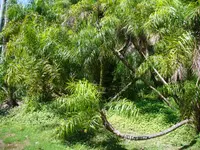
Root-zone mulching

Apply a 5–8 cm layer of coarse organic mulch in a wide ring starting 10–15 cm away from the trunk to stabilize soil moisture, limit weed competition, and protect surface roots from heat stress.

Nutrient monitoring

Check for early signs of magnesium or potassium deficiency, such as leaflet yellowing with green veins, and adjust with a slow-release palm-specific fertilizer rather than high-nitrogen lawn products that can imbalance nutrition.

Cold event protection

Before forecast cold snaps, water the root zone thoroughly and wrap the crown and upper trunk with breathable frost cloth or burlap to reduce tissue damage and protect emerging spear leaves.

Transplant timing

Schedule field planting or upsizing containers for late spring to early summer when soil is warm and growth is active, which improves root establishment and makes caring for Syagrus flexuosa more predictable in the first year.

Common Pests and Diseases

Palm aphids

These insects feed in clusters on the undersides of leaflets and young rachises, sucking sap and causing yellowing and reduced vigor. Symptoms include sticky honeydew and sooty mold on the foliage beneath infested fronds.

Solution

Prune and destroy heavily infested fronds, then hose remaining foliage with a firm stream of water to dislodge colonies. If needed, treat young growth with horticultural soap or lightweight horticultural oil, repeating every 7–10 days until populations drop, and reduce excess nitrogen fertilization that promotes soft, aphid-prone growth when growing Syagrus flexuosa.

Palm leaf skeletonizer

This pest is a caterpillar that mines and scrapes leaf tissue, leaving brown, transparent patches and fibrous veins exposed on pinnae. Damage starts on middle-aged fronds and can spread across the canopy in warm seasons.

Solution

Cut and dispose of infested fronds showing extensive windowpaning or webbing, sealing them in bags to prevent larvae from completing their life cycle. For active infestations, inspect fronds regularly and spot-treat young larvae with Bacillus thuringiensis (Bt) spray, applied in the evening according to label directions.

Red palm mite

These mites cluster along the undersides and midribs of pinnae, causing fine yellow speckling that can progress to bronzing and premature leaf drop. Infestations are more common in hot, dry, and sheltered sites with low air movement.

Solution

Increase overhead rinsing of foliage to wash off mites and dust, and remove the most damaged fronds to reduce populations. In persistent cases, use a labeled miticide or horticultural oil, ensuring thorough coverage of leaflet undersides and improving spacing and air movement around the palm.

Ganoderma butt rot

This disease is caused by the fungus Ganoderma zonatum, which attacks the lower trunk and root collar, leading to slow decline, wilting, and eventual palm death. Symptoms include a hard conk (shelf-like fungal structure) forming near the base of the trunk.

Solution

Remove and destroy affected palms as soon as decline and conks are confirmed, including as much of the lower trunk and root system as possible, and do not replant palms in the same spot. Avoid trunk wounding and mechanical injury, and improve site drainage and soil health to reduce future susceptibility in nearby palms.

Fusarium wilt

This disease, often caused by Fusarium oxysporum f. sp. palmarum, leads to one-sided yellowing and browning of fronds, progressing upward and eventually killing the crown. Symptoms include asymmetric canopy dieback and darkened vascular tissue in affected leaf bases.

Solution

Remove and destroy severely affected fronds and, if decline advances, remove the entire palm to prevent spread via contaminated tools or debris. Sterilize pruning tools between cuts with alcohol or a 10% bleach solution, avoid overhead irrigation that keeps foliage wet for long periods, and source replacement palms from certified disease-free nurseries following Syagrus flexuosa care instructions.

Interesting Facts

Cerrado specialist palm

This species is native to the Brazilian cerrado, a fire-influenced savanna, and often grows in open, seasonally dry grasslands rather than in dense forests.

Edible oily fruits

Its small yellowish drupes contain a fatty pulp and kernel that are locally used for making oil and as animal fodder in rural areas of central Brazil.

Clustering growth habit

Unlike many solitary palms, it often forms multi-stemmed clumps from basal suckers, creating dense groups that can resprout after damage.

Botan icon

Did you know?

In parts of the Brazilian cerrado, local communities traditionally use the fibrous leaf sheaths and fronds of this palm for making rustic brooms, simple handicrafts, and low-cost thatching, providing a small but important non-timber forest product in regions with few other durable plant fibers.

FAQs about Syagrus flexuosa

Yes, this palm can live in large containers for many years if root space, drainage, and nutrients are adequate. Expect slower growth and smaller size than in-ground specimens, but it remains an attractive architectural feature.

Grow Healthy Plants with Botan Care

Keep your plants happy and healthy with plant identification, disease detection, and easy care guidance.

Botan plant care app — identify plants on mobile

Explore More Plants