Stable container choice
Use a wide, heavy pot rather than a tall, narrow one to counterbalance the palm’s arching fronds and shallow roots, reducing the risk of tipping as the plant gains height and canopy mass.

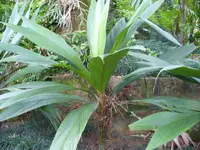
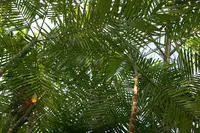
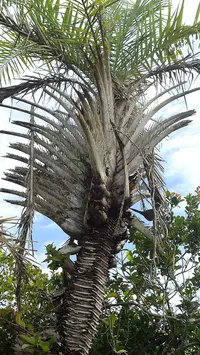
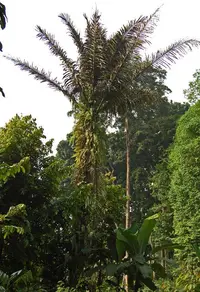
Asterogyne martiana is a small understory palm native to the humid forests of Central America. It forms a slender trunk with arching, feather-like leaves that create a soft, tropical look. Growth is generally slow and compact, which makes it interesting for collectors and indoor palm enthusiasts.
This species prefers warm, sheltered, and consistently moist conditions that mimic shaded rainforest floors. It can be moderately demanding, mainly because it dislikes cold, dry air and irregular watering. For those who learn how to care for Asterogyne martiana, it can become a long-lived foliage plant with a refined, elegant appearance.

Care Difficulty
Moderate Care

Light Preference
Partial Shade

Water Requirements
Keep Soil Moist

Temperature Preference
Tropical / Frost Sensitive

Hardiness Zone
11–12

Soil Texture
Loamy, Silty, Organic-rich

Soil pH
Acidic (5.5–6.5), Slightly acidic (6.5–7.0)

Soil Drainage
Moist but well-drained

Fertilization
Minimal (feed rarely)
Scan your plant to receive care tips personalized for your specific plant
Available on iOS and Android
This understory palm prefers bright, gentle light that mimics filtered forest conditions.
This species prefers consistently moist but not waterlogged soil around its fibrous roots.
This palm thrives in warm, stable conditions similar to lowland tropical forest understory.
This species prefers consistently humid air and reacts poorly to very dry indoor conditions.
This understory palm needs loose, organic-rich, sharply draining soil to avoid root problems.
This palm adapts well to container growing when the pot setup supports its fibrous root system.
This understory palm benefits from light, steady feeding during active growth, especially in containers.
Pruning needs for this small palm are minimal and mainly cosmetic.
This slow-growing palm prefers stable conditions, so repotting or transplanting should be infrequent and careful.
Propagation is usually done from seed and requires patience and warm, stable conditions.
This tropical palm is frost-tender and needs careful winter management in most temperate climates.

Plant Health Check
Not sure what's wrong with your plant? Check your plant's health inside the app.
This species is a small, shade-adapted palm native to humid lowland and premontane rainforests from southern Nicaragua through Costa Rica into Panama, where it naturally grows in the dim understory beneath taller trees.
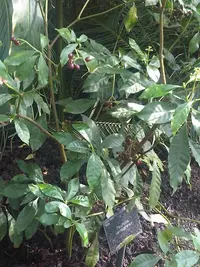
Its foliage forms broad, fanlike blades with deep pleats and a somewhat truncated or squared-off tip, giving it a different look from the feathered fronds that many people associate with palms.
In nature it usually grows as a solitary-stemmed palm, but in some sites it can form small clumps as new shoots arise close to the main stem, helping it occupy small clearings on the forest floor.

This palm is considered uncommon in cultivation and is mainly found in specialized botanical collections and serious palm enthusiasts’ gardens, despite being one of the more attractive small neotropical understory palms for shaded, humid landscapes.
This palm grows slowly to moderately, often adding only a few new fronds each year. In suitable warm, humid conditions it may gain 10–20 cm annually, but growth slows noticeably in cooler or drier environments.
Keep your plants happy and healthy with plant identification, disease detection, and easy care guidance.