Deep root space
Plant in a location or container that allows at least 60–80 cm of unrestricted root depth so the palm can anchor well and develop a stable trunk as it matures.

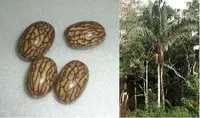
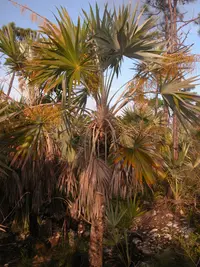
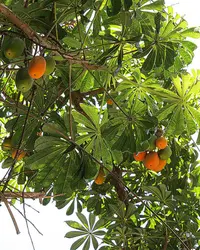
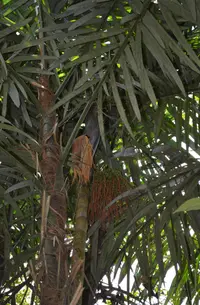
Patawa, Oenocarpus bataua, is a tall, single-stemmed palm native to lowland rainforests of the Amazon and other parts of northern South America. It is mainly valued for its nutritious fruits and oil-rich pulp, traditionally used as food and for cosmetic products.
The palm forms a graceful crown of long, arching fronds and prefers warm, humid, frost-free conditions. It grows slowly at first, then can become a large landscape tree in truly tropical climates.
Because it demands consistent warmth, high humidity, and deep, moist but well-drained soil, it is challenging outside the tropics. Gardeners who want to learn how to care for patawa usually grow it in large containers under protected, controlled conditions.

Care Difficulty
Hard Care

Light Preference
Partial Shade

Water Requirements
Keep Soil Moist

Temperature Preference
Tropical / Frost Sensitive

Hardiness Zone
11–12

Soil Texture
Loamy, Silty, Organic-rich

Soil pH
Strongly acidic (4.5–5.5), Acidic (5.5–6.5)

Soil Drainage
Moist but well-drained

Fertilization
Minimal (feed rarely)
Scan your plant to receive care tips personalized for your specific plant
Available on iOS and Android
This tropical palm prefers bright, filtered light that mimics a high-canopy rainforest environment.
Oenocarpus bataua prefers consistently moist, but not waterlogged, soil to support steady tropical growth.
This species thrives in warm, stable tropical conditions and is sensitive to cold and frost.
This palm prefers consistently high air humidity to maintain healthy foliage.
This species needs deep, moist, well‑aerated soil that mimics its rainforest habitat.
This palm can be grown in large containers for its juvenile stages if managed carefully.
This palm benefits from light, consistent nutrition in containers or nutrient-poor soils, but heavy feeding is unnecessary.
Pruning Oenocarpus bataua focuses on hygiene and safety rather than shaping.
This species is usually field-grown, so transplanting young plants correctly is more important than frequent repotting.
New Oenocarpus bataua plants are produced almost exclusively from seeds, which germinate slowly but reliably under warm, moist conditions.
This strictly tropical palm is frost sensitive and needs careful winter management outside lowland tropics.

Plant Health Check
Not sure what's wrong with your plant? Check your plant's health inside the app.
The dark purple fruits are exceptionally rich in edible oil, with a fatty acid profile similar to olive oil, which has led to their use as a traditional cooking and cosmetic oil in parts of Amazonia.
This palm often grows in the shaded understory of humid lowland forests yet can eventually reach the canopy, showing an unusual combination of shade tolerance in youth and high light demand in adulthood.
Its fruiting season and heavy fruit production make it an important food source for many Amazonian animals, including large birds and mammals that help disperse its seeds over long distances.

Studies in western Amazonia have shown that the palm heart of this species can be harvested without necessarily killing the entire plant, which has made it a more sustainable local alternative to other palm-heart species that must be cut down completely.
This palm grows slowly to moderately, often adding about 20–40 cm of trunk per year under warm, consistently moist conditions. Growth is much slower in cooler climates, in containers, or when nutrients and water are limited.
Keep your plants happy and healthy with plant identification, disease detection, and easy care guidance.