Key Thatch Palm Care (Leucothrinax morrisii)

Key Thatch Palm

About Key Thatch Palm

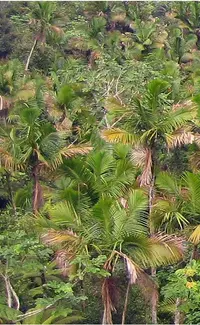
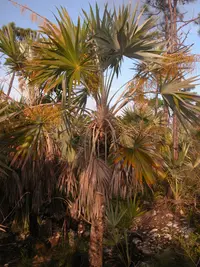
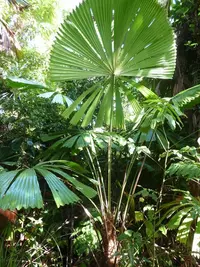
Key thatch palm, Leucothrinax morrisii, is a small to medium fan palm native to the Florida Keys, the Bahamas, and nearby Caribbean islands. It naturally grows in coastal scrub and rocky, sandy habitats exposed to sun and wind.

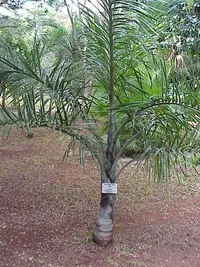
The plant forms a slender trunk topped with a rounded crown of stiff, pale green to bluish fan leaves, giving it a clean, architectural look. Its slow to moderate growth and relatively compact size make it suitable for small gardens and, in warm regions, for patios or large containers.

This species prefers bright light, good air movement, and sharply drained, sandy soil, which makes it drought tolerant but sensitive to poor drainage. Understanding these natural conditions provides a good starting point for how to care for Key Thatch Palm.

Main Plant Requirements

Care Difficulty

Moderate Care

Light Preference

Full Sun

Water Requirements

Moderate Water

Temperature Preference

Warm Climate

Hardiness Zone

10–11

Soil Texture

Sandy, Loamy, Rocky

Soil pH

Slightly acidic (6.5–7.0), Neutral (7.0)

Soil Drainage

Well-drained

Fertilization

Minimal (feed rarely)

Get Personalized Care Plan

Scan your plant to receive care tips personalized for your specific plant

Available on iOS and Android

How to Care for the Key Thatch Palm

This palm prefers bright, open conditions similar to coastal habitats with strong light and good air movement.

  • Provide 6–8 hours of direct sun daily; full sun is ideal once established, though young plants benefit from light afternoon shade in very hot inland sites.
  • Key Thatch Palm tolerates light partial shade, but growth becomes slower and crowns sparser if it receives less than about 4 hours of direct sun.
  • In summer, monitor for leaf scorch on newly planted specimens; in winter, avoid dense shade from buildings or trees that reduces light intensity for extended periods.

Leucothrinax morrisii prefers evenly moist but fast-draining soil and does not tolerate standing water.

  • Allow the top 3–5 cm of soil to dry before watering; in sandy coastal soils this may mean deep watering every few days in summer, guided by soil feel rather than a fixed schedule.
  • In cooler months, reduce frequency so the soil dries a bit deeper between waterings, as root activity and evaporation both slow down.
  • Watch for yellowing, limp fronds and sour-smelling, soggy soil as signs of overwatering, while crisp leaf tips and slow spear expansion suggest underwatering or drought stress, especially on windy sites.

This species thrives in warm subtropical to tropical climates with mild winters and hot summers.

  • Optimal growth occurs around 75–90°F (24–32°C); the palm handles typical coastal heat well if soil moisture is adequate and roots are not confined.
  • It tolerates brief drops to about 28–30°F (-2 to -1°C) with minor leaf damage, but repeated freezes below this range can kill young plants or defoliate mature ones.
  • In regions with cool winters, site the palm in a warm microclimate, avoid cold wind exposure, and protect the crown if forecasts predict hard frost or prolonged temperatures below 32°F (0°C).

This palm handles a wide humidity range but benefits from moderate moisture in the air.

  • Aim for 40–60% humidity, which suits both indoor and outdoor Key Thatch Palm cultivation.
  • It tolerates short dry-air spells, but prolonged humidity below 30% can brown leaflet tips and edges.
  • Increase humidity with nearby water trays, grouped plants, or occasional misting, while ensuring leaves dry quickly to prevent fungal issues.

Leucothrinax morrisii prefers fast-draining, mineral-rich soil that never stays waterlogged.

  • Use a sandy or sandy-loam mix with 40–60% coarse sand plus components like fine gravel and a small amount of compost.
  • Ensure very sharp drainage; excess water should exit the pot or planting area within minutes after heavy watering or rain.
  • Keep pH slightly acidic to neutral (pH 6.0–7.5), avoiding strongly acidic or alkaline conditions that limit nutrient uptake.
  • Improve aeration and drainage by avoiding high peat content and heavy clay, and by incorporating coarse materials such as pumice or perlite.

This species can be grown in containers, especially when young or in cooler regions.

  • Choose a deep, heavy container that reduces tipping risk as the trunk elongates and the crown becomes top-heavy.
  • Leave a broad, open soil surface in the pot to encourage gas exchange and prevent anaerobic conditions around the roots.
  • Position the container where wind exposure is moderated by walls or railings to reduce leverage on the root ball and pot.

This coastal palm benefits from light, consistent feeding during active growth but is sensitive to excess salts.

  • Use a balanced slow-release fertilizer, such as 8-2-12 with micronutrients, formulated for palms growing in sandy soils.
  • Apply in spring and midsummer, staying within label rates to avoid root and leaf burn in Key Thatch Palm.
  • Water deeply after applying to move nutrients into the root zone and reduce salt buildup around roots.
  • Skip or halve applications in late fall and winter when growth slows, especially in cooler climates.

Leucothrinax morrisii needs only light, periodic pruning to maintain health and a tidy crown.

  • Carry out pruning in late winter to early spring or during stable warm weather, avoiding peak heat or drought.
  • Remove only dead, yellowing, storm-damaged, or crossing fronds; keep healthy green leaves to support photosynthesis.
  • Use clean, sharp bypass loppers or a pruning saw, sterilizing blades between plants to limit disease spread.
  • Cut frond stalks close to the trunk without nicking living tissue, preserving the palm’s natural form and growth.

This palm is usually grown in the ground; container plants or young specimens resent frequent disturbance.

  • Transplant in late spring to early summer when soil is warm and the plant can re-establish quickly.
  • Look for circling roots, roots emerging from drainage holes, or stalled growth as cues a container plant needs a larger pot.
  • Move up only 1–2 pot sizes, keeping the root ball intact and setting the palm at the same soil depth as before.
  • Water thoroughly after planting, provide shade for 1–2 weeks, and avoid heavy fertilizer until new growth resumes to reduce stress.

New Leucothrinax morrisii plants are typically raised from seed, and the process is slow but straightforward with patience.

  • Collect fully ripe, cleaned seeds and sow them in late spring to early summer in a fast-draining, sandy mix.
  • Maintain warm conditions around 75–85°F and consistent but not waterlogged moisture to support germination.
  • Provide bright, indirect light and good air circulation to limit fungal problems during the long germination period.
  • Transplant seedlings only after several true leaves form, handling the delicate roots gently to avoid setback.

This tropical palm is only marginally hardy and needs attention in regions with cool or freezing winters.

  • Tolerates brief dips near 30°F but can suffer leaf damage or death with harder or prolonged freezes.
  • Apply a 5–8 cm layer of dry mulch around the root zone in fall, keeping it slightly away from the trunk.
  • For in-ground plants in borderline climates, wrap the crown and trunk with breathable frost cloth during cold snaps.
  • Move container plants indoors or into a frost-free greenhouse before night temperatures drop consistently below 40°F.

Care Tips

Protect Trunk Base

Keep mulch, stones, and groundcovers 10–15 cm away from the trunk to prevent rot at the swollen base and to discourage rodents from chewing young tissue.

Wind Hardening

Before planting in an exposed coastal site, grow the palm for 1–2 seasons in a breezier but still protected area so the petioles and roots adapt to wind stress without snapping or rocking loose.

Manage Salt Overspray

In oceanfront plantings, give the foliage a fresh-water hose rinse every few weeks during dry periods to remove salt film and reduce leaf burn while still allowing the palm to benefit from its natural salt tolerance.

Root Zone Stability

Avoid frequent shallow cultivation or planting short-lived annuals right at the root zone so the fine feeder roots can form a stable, dense mat that anchors the palm and improves nutrient uptake.

Hurricane Tie Support

In hurricane-prone regions, install a low, flexible tie or three-point guy system around the lower trunk only during storm season to stabilize newly established plants, then remove it afterward to prevent girdling and allow normal trunk expansion.

Common Pests and Diseases

Palm leaf skeletonizer

This pest is a caterpillar that feeds between the leaf surfaces, leaving translucent, windowed patches and narrow brown feeding trails on the fronds. Symptoms include premature browning and a lacy, skeletonized appearance of the leaflets.

Solution

Prune and dispose of heavily damaged fronds to remove larvae and pupae, then inspect new growth regularly for early feeding tracks. For ongoing problems, use a targeted biological control such as Bacillus thuringiensis (Bt) applied to the undersides of fronds, and avoid broad-spectrum insecticides that harm beneficial predators.

Royal palm bug

This pest is a small sap-sucking insect that targets expanding spear leaves, causing yellowing, distorted new fronds and reduced leaf size. Symptoms include weak, sparse crowns and slower overall growth, especially on young or stressed palms.

Solution

Trim and discard severely deformed young fronds, then treat emerging spears with a systemic insecticide labeled for palm bugs, following all safety instructions. Improving irrigation consistency and avoiding nutrient stress helps the palm outgrow light infestations and reduces future susceptibility when caring for Key Thatch Palm.

Scale insects

These insects attach to leaflets and petioles, appearing as small bumps and causing yellow spotting, leaf drop, and general decline over time. This pest often produces sticky honeydew that can lead to sooty mold on lower fronds or nearby surfaces.

Solution

Wipe accessible fronds with a soft cloth dipped in mild soapy water or horticultural oil to dislodge and smother scales, repeating every 7–14 days until new growth is clean. For heavier infestations, combine manual removal with a systemic insecticide and improve air movement and light levels to support plant recovery.

Ganoderma butt rot

This disease is a lethal fungal infection attacking the lower trunk, leading to canopy thinning, reduced new growth, and eventual collapse of the crown. Symptoms include a hard, varnished, bracket-shaped conk at the trunk base and internal wood decay.

Solution

Remove and destroy affected palms completely, including the stump, since the fungus persists in soil and wood and cannot be cured once established. Do not replant another palm in the same exact spot, avoid trunk wounding, and manage soil drainage and compaction to reduce stress on remaining palms.

Lethal yellowing-like phytoplasma

This disease is caused by a phytoplasma, a specialized bacterium that disrupts the plant’s vascular system, leading to premature fruit drop, yellowing of lower fronds, and rapid crown decline. Symptoms include browning and collapse of the spear leaf and death of the apical meristem, the main growing point.

Solution

Promptly remove and destroy palms showing advanced symptoms to reduce the local source of infection, and monitor nearby specimens closely for early signs of decline. In regions where this problem is documented, consult local extension guidance on prophylactic antibiotic trunk injections for high-value specimens and always control planthopper and leafhopper vectors through habitat management and targeted treatments when recommended.

Interesting Facts

Endemic Caribbean palm

This species occurs naturally only in a small area of the northern Caribbean, mainly the Florida Keys, parts of the Bahamas, and nearby islands, where it grows in coastal thickets and rocky limestone soils just above the high-tide line.

Fan leaves with wax

Its pale, almost silvery fan-shaped leaves are coated with a fine waxy layer that reduces water loss and helps the palm tolerate intense sun, salt-laden winds, and periodic drought in coastal habitats.

Salt and storm tolerant

Mature plants show high tolerance to salt spray and strong tropical storms, often surviving where less-adapted trees are damaged, which makes this palm an important stabilizing element in exposed coastal vegetation.

Botan icon

Did you know?

The fruit of this palm is an important seasonal food source for several Caribbean bird species, which swallow the small drupes whole and disperse the seeds as they move between coastal islands.

FAQs about Key Thatch Palm

This species grows slowly, often adding only 7–15 cm of trunk per year in suitable outdoor conditions. Growth is even slower in containers. Consistent warmth, adequate nutrients, and space for roots help maintain steady development.

Grow Healthy Plants with Botan Care

Keep your plants happy and healthy with plant identification, disease detection, and easy care guidance.

Botan plant care app — identify plants on mobile

Explore More Plants