Queensland Fan Palm Care (Licuala ramsayi)

Also known as: Fan palm
Queensland Fan Palm

About Queensland Fan Palm

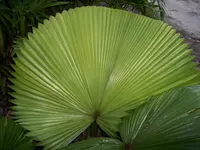
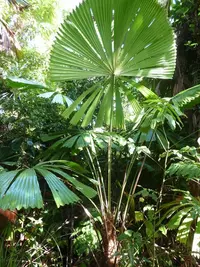
Queensland fan palm, Licuala ramsayi, is a tropical palm known for its large, round, pleated leaves that form a dramatic, almost circular fan. It usually grows with a single, slender trunk and a tidy crown, giving it a clean, architectural look in suitable climates.

This species is native to the rainforests and moist coastal areas of northeastern Australia, where it thrives in warm, shaded, humid conditions. It is considered moderately challenging, as it dislikes cold, dry air, and irregular watering, so learning how to care for Queensland Fan Palm is important for long-term success.

Main Plant Requirements

Care Difficulty

Hard Care

Light Preference

Partial Shade

Water Requirements

Keep Soil Moist

Temperature Preference

Tropical / Frost Sensitive

Hardiness Zone

10–11

Soil Texture

Loamy, Silty, Organic-rich

Soil pH

Acidic (5.5–6.5), Slightly acidic (6.5–7.0)

Soil Drainage

Moist but well-drained

Fertilization

Light (every 4–6 weeks)

Get Personalized Care Plan

Scan your plant to receive care tips personalized for your specific plant

Available on iOS and Android

How to Care for the Queensland Fan Palm

This palm prefers bright, filtered light that mimics dappled rainforest conditions.

  • Provide 4–6 hours of bright, indirect light daily, such as beneath high tree canopy or a shade cloth that softens direct sun.
  • Tolerates light morning sun but protect Queensland Fan Palm from harsh midday and afternoon sun, which can scorch leaves and bleach color.
  • In deeper shade growth slows and fronds stretch; increase light gradually in spring, and offer extra shade during intense summer sun in hot climates.

This species needs consistently moist but not waterlogged soil.

  • Irrigate when the top 2–4 cm of soil feels slightly dry, aiming for evenly damp soil down to root depth rather than surface wetness only.
  • Use deep, slow watering in well-drained soil so excess water can escape; standing water around the root zone increases risk of root rot in Licuala ramsayi.
  • In cooler seasons reduce frequency as drying slows; drooping, crisp frond edges indicate underwatering, while yellowing lower leaves and sour-smelling soil suggest overwatering.

This palm thrives in warm, frost-free climates with stable temperatures.

  • Ideal growing range is 70–85°F (21–29°C), where leaf expansion and root activity remain steady and foliage stays a rich green.
  • Short dips to 55°F (13°C) are tolerated, but growth slows; prolonged exposure below 50°F (10°C) can damage fronds and weaken the plant.
  • Protect from frost, as tissue is easily burned at 32°F (0°C) and below; in extreme heat above 95°F (35°C), increase shade and soil moisture to limit stress.

This palm needs consistently high humidity to maintain healthy foliage and avoid leaf damage.

  • Aim for 60–80% humidity; prolonged levels below 50% cause leaf edges to brown and fronds to crisp.
  • Dry indoor air stresses Queensland Fan Palm, especially near heaters or air conditioning vents.
  • Increase humidity with a room humidifier, grouped plants, and a wide pebble tray that allows water to evaporate under the pot.

This species prefers a moist, airy, organic-rich substrate that drains freely yet never dries out completely.

  • Use a mix of roughly 40% peat or coco coir, 30% fine compost, 20% pine bark, and 10% perlite for structure and drainage.
  • Aim for slightly acidic to neutral pH around 6.0–7.0, which supports nutrient uptake and root health in Licuala ramsayi.
  • Ensure excess water can drain quickly; waterlogged or compacted soil leads to root rot and yellowing fronds.
  • Improve aeration by blending in chunky bark and perlite rather than sand, which can settle and reduce pore space.

This palm can be grown in containers, but it needs careful attention to stability and moisture management.

  • Choose a wide, heavy pot to counterbalance the tall, fan-shaped crown and reduce tipping risk in wind or on balconies.
  • Use a deep container that allows vertical root development, keeping the root zone evenly moist without shallow drying.
  • Select thicker-walled clay or ceramic pots outdoors to moderate temperature swings and slow surface drying in hot weather.

Licuala ramsayi benefits from light, consistent feeding in warm months to support steady leaf production.

  • Apply a balanced liquid fertilizer (such as 10-10-10 or 20-20-20) at 1/4–1/2 strength every 4–6 weeks during spring and summer.
  • Use slow-release palm fertilizer granules in early spring for outdoor plants, following label rates to avoid salt buildup.
  • Supplement with a thin layer of compost over the root zone once a year, keeping it away from the trunk.
  • Stop feeding in late fall and winter, when growth slows, to reduce weak, stretched foliage.

Pruning Licuala ramsayi is minimal and focuses on maintaining health rather than reshaping the plant.

  • Carry out pruning in late winter or early spring, before strong new growth begins.
  • Remove dead, yellowing, or torn fronds at the base with clean, sharp bypass pruners or a sterilized saw.
  • Avoid cutting green, healthy fronds, as each fan contributes significantly to the palm’s energy production and vigor.
  • Trim only dry leaf tips if needed for appearance, without cutting into still-green tissue.

This palm dislikes disturbance, so repotting or transplanting should be infrequent and done with care.

  • Plan repotting or transplanting in late spring or early summer, once temperatures are consistently warm.
  • Look for roots circling the container, pushing through drainage holes, or noticeably slowed growth as signals to move up 1 pot size.
  • Lift the root ball gently, keep as much soil intact as possible, and avoid breaking thick structural roots.
  • Water thoroughly after transplanting, provide shade for 1–2 weeks, and maintain even moisture to limit transplant shock when growing Queensland Fan Palm.

Licuala ramsayi is usually propagated from seed and is considered slow and demanding to raise.

  • Collect fresh, ripe seeds and clean off any remaining fruit pulp to reduce fungal problems.
  • Sow in a sterile, very well-drained mix, keeping temperatures around 77–86°F with high humidity and gentle bottom warmth.
  • Provide bright, indirect light and keep the medium evenly moist, never waterlogged, for many months, as germination is often slow.
  • Transplant seedlings only when they have several firm roots and at least 1–2 strong leaves to minimize setback.

This tropical palm is frost-tender and needs thoughtful winter care in most non-tropical climates.

  • Avoid exposure to frost or temperatures below about 40°F, which can damage fronds and growing points.
  • For in-ground plants in marginal climates, apply a 5–10 cm mulch layer around the root zone, keeping it clear of the trunk.
  • Wrap the stem and emerging spear lightly with breathable frost cloth during cold snaps to limit tissue damage.
  • Move container plants indoors or into a heated greenhouse before the first frost, giving bright, filtered light and reduced watering.

Care Tips

Gradual Light Acclimation

When moving a nursery plant outdoors or into a brighter spot, increase light over 2–3 weeks by shifting it a little closer to the light source every few days to prevent leaf scorch on the broad fronds.

Rotating For Symmetry

Turn the container 1/4 turn every 2–3 weeks so new fronds distribute evenly around the trunk and the crown stays balanced rather than leaning toward the brightest side.

Protecting Young Trunks

For young plants grown outdoors, use a breathable tree wrap or shade cloth around the lower stem during the first 1–2 summers to reduce sunburn and mechanical damage from wind.

Wind Management Setup

Position large pots behind a solid barrier such as a wall, hedge, or balcony screen so the fan leaves are shielded from strong, drying winds that can tear the leaf segments.

Container Weight Stabilization

In windy or exposed spots, add a 2–4 cm layer of gravel or stones on top of the soil and use a heavy, wide-based pot to reduce the risk of the palm toppling as it develops larger fronds, which is especially useful when growing Queensland Fan Palm in containers.

Common Pests and Diseases

Palm scale

This pest attaches to fronds and petioles, sucking sap and causing yellow spotting, loss of gloss, and general decline. Symptoms include rough, crusty patches that can be scraped off with a fingernail.

Solution

Wipe fronds and petioles with a soft cloth dipped in a dilute insecticidal soap solution, repeating every 7–10 days until new growth is clean. For heavier infestations on outdoor plants, use a horticultural oil spray, ensuring thorough coverage of both leaf surfaces while avoiding application during high heat or direct midday sun.

Spider mites

These insects favor the large, pleated fronds in warm, dry air, causing fine stippling, dull color, and eventual browning along the leaf segments. Symptoms include very fine webbing between ribs and along the undersides of the leaves.

Solution

Increase humidity around the plant, then hose or shower the fronds thoroughly, focusing on the undersides, and repeat weekly until there is no new damage. If mites persist, apply a miticidal or insecticidal soap spray labeled for spider mites, rotating products if needed and monitoring new leaves closely as part of Queensland Fan Palm care instructions.

Leaf spot fungus

This disease produces brown to black water-soaked spots on the broad fan blades, often with a yellow halo that can merge into larger blotches. Symptoms include premature yellowing and shedding of the older fronds in humid, low-airflow conditions.

Solution

Remove and dispose of affected fronds, avoid overhead watering, and improve spacing and airflow around the plant. In persistent or severe cases, apply a copper-based or other palm-safe fungicide to both sides of the leaves, following label directions and treating new growth as it emerges.

Pink rot

This disease, caused by the fungus Nalanthamala vermoeseni, leads to soft, brown lesions at the base of fronds or on young emerging leaves, sometimes with salmon-pink fungal growth. Symptoms include distorted or collapsed new spears and dieback from the growing point in overly wet or shaded conditions.

Solution

Cut out and discard infected tissue back to firm, healthy material, then reduce overhead watering and improve light and airflow. Keep the crown area dry, avoid injuries to the growing point, and apply a systemic fungicide labeled for palm pink rot where the disease has been confirmed or has occurred before.

Mealybugs

These insects gather in the folds and bases of the fan fronds, appearing as white cottony masses that excrete sticky honeydew. Symptoms include distorted new growth, slowed vigor, and sometimes sooty mold growing on the honeydew deposits.

Solution

Use a cotton swab dipped in isopropyl alcohol to dab visible clusters, then wash the plant with a mild insecticidal soap solution, paying attention to leaf bases and undersides. Repeat treatments every 7–14 days until no new insects appear, and inspect any nearby palms to prevent reinfestation.

Interesting Facts

Monsoon forest specialist

This palm is naturally restricted to lowland and upland rainforests of northeastern Queensland, often growing along creeks and in seasonal monsoon gullies where soils stay moist but not permanently flooded.

Architect of rainforest shade

Its huge, circular, pleated fronds form an almost complete disc, creating deep shade that influences the humidity and light levels of the forest floor beneath it.

Rain-dispersed fruit strategy

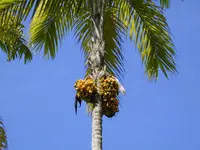
The species produces bright red drupes that often fall and roll downslope during heavy tropical rains, helping spread seeds along creek lines and into new rainforest gaps.

Botan icon

Did you know?

In parts of its native range, dense colonies of this palm form almost pure stands called fan palm forests, where its broad crowns dominate the canopy structure and create a distinctive, umbrella-like landscape that is unlike surrounding rainforest types.

FAQs about Queensland Fan Palm

Growth is slow to moderate. Young plants may add only 10–20 cm of trunk per year in suitable outdoor conditions, often less in containers. Consistent warmth, moisture, and high humidity help maintain a steady growth rate.

Grow Healthy Plants with Botan Care

Keep your plants happy and healthy with plant identification, disease detection, and easy care guidance.


Botan plant care app — identify plants on mobile

Explore More Plants