Support heavy clusters
Install sturdy stakes or a simple trellis frame before the palms reach full height so developing fruit clusters and spiny fronds can be tied and supported without damaging the crown.

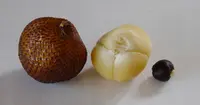
Salak, or Salacca zalacca, is a tropical palm grown mainly for its distinctive scaly-skinned fruits known as snake fruit. It forms dense clumps of short, stout stems armed with sharp spines.
This species is native to humid lowland forests and plantations in Indonesia and Southeast Asia, where it grows in warm, sheltered, partially shaded sites. It prefers consistently moist, well-drained soil and high humidity.
For home growers, the spines, size, and climate needs make it more suitable for experienced growers or outdoor cultivation in tropical regions. Learning how to care for Salak starts with providing stable warmth, moisture, and protection from strong wind and full sun.

Care Difficulty
Hard Care

Light Preference
Partial Shade

Water Requirements
Keep Soil Moist

Temperature Preference
Tropical / Frost Sensitive

Hardiness Zone
11–12

Soil Texture
Loamy, Silty, Organic-rich

Soil pH
Acidic (5.5–6.5), Slightly acidic (6.5–7.0)

Soil Drainage
Moist but well-drained

Fertilization
Moderate (every 2–4 weeks)
Scan your plant to receive care tips personalized for your specific plant
Available on iOS and Android
This tropical palm needs bright, indirect light with some protection from harsh midday sun.
This species prefers consistently moist, never waterlogged soil.
This palm thrives in warm, stable tropical conditions without temperature extremes.
This palm prefers consistently high humidity to support healthy foliage and fruiting.
Salacca zalacca thrives in deep, moist, well-aerated substrates that mimic rich tropical forest floor conditions.
This species can be grown in large containers, but only with careful attention to stability and moisture management.
This tropical fruit palm benefits from moderate feeding to sustain growth and fruiting.
Pruning Salacca zalacca focuses on safety, access, and plant health rather than shaping like an ornamental shrub.
This palm is usually grown in-ground, so transplanting young plants at the right time is more important than frequent repotting.
Propagation of Salacca zalacca is usually done from seeds, with offshoots sometimes used where available.
This tropical species has very low frost tolerance and needs careful winter management outside hot, frost-free climates.

Plant Health Check
Not sure what's wrong with your plant? Check your plant's health inside the app.
The fruit of this palm has a thin, brittle skin made of overlapping, glossy brown scales that closely resemble snake skin, which is why it is commonly called snake fruit.
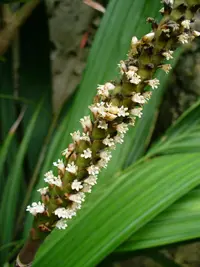
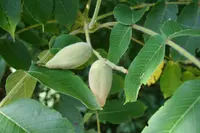
The palm produces separate male and female inflorescences on the same plant, but in cultivation it is often hand-pollinated to ensure good fruit set because natural pollination can be unreliable in dense plantings.
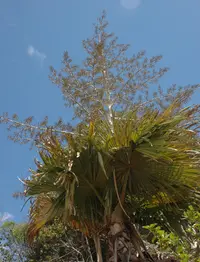
Instead of forming a tall visible trunk, this species grows as dense clumps with very short, often subterranean stems and long, arching, spiny leaves that can make harvest and maintenance physically challenging.

In parts of Indonesia, large areas of lowland forest and former rice fields have been converted specifically to Salacca zalacca orchards, and some locally adapted cultivars are so valued that they are protected and promoted as regional heritage crops.
The fruits are edible and widely consumed. They have a crisp texture with sweet to tangy flesh and a reddish-brown scaly skin. Only the peeled flesh is eaten; the hard central seed is discarded.
Keep your plants happy and healthy with plant identification, disease detection, and easy care guidance.