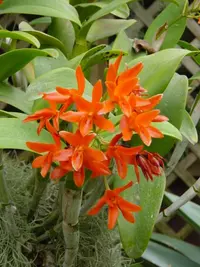
Aeschynanthus parviflorus Care

Aeschynanthus parviflorus

About Aeschynanthus parviflorus

Aeschynanthus parviflorus is a compact, evergreen epiphyte from tropical forests of Southeast Asia, where it grows on trees in warm, humid shade. It forms trailing or slightly arching stems with small, fleshy leaves and tubular flowers that are usually red to orange, making it suitable for hanging baskets or elevated pots indoors.

This species prefers bright, filtered light, moderate moisture, and a loose, well‑drained mix that mimics its natural tree‑dwelling habit. Its succulent leaves store some water, which makes it moderately forgiving of brief drying, but consistent care for Aeschynanthus parviflorus still matters for good flowering.

Main Plant Requirements

Care Difficulty

Moderate Care

Light Preference

Bright Indirect Light

Water Requirements

Moderate Water

Temperature Preference

Tropical / Frost Sensitive

Hardiness Zone

11–12

Soil Texture

Loamy, Peaty, Organic-rich

Soil pH

Acidic (5.5–6.5), Slightly acidic (6.5–7.0)

Soil Drainage

Moist but well-drained

Fertilization

Light (every 4–6 weeks)

Get Personalized Care Plan

Scan your plant to receive care tips personalized for your specific plant

Available on iOS and Android

How to Care for the Aeschynanthus parviflorus

This species prefers bright, indirect light that mimics filtered tropical forest conditions.

  • Provide 6–8 hours of bright, filtered light each day, such as near an east or bright north-facing window, or under light shade outdoors.
  • Tolerate only gentle morning sun; protect from strong midday or afternoon sun, which can scorch leaves and fade flowers.
  • In winter, move Aeschynanthus parviflorus closer to a bright window or supplement with grow lights if new growth becomes sparse or stems stretch.

Watering should keep the root zone lightly moist but never waterlogged.

  • Before watering, let the top 2–3 cm of the potting mix dry, then water thoroughly so excess drains away completely.
  • Reduce watering in autumn and winter when growth slows, allowing the top 3–4 cm to dry; increase slightly in spring and summer during active growth and flowering.
  • Watch for soft, yellowing leaves or a sour smell as signs of overwatering, and wrinkling or crisp edges as signs of underwatering, then adjust frequency.

Stable, warm temperatures support steady growth and flowering of this species.

  • Aim for 65–80°F (18–27°C) for best growth, keeping day and night swings small to reduce stress on the plant.
  • Avoid temperatures below 55°F (13°C); prolonged exposure near this level can slow growth, cause leaf drop, and increase disease risk.
  • Protect from frost and from hot, drying drafts above 85°F (29°C); provide shade and extra humidity during heat waves to limit leaf scorch.

This species prefers moderately high, stable humidity to support healthy foliage and flowering.

  • Aim for 50–70% humidity; it will tolerate brief drops but prolonged very dry air leads to leaf edge browning.
  • Watch for curled, crispy leaf tips and slowed growth as signs of humidity stress in dry rooms or near heating vents.
  • Increase humidity with a nearby humidifier, grouping plants together, or a pebble tray that keeps the pot above, not in, the water.

Use a light, airy, fast-draining mix that still holds some moisture around the roots.

  • Choose a loose, chunky mix such as 2 parts peat- or coco-based potting mix with 1 part perlite and 1 part fine orchid bark for structure.
  • Ensure rapid drainage so water runs through within seconds, preventing waterlogging and root rot in the relatively fine roots of Aeschynanthus parviflorus.
  • Keep pH slightly acidic to neutral, around 5.8–6.8, which supports nutrient availability and stable leaf color.
  • Avoid dense garden soil or heavy clay-based mixes that compact, reduce aeration, and keep roots wet for long periods.

This species is well suited to container growing, especially in hanging baskets or elevated pots.

  • Select a wide, shallow container that allows roots to spread laterally and accommodates trailing stems over the rim.
  • Use a pot material with moderate breathability, such as terracotta or unglazed ceramic, to reduce the risk of chronically wet mix in cool rooms.
  • Stabilize hanging or elevated containers securely, since mature trailing growth adds weight that can shift an unsecured hook or shelf.

Nutrient support helps Aeschynanthus parviflorus flower well in containers without forcing soft, weak growth.

  • Use a balanced liquid fertilizer (for example 10-10-10 or 20-20-20) at 1/4–1/2 label strength for indoor or potted plants.
  • Feed every 4–6 weeks during spring and summer when growth is active, skipping applications if growth slows from low light.
  • Reduce or stop feeding in fall and winter, when the plant’s nutrient demand is much lower.
  • Incorporate a small amount of compost or a low-dose slow-release fertilizer into the potting mix at the start of the growing season.

Thoughtful pruning keeps Aeschynanthus parviflorus compact, leafy, and floriferous over many years.

  • Carry out light pruning in late winter or early spring before vigorous new growth begins.
  • Use clean, sharp scissors or pruning snips to remove dead, damaged, or diseased stems back to healthy tissue.
  • Thin out crowded or overly long shoots to improve air movement and light penetration and to maintain a balanced shape.
  • After flowering, tip back leggy stems by a few nodes to encourage branching and more future blooms.

Container-grown Aeschynanthus parviflorus benefits from occasional repotting to refresh soil and prevent root binding.

  • Check for roots circling the pot, emerging from drainage holes, or unexplained slow growth as signs it needs a larger container.
  • Plan to repot every 2–3 years in spring, moving only 1 pot size up to avoid excess wet soil around the roots.
  • Gently loosen circling roots and remove a little old mix, then set the plant in fresh, well-drained potting medium.
  • Water thoroughly after repotting, then keep in bright, indirect light and slightly drier for 1–2 weeks to limit transplant shock.

New plants of Aeschynanthus parviflorus are most often produced from stem cuttings rather than seed.

  • Take 7–10 cm semi-ripe stem cuttings in late spring or summer, choosing non-flowering shoots with several nodes.
  • Remove lower leaves and insert cut ends into a moist, well-drained mix such as 1:1 peat-free compost and perlite.
  • Maintain bright, indirect light, high humidity, and a temperature of 70–80°F to encourage rapid rooting.
  • Once roots are 2–3 cm long and new growth appears, pot each cutting into a small container and resume normal care.

This tropical species needs warm, stable indoor conditions through winter in most climates.

  • Aeschynanthus parviflorus is frost tender and should be kept above 55°F, ideally 60–75°F, at all times.
  • Move outdoor containers indoors before night temperatures drop below 55°F, placing them in bright, indirect light.
  • Keep soil slightly drier in winter, allowing the top layer to dry between waterings to avoid root rot in cool conditions.
  • Keep the plant away from cold drafts, single-pane windows, and heating vents that cause rapid temperature swings.

Care Tips

Encourage Trailing Form

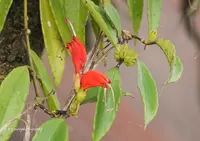
Pinch back only the soft stem tips after a flowering cycle to promote branching and a fuller, cascading habit without removing developing flower buds along the vines.

Rotate For Even Growth

Turn the pot 90° every 1–2 weeks so all sides receive similar light, which reduces leaning, encourages symmetrical trailing, and improves overall flowering potential.

Support Long Stems

Guide longer stems onto a hoop or small trellis, or loosely clip them to a hanging basket rim, to prevent breakage at the base and keep the plant’s weight evenly distributed.

Seasonal Rest Period

After the main flowering flush, reduce fertilizer and allow a slightly cooler, stable environment for 4–6 weeks to support bud set for the next blooming cycle.

Targeted Pest Monitoring

Inspect the undersides of leaves and the soft stem tips weekly with a hand lens, and isolate the plant promptly if mealybugs or thrips are seen, as early action is essential when caring for Aeschynanthus parviflorus.

Common Pests and Diseases

Mealybugs

This pest often hides in leaf axils and along stems, feeding on sap and causing leaf curling, stunting, and sticky honeydew on surfaces below the plant.

Solution

Isolate the plant, then dab visible insects with cotton swabs dipped in 70% isopropyl alcohol and rinse foliage with lukewarm water; repeat weekly until clear. For heavier infestations on hanging baskets, use a labeled insecticidal soap or neem oil spray, ensuring thorough coverage of stems and leaf joints, and improve air circulation as part of Aeschynanthus parviflorus care instructions.

Spider mites

These insects thrive in warm, dry indoor air and cause fine stippling, dull foliage, and fine webbing on undersides of leaves and between stems.

Solution

Increase humidity around the plant, then rinse foliage thoroughly under a gentle shower or sink sprayer, focusing on leaf undersides. If mites persist, apply insecticidal soap or a horticultural oil at 5–7 day intervals, keeping the plant out of direct sun until leaves are dry to avoid leaf burn.

Aphids

This pest clusters on tender new growth and flower stalks, sucking sap and causing distorted leaves, sticky honeydew, and sometimes sooty mold on the glossy foliage.

Solution

Physically remove colonies by rinsing the plant with a firm but gentle stream of water, then treat remaining insects with insecticidal soap, repeating after 5–7 days as needed. Avoid overfertilizing, since very soft, fast growth attracts aphids and increases the chance of recurring problems.

Botrytis blight

This disease appears as soft, water-soaked spots on leaves, stems, or flowers that quickly develop fuzzy gray mold, especially in cool, humid, low-light conditions.

Solution

Remove and discard all affected tissues and old spent flowers, then increase air movement and reduce crowding around the plant. Allow the potting mix surface to dry slightly between waterings, avoid wetting the foliage, and in persistent cases use a labeled fungicide suitable for indoor ornamentals while correcting the underlying humidity and airflow issues.

Leaf spot

Symptoms include small brown or black spots on leaves, sometimes with yellow halos, often starting on older or shaded foliage where moisture lingers longest.

Solution

Prune and discard affected leaves, sterilizing pruning tools with alcohol between cuts, and avoid overhead watering that keeps foliage wet. Improve light and airflow, water in the morning so leaves dry quickly, and if spotting continues, apply a suitable copper-based or broad-spectrum fungicide according to label directions for indoor ornamental plants.

Interesting Facts

Named for tiny flowers

The species epithet parviflorus is Latin for small-flowered, referring to its comparatively smaller, slender tubular blooms within the lipstick vine group, even though the overall floral display can still be quite showy when many flowers open together.

Epiphytic forest specialist

This species often grows as an epiphyte on trees in humid tropical forests, anchoring to bark rather than soil, which explains its trailing habit and preference for airy, well-drained root conditions in cultivation.

Bird-pollinated tube flowers

Its bright tubular flowers are adapted for pollination by nectar-feeding birds in its native range, with a floral shape and orientation that make nectar accessible to bird beaks while dusting them with pollen.

FAQs about Aeschynanthus parviflorus

This species performs best indoors or in sheltered, warm outdoor spots in frost-free climates. It dislikes cold drafts and low humidity. In most temperate regions, treat it as a houseplant or patio plant that comes inside over winter.

Grow Healthy Plants with Botan Care

Keep your plants happy and healthy with plant identification, disease detection, and easy care guidance.

Botan plant care app — identify plants on mobile

Explore More Plants