Haworthiopsis reinwardtii Care

Haworthiopsis reinwardtii

About Haworthiopsis reinwardtii

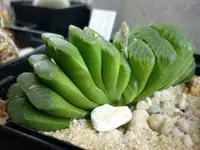
Haworthiopsis reinwardtii, often called zebra haworthia, is a small succulent from South Africa. It forms tight clumps of upright, pointed leaves marked with raised white bands. The plant grows slowly and stays compact, which makes it suitable for windowsills, desks, and small indoor spaces. Its firm, fleshy leaves store water, so it tolerates short periods of neglect better than many leafy houseplants. This species prefers bright, indirect light, occasional watering, and a gritty, fast-draining soil mix. These traits make it straightforward to care for Haworthiopsis reinwardtii, provided it is not overwatered or kept in heavy, soggy soil.

Main Plant Requirements

Care Difficulty

Easy Care

Light Preference

Bright Indirect Light

Water Requirements

Low Water

Temperature Preference

Tropical / Frost Sensitive

Hardiness Zone

10–11

Soil Texture

Sandy, Loamy, Rocky

Soil pH

Acidic (5.5–6.5), Slightly acidic (6.5–7.0)

Soil Drainage

Well-drained

Fertilization

Minimal (feed rarely)

Get Personalized Care Plan

Scan your plant to receive care tips personalized for your specific plant

Available on iOS and Android

How to Care for the Haworthiopsis reinwardtii

This compact succulent prefers bright, indirect light that mimics open shade in its native habitat.

  • Provide 4–6 hours of bright, filtered light daily, such as near an east- or west-facing window or in light shade outdoors.
  • Tolerates light morning sun but protect Haworthiopsis reinwardtii from strong midday or afternoon sun, which can cause leaf scorch and bleaching.
  • In low light, leaves may stretch and lose patterning; move gradually to a brighter spot, especially in winter when natural light levels drop.

This species stores water in its leaves and needs a thorough but infrequent watering approach.

  • Allow the top 3–5 cm of soil to dry completely before watering, then water deeply so excess drains away.
  • Reduce watering in winter, sometimes to once every 3–4 weeks, as growth slows and Haworthiopsis reinwardtii uses less moisture.
  • Watch for mushy, yellowing leaves and a sour soil smell as signs of overwatering; very shriveled, papery leaves signal underwatering.

This succulent prefers warm, stable conditions with protection from frost and extreme heat.

  • Aim for 65–80°F (18–27°C) for steady growth, with slightly cooler nights improving resilience.
  • Protect from temperatures below 40°F (4°C); brief dips to 35°F (2°C) may be tolerated but repeated or hard frost can kill tissues.
  • In hot spells above 90°F (32°C), give bright shade, increase airflow, and avoid placing near heat-reflecting surfaces like metal or south-facing walls.

This species is well adapted to dry indoor air and usually does not need extra humidity attention.

This succulent needs a fast-draining, mineral-rich mix to prevent root rot.

  • Use a cactus/succulent mix amended with extra pumice, perlite, or coarse sand to create a gritty, open structure.
  • Aim for slightly acidic to neutral pH around 6.0–7.0, avoiding dense, clay-heavy garden soil.
  • Limit peat and compost to a small fraction of the mix so the root zone dries within 3–5 days after watering.
  • For Haworthiopsis reinwardtii, prioritize sharp drainage and ample air pockets over moisture retention.

This species is very suitable for container growing due to its compact, clumping habit.

  • Choose a pot only 2–3 cm wider than the root ball to prevent the mix from staying wet too long.
  • Select unglazed terracotta if extra evaporation is needed, especially in cooler or low-light positions.
  • Use a relatively shallow pot and fill the upper rim with coarse gravel to keep the rosette base dry from splashing.

This compact succulent needs only light feeding to stay healthy in containers.

  • Use a balanced liquid fertilizer (for example 10-10-10) diluted to 25–50% strength during active growth in spring–summer.
  • Feed Haworthiopsis reinwardtii no more than every 4–6 weeks; more can cause soft, weak growth and salt buildup.
  • Skip compost-heavy mixes and choose low-organic, cactus-specific products to avoid soggy soil and root issues.
  • Stop fertilizing in fall–winter, or apply at 10–25% strength only if the plant is still growing under strong light.

Pruning needs are minimal and focus on hygiene and maintaining a neat rosette.

  • Best time for light pruning is during active growth in spring–summer when recovery is fastest.
  • Remove dried or damaged leaves at the base, pulling gently or cutting with clean, sharp scissors.
  • Thin out crowded offsets only if they distort the clump or if you plan to replant them separately.
  • Sanitize tools with alcohol before use to lower the risk of spreading rot or fungal issues on Haworthiopsis reinwardtii.

This species prefers slightly tight containers and infrequent repotting.

  • Repot every 2–3 years, or when roots circle the pot, emerge from drainage holes, or growth noticeably slows.
  • Choose late spring as the best time, when days lengthen and the plant can resume growth quickly after disturbance.
  • Use a shallow pot with drainage and a gritty cactus mix; handle roots gently and shake off only loose, old soil.
  • After repotting Haworthiopsis reinwardtii, wait 3–5 days before watering to let any root damage dry and reduce rot risk.

Propagation is straightforward and most often done by offsets rather than seed.

  • Divide offsets from the mother plant in late spring–summer when plants are actively growing.
  • Gently remove the clump from the pot and separate pups with some roots attached, using a sterile knife if needed.
  • Allow cut or broken surfaces to dry and callus for 1–3 days in shade before potting.
  • Plant divisions in a dry, gritty mix, then water lightly after 3–5 days and keep in bright, indirect light until rooted.

Winter care focuses on keeping this succulent cool, dry, and frost free.

  • Haworthiopsis reinwardtii is not frost hardy; persistent temperatures below 30°F can damage or kill tissues.
  • Move container plants indoors or into a bright, cool space when outdoor nights approach 35–40°F.
  • Water sparingly in winter, letting the mix dry almost completely between light waterings to prevent root rot.
  • Provide as much light as possible indoors, using a grow light if needed to avoid weak, etiolated growth.

Care Tips

Offset management

Remove and replant offsets only when they have at least 4–5 leaves and visible roots, then let the cut or broken base dry for 2–3 days before potting to reduce rot risk when growing Haworthiopsis reinwardtii.

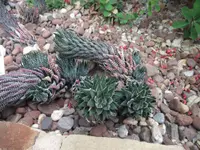
Cluster shape control

Rotate the pot 90° every 2–3 weeks and remove weak, stretched rosettes from the shaded side so the clump stays compact and evenly shaped.

Targeted pest checks

Inspect the tight leaf rosettes with a cotton swab or soft brush every month to detect and manually remove mealybugs or scale before they hide deep between the leaves.

Root health monitoring

Gently unpot and inspect roots once a year at the start of the warm season, trimming any hollow or dark mushy roots and refreshing the top 2–3 cm of mix to keep the plant vigorous.

Seasonal outdoor shift

In mild climates, move the plant outdoors under bright, roofed shelter in late spring to increase light and airflow, then bring it back indoors well before nights drop below 50°F to avoid cold stress.

Common Pests and Diseases

Mealybugs

This pest often hides in the tight leaf rosettes and along the stem, feeding on sap and causing slow, patchy yellowing or stunted growth. Symptoms include white, cotton-like clusters in crevices and sticky honeydew on leaves or nearby surfaces.

Solution

Isolate the plant, then dab visible insects with cotton swabs dipped in 70% isopropyl alcohol and repeat weekly until no new clusters appear. Increase airflow, avoid excess nitrogen fertilizer, and for heavier infestations use a labeled ready-to-use insecticidal soap or neem oil spray, making sure to reach the leaf bases and underside of rosettes.

Aloe mite

This pest (eriophyid mite) can cause warped, tumor-like growths or rough, bumpy patches on leaves and at the growth point. Symptoms include distorted rosettes and abnormal tissue that does not return to normal even if the pest is removed.

Solution

Remove and discard all visibly deformed leaves and heavily affected offsets, sterilizing tools between cuts with alcohol. Keep new plants quarantined for several weeks, avoid placing stressed plants in very tight groups, and if distortion continues, discard the entire plant to prevent spread to other succulents.

Scale insects

These insects attach firmly to the leaves and stems, appearing as small, brown or gray domes that can blend with the rough, banded surface. Symptoms include dull, weakened foliage, slowed growth, and sometimes sticky honeydew or sooty mold on nearby surfaces.

Solution

Gently scrape or rub off individual scales with a fingernail or soft toothbrush, then wipe the plant with a cloth lightly moistened with 70% isopropyl alcohol. For persistent cases, use a labeled systemic insecticide suitable for succulents and reduce plant stress by providing bright light and correct watering to support Haworthiopsis reinwardtii care.

Leaf spot

This disease produces small, sunken brown or gray lesions on leaves, often starting where water sits in the rosette or where old debris is trapped. Symptoms include spots that may slowly expand, sometimes with a darker edge or slightly soft tissue around the lesion.

Solution

Remove affected leaves if damage is localized and keep the rosette dry by watering at the soil line rather than overhead, especially in cool conditions. Improve light and airflow around the plant, avoid crowding pots, and if spotting continues, apply a labeled copper-based or broad-spectrum fungicide lightly and allow leaves to dry quickly after treatment.

Interesting Facts

Distinct towered rosettes

Unlike many related haworthias that stay squat and compact, this species naturally forms tall, tower-like rosettes with densely packed leaves, often reaching over 15 cm in height in cultivation.

Pronounced white tubercles

Its raised white tubercles (small, wart-like bumps) form regular transverse bands on the leaves, creating a strong visual contrast that makes it easy to distinguish from similar species like Haworthiopsis fasciata, which tends to have smoother inner leaf surfaces.

Nocturnal flower opening

The small tubular flowers often open in the late afternoon or evening, a timing that aligns with activity patterns of certain small pollinating insects in its native range in South Africa’s Eastern Cape.

Botan icon

Did you know?

This species was long known in cultivation under the older name Haworthia reinwardtii and has been grown in European collections since at least the 19th century, making it one of the historically most widespread and recognizable haworthioid succulents in horticulture.

FAQs about Haworthiopsis reinwardtii

This species often flowers sparsely indoors. Limited light, stress from recent repotting, or irregular watering can reduce flowering. Healthy growth, bright indirect light, and a slight rest period in cooler, drier conditions often improve bloom likelihood.

Grow Healthy Plants with Botan Care

Keep your plants happy and healthy with plant identification, disease detection, and easy care guidance.

Botan plant care app — identify plants on mobile

Explore More Plants