


Basket mounting
Grow plants in a slatted wooden or plastic basket with large, open sides so the roots can hang freely and dry quickly, which reduces rot and encourages strong aerial root growth.

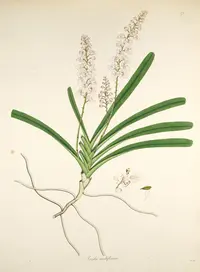
Aerides multiflora, often called multi-flowered aerides, is a warm-growing epiphytic orchid that forms graceful, arching flower spikes. It typically grows on trees, anchoring to bark rather than soil. The plant produces dense clusters of small, waxy flowers in shades of white, pink, or purple, often with a pleasant fragrance. Leaves are strap-shaped and arranged in a tidy fan. In nature, Aerides multiflora occurs in humid forests of South and Southeast Asia, where it enjoys bright, filtered light and moving air. It is considered a moderately challenging orchid, mainly because it needs consistent humidity and good air circulation. Understanding how to care for Multi-flowered Aerides becomes easier once its native forest canopy conditions are kept in mind.

Care Difficulty
Hard Care

Light Preference
Partial Shade

Water Requirements
Regular Water

Temperature Preference
Tropical / Frost Sensitive

Hardiness Zone
12–13

Soil Texture
Organic-rich, Rocky

Soil pH
Acidic (5.5–6.5)

Soil Drainage
Well-drained

Fertilization
Moderate (every 2–4 weeks)
Scan your plant to receive care tips personalized for your specific plant
Available on iOS and Android
This orchid prefers bright, filtered light similar to bright forest canopy conditions.
Watering should balance consistent moisture with ample air around the roots.
This species prefers warm, stable conditions without cold drafts or sudden extremes.
This orchid needs high, stable humidity to maintain healthy roots and flower production.
Aerides multiflora is an epiphytic orchid that needs a very airy, fast-draining medium rather than regular potting soil.
This species is well suited to container or basket growing when root aeration is prioritized.
This epiphytic orchid responds well to light, consistent feeding during active growth.
Pruning needs for Aerides multiflora are minimal and mostly hygienic.
This orchid prefers to stay undisturbed but occasionally needs repotting or remounting when overcrowded.
Propagation of Aerides multiflora is usually done by division rather than from seed at home.
This warmth-loving orchid is not frost tolerant and needs sheltered winter conditions in most climates.

Plant Health Check
Not sure what's wrong with your plant? Check your plant's health inside the app.
The flowers produce a sweet, strong scent that intensifies in the morning and evening, timed with the activity of its main pollinators, small bees and other insects in its native Southeast Asian forests.
It forms long, pendent inflorescences with numerous closely spaced flowers, creating a dense floral cascade that can hang well below the foliage on mature plants.
This species typically grows as an epiphyte on tree trunks and branches in warm, humid, low- to mid-elevation forests from the Himalayas across parts of India to Southeast Asia, relying on tree hosts only for physical support, not for nutrients.

In parts of its native range, especially in northeastern India, wild populations have declined locally due to habitat loss and over-collection by orchid enthusiasts, and it is now monitored or regulated in some regions to reduce unsustainable harvesting.
Lack of flowering often comes from insufficient light, too-warm nights, or no slight winter rest. Provide bright filtered light, good airflow, and a mild drop in night temperature to trigger spikes. Avoid heavy nitrogen fertilization before flowering.
Keep your plants happy and healthy with plant identification, disease detection, and easy care guidance.

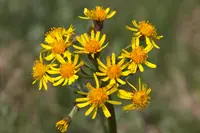
Tephroseris crispa
Tephroseris crispa
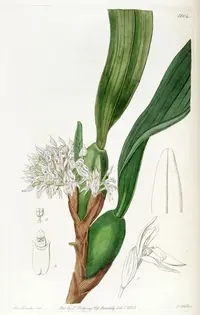
crowded maxillaria
Maxillaria densa
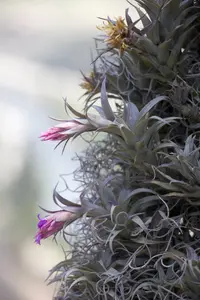
Tillandsia nana
Tillandsia nana
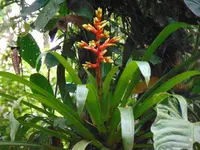
Guzmania scherzeriana
Guzmania scherzeriana

Panda Plant
Kalanchoe tomentosa 'Chocolate Soldier'
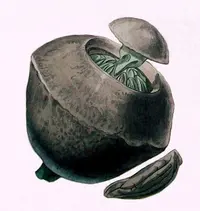
paradise nut
Lecythis zabucajo
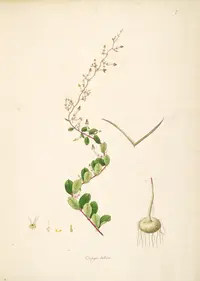
Bulbous Ceropegia
Ceropegia bulbosa
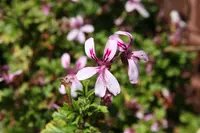
Pelargonium pseudoglutinosum
Pelargonium pseudoglutinosum