Adromischus liebenbergii Care

Adromischus liebenbergii

About Adromischus liebenbergii

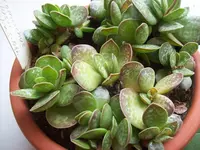
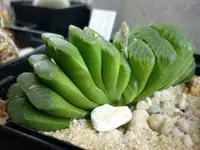
Adromischus liebenbergii is a compact succulent from arid regions of South Africa, forming low clumps of thick, often slightly spotted, triangular leaves. Its growth is slow and tidy, which makes it suitable for small spaces and container collections.

This species produces slender flower stalks with small tubular blooms, but it is mainly valued for its sculptural foliage. It generally prefers bright light, low to moderate moisture, and very free-draining, sandy soil.

Because it stores water in its leaves, it tolerates short periods of neglect, but it is sensitive to overwatering and poor drainage. With these basics understood, it is straightforward to care for Adromischus liebenbergii in a home setting.

Main Plant Requirements

Care Difficulty

Easy Care

Light Preference

Full Sun

Water Requirements

Low Water

Temperature Preference

Tropical / Frost Sensitive

Hardiness Zone

10–11

Soil Texture

Sandy, Loamy, Rocky

Soil pH

Slightly acidic (6.5–7.0), Neutral (7.0)

Soil Drainage

Well-drained

Fertilization

Minimal (feed rarely)

Get Personalized Care Plan

Scan your plant to receive care tips personalized for your specific plant

Available on iOS and Android

How to Care for the Adromischus liebenbergii

This compact succulent prefers bright, indirect light with some direct sun for best color and growth.

  • Provide 4–6 hours of direct morning sun or late-afternoon sun, plus bright indirect light for the rest of the day.
  • Tolerates light, dappled shade, but in too little light stems may stretch, leaves lose markings, and growth slows.
  • In hot, dry summers, protect Adromischus liebenbergii from harsh midday sun to avoid leaf scorch and permanent scarring.

This species stores water in its leaves and needs a thorough-dry cycle rather than frequent watering.

  • Water only when the top 2–5 cm of soil are completely dry, then soak the root zone and let excess drain away.
  • In spring–summer, this may mean watering every 10–21 days; in cooler, low-light seasons, reduce to when the mix is dry for several days.
  • Watch for overwatering signs like soft, translucent leaves and a sour smell, versus underwatering signs such as wrinkled, flattened leaves.

This succulent prefers warm, dry conditions and is not tolerant of frost or prolonged cold.

  • Aim for 65–80°F (18–27°C) during active growth, with good airflow to reduce fungal problems.
  • Protect from temperatures below 40°F (4°C); brief dips to 35°F (2°C) may be survived but can damage foliage and roots.
  • In hot spells above 90°F (32°C), provide light shade and avoid reflected heat from concrete or walls to prevent leaf stress.

This species prefers dry indoor air and does not have special humidity requirements.

This compact succulent needs a fast-draining, mineral-based mix to protect its shallow roots from rot.

  • Use a cactus/succulent mix amended with extra mineral grit, such as pumice, perlite, or coarse sand, to create a loose, airy structure.
  • Aim for slightly acidic to neutral pH, around 6.0–7.0, which supports healthy nutrient uptake without encouraging root problems.
  • Avoid dense, peat-heavy or clay-based substrates that hold water around the roots for long periods and limit oxygen.
  • For Adromischus liebenbergii, keep organic matter low and rely on hard, granular materials to improve both aeration and drainage.

This species is well suited to container cultivation due to its compact, shallow-rooting habit.

  • Choose a wide, shallow pot so the shallow root system can spread laterally without sitting in deep, moist soil.
  • Select terracotta or other porous materials to let the mix dry faster after watering and reduce rot risk.
  • Ensure the pot is heavy enough that the clustered foliage does not tip it over when the substrate is very dry.

This compact succulent needs only light feeding to support slow, healthy growth.

  • Use a balanced liquid cactus or succulent fertilizer (for example 10-10-10) diluted to 25–50% strength.
  • Feed Adromischus liebenbergii once every 4–6 weeks in spring and summer when actively growing.
  • Skip fertilizing in fall and winter to avoid weak, stretched growth.
  • Apply only to moist soil and flush the pot with plain water a few times each season to limit salt buildup.

This species needs minimal pruning, mainly to keep the rosette neat and healthy.

  • In late spring or early summer, remove dead, shriveled, or damaged leaves at the base with clean fingertips or small scissors.
  • Thin out crowded, inward-facing stems to improve light penetration and airflow around the plant.
  • Pinch back overly long shoots to keep a compact shape and prevent the plant from becoming leggy.
  • Disinfect tools before and after use to reduce the risk of spreading fungal or bacterial problems on Adromischus liebenbergii.

This slow-growing succulent prefers infrequent repotting in a small, well-drained container.

  • Plan to repot every 2–3 years in spring when growth resumes, or when roots circle the pot or emerge from drainage holes.
  • Choose a container only 1–2 in wider with ample drainage and use a gritty cactus or succulent mix.
  • Gently loosen the root ball, remove old compacted soil, and trim dead roots with sterile scissors to reduce stress.
  • After repotting Adromischus liebenbergii, keep soil just barely moist for 1–2 weeks and provide bright, indirect light while roots reestablish.

New plants are most often produced from leaf or stem cuttings taken from healthy growth.

  • In late spring or summer, select firm, unblemished leaves or short stem sections from Adromischus liebenbergii.
  • Allow cut surfaces to callus in dry, bright shade for 2–5 days before planting to limit rot.
  • Place cuttings on or just in a barely moist, very free-draining mix and keep in bright, indirect light.
  • Maintain warm conditions around 68–77°F with low to moderate humidity until roots and new shoots develop.

This succulent is not frost hardy and needs cool, dry, bright conditions indoors during winter in most climates.

  • Keep temperatures around 50–60°F and avoid exposure below 40°F, which can damage leaves and roots of Adromischus liebenbergii.
  • Move outdoor containers indoors before the first frost, placing them near a bright window or under grow lights.
  • Water sparingly, letting the mix dry almost completely, and provide good air circulation to prevent rot.

Care Tips

Rotate For Symmetry

Rotate the pot 90° every 2–3 weeks so light reaches all sides evenly and the rosette stays compact rather than leaning toward one direction.

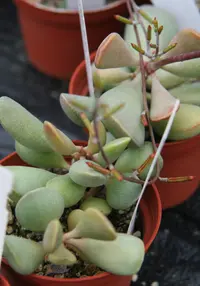
Use Top Dressing

Apply a 0.5–1 cm layer of decorative gravel or pumice on the soil surface to keep leaves dry at the base, reduce fungus gnat activity, and stabilize the shallow roots.

Protect From Summer Rains

If kept outdoors, move the plant under a deep overhang or into a cold frame during warm, wet spells to prevent sudden waterlogging and leaf splitting.

Cool-Season Rest

From late fall to early spring, keep the plant slightly cooler and drier while still bright, which encourages tighter growth and better color without forcing new, weak leaves.

Inspect Leaf Bases

Every few weeks, gently lift outer leaves to check the crown and leaf bases for soft spots or rot, and remove any mushy tissue promptly to stop problems early when caring for Adromischus liebenbergii.

Common Pests and Diseases

Mealybugs

This pest often hides in leaf axils and along the crinkled leaf margins, sucking sap and leaving white cottony masses on stems and leaves.

Solution

Isolate the plant, then dab visible insects with cotton swabs dipped in 70% isopropyl alcohol and repeat weekly until gone; for heavier infestations, rinse the plant gently and apply a dilute neem oil or insecticidal soap spray, ensuring the potting mix dries well afterward to avoid excess moisture stress.

Aphids

These insects cluster on soft new growth and flower stalks, causing distortion, sticky honeydew, and sometimes black sooty mold on leaf surfaces.

Solution

Move the plant to a sink and wash colonies off with a firm but gentle stream of water, then use insecticidal soap or neem oil on new growth and monitor regularly, keeping the plant in bright, airy conditions to reduce repeat outbreaks.

Leaf spot

This disease causes small, sunken, brown to black lesions on the thick leaves, sometimes with a slightly water-soaked or yellowish edge.

Solution

Remove and discard affected leaves, improve air circulation around the plant, avoid wetting the foliage, and allow the gritty succulent mix to dry fully between waterings; if spots continue to spread, apply a copper-based fungicide lightly, following label rates for succulents.

Edema

Symptoms include raised, corky or blister-like patches on leaves, often appearing after episodes of overwatering or sudden changes in moisture while the plant is kept cool.

Solution

Allow the soil to dry more thoroughly between waterings, use a fast-draining, mineral-rich mix, and keep the plant in warmer, bright conditions; damaged tissue will not heal, but new growth should appear normal once watering is corrected as part of broader Adromischus liebenbergii care.

Interesting Facts

Highly localized habitat

This species is naturally restricted to rocky sandstone slopes in the Western Cape of South Africa, where it grows in shallow crevices with very fast-draining mineral soils.

Variable leaf markings

Its thick, triangular leaves often show fine speckling or mottling, but intensity and pattern can vary greatly between individual plants and wild populations, making it a visually diverse species within a small range.

Seasonal growth rhythm

In its native habitat it grows mainly during the cooler, moister winter months and slows or nearly stops active growth in the hot, dry summer, following the local winter-rainfall climate pattern.

FAQs about Adromischus liebenbergii

Brown, crispy leaf edges usually indicate underwatering, excessive sun intensity, or very low humidity. Soft brown patches often mean rot from trapped moisture or poor air flow. Remove damaged leaves and correct the underlying problem promptly.

Grow Healthy Plants with Botan Care

Keep your plants happy and healthy with plant identification, disease detection, and easy care guidance.

Botan plant care app — identify plants on mobile

Explore More Plants