Nenta Adromischus Care (Adromischus caryophyllaceus)

Nenta Adromischus

About Nenta Adromischus

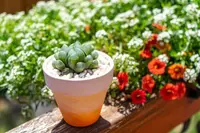
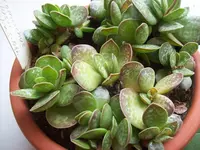
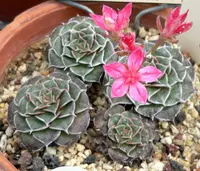
Nenta Adromischus (Adromischus caryophyllaceus) is a compact, slow-growing succulent from the dry regions of South Africa. It forms low clusters of fleshy, often paddle-shaped leaves that may show subtle spotting or edging.

This plant stores water in its leaves and stems, which makes it tolerant of short periods of neglect. Its small size and tidy growth habit suit windowsills and small indoor spaces.

Because it comes from rocky, arid habitats, it prefers bright light, infrequent watering, and very free-draining soil. These traits generally make it easy to care for Nenta Adromischus when overwatering is avoided.

Main Plant Requirements

Care Difficulty

Easy Care

Light Preference

Partial Sun

Water Requirements

Low Water

Temperature Preference

Tropical / Frost Sensitive

Hardiness Zone

10–11

Soil Texture

Sandy, Loamy, Rocky

Soil pH

Slightly acidic (6.5–7.0), Neutral (7.0)

Soil Drainage

Well-drained

Fertilization

Minimal (feed rarely)

Get Personalized Care Plan

Scan your plant to receive care tips personalized for your specific plant

Available on iOS and Android

How to Care for the Nenta Adromischus

This compact succulent prefers bright, dry, sun-exposed conditions similar to its native habitat.

  • Provide 4–6 hours of direct morning sun with bright, filtered light or light shade in the afternoon to prevent leaf scorch, especially for Nenta Adromischus in hot regions.
  • In very strong summer sun, move plants where they receive early sun then dappled shade after 1–2 pm to reduce stress and wrinkling.
  • If stems stretch or leaves lose color, increase light exposure gradually over 7–10 days to avoid sudden sunburn.

This drought-adapted succulent stores water in its leaves and needs infrequent but thorough watering.

  • Water only when the top 3–5 cm of soil are completely dry; in warm growing seasons this may be every 10–21 days depending on pot size, soil, and climate.
  • Use very fast-draining, gritty soil so water runs through quickly and no water stands around roots, reducing rot risk for Adromischus caryophyllaceus.
  • Overwatering shows as soft, translucent, or splitting leaves; underwatering shows as wrinkled, deflated leaves that plump up within a few days after a deep soak.

This species prefers warm, dry conditions with mild temperature swings between day and night.

  • Ideal growth occurs around 65–80°F (18–27°C), with cooler nights down to about 55°F (13°C) supporting a natural daily temperature rhythm.
  • Protect from frost; sustained exposure below 32°F (0°C) damages leaves and roots, so move plants to shelter before overnight cold snaps.
  • Tolerates short heat waves up to 95°F (35°C) if soil is dry, airflow is good, and the plant is shaded from intense midafternoon sun to limit stress.

Adromischus caryophyllaceus handles typical indoor humidity well and rarely needs special adjustment.

  • Target 30–50% humidity, similar to a dry indoor room, to reduce rot risk in the fleshy leaves.
  • This succulent tolerates very dry air, so avoid humidifiers unless air is extremely dry and leaves wrinkle despite correct watering.
  • If humidity is too high, watch for soft, translucent leaves or fungus on the soil and improve air movement around Nenta Adromischus.

This succulent needs a very fast-draining, gritty mix to protect its shallow roots from rot.

  • Use a sandy, mineral-heavy mix such as 50–70% pumice, perlite, or coarse grit blended with 30–50% lean cactus mix.
  • Keep structure loose and airy so water drains in seconds, not minutes, and the mix dries fully within 2–4 days.
  • Aim for slightly acidic to neutral pH around 6.0–7.0, which supports nutrient uptake without increasing rot risk.
  • Avoid peat-heavy or compact, water-retentive soils, and never use garden soil, which suffocates Adromischus caryophyllaceus roots in containers.

This species is very suitable for container growing due to its compact, shallow root system.

  • Choose a wide, shallow pot so the spreading root system anchors well while the mix dries quickly between waterings.
  • Prefer unglazed terracotta over plastic when extra evaporation is needed in cooler or low-light positions.
  • Use a pot with slightly raised feet or place it on pot risers so drainage holes stay clear and excess water leaves the container immediately.

This compact succulent grows well with very light feeding during its active season.

  • Use a balanced liquid cactus fertilizer at 1/4 strength for Nenta Adromischus during spring and summer.
  • Apply once every 4–6 weeks when growth is visible, on already moist soil to avoid root burn.
  • Avoid organic compost in pots; choose mineral, low-nitrogen formulas suited to succulents.
  • Stop feeding in fall and winter, when growth slows or stops, to prevent weak, etiolated tissue.

Adromischus caryophyllaceus needs minimal pruning, mainly for appearance and hygiene.

  • In late winter or early spring, remove dead, damaged, or shriveled leaves with clean, sharp scissors.
  • Pinch or cut back leggy stems just above a node to keep a compact, rounded shape.
  • Avoid heavy pruning; reduce only up to 1/3 of growth at a time to limit stress.
  • Discard diseased material and disinfect tools with alcohol to reduce pathogen spread.

This species prefers a snug pot and only occasional repotting in a fast-draining mix.

  • Check for roots circling the drainage holes, soil drying extremely fast, or stalled growth as signs it needs a larger container.
  • Plan to repot every 2–3 years in late spring, using a gritty cactus/succulent substrate with ample mineral content.
  • Water lightly a few days before repotting, then gently loosen the root ball and remove only dead or rotten roots.
  • Place the plant at the same depth, avoid watering for 3–5 days after repotting, then resume modest watering to limit root stress.

This succulent is commonly multiplied from leaf and stem cuttings.

  • Take healthy leaf or short stem cuttings in late spring or early summer, selecting firm, unblemished tissue.
  • Allow cut surfaces to callus for 2–5 days in a dry, shaded spot to lower rot risk.
  • Set cuttings upright on a barely moist, gritty cactus mix with bright, indirect light and 70–80°F temperatures.
  • Keep humidity low, water sparingly from the side, and expect roots in 3–6 weeks before potting individually.

This plant is not frost hardy and needs protection from freezing conditions.

  • Move containers indoors before temperatures drop below 40°F, providing bright light and good air flow.
  • Maintain indoor temperatures around 55–70°F and keep the soil almost dry, watering lightly only when leaves start to soften.
  • Avoid cold drafts, condensation on leaves, and overly wet soil, which increase the risk of rot in winter.

Care Tips

Rotation for symmetry

Rotate the pot 90° every 2–3 weeks so the rosette stays compact and even, reducing the risk of the plant leaning or stretching toward a single light source.

Controlled offset removal

When removing offsets, use a sterile, sharp blade and allow the cut surfaces to callus for 2–4 days before replanting to reduce rot and improve establishment of new plants.

Top-dressing with grit

Apply a 0.5–1 cm layer of horticultural grit or coarse sand on the soil surface to keep leaves dry at the base, limit fungus gnat breeding, and reduce soil splash on the foliage.

Winter rest adjustment

In winter, reduce handling and repotting and keep the plant slightly drier, as this semi-dormant phase helps maintain tight leaf spacing and prolongs the life of older rosettes when caring for Nenta Adromischus.

Prevent stem collapse

If the basal stem becomes woody and top-heavy, gently top-dress and mound fresh gritty mix around the base to stabilize the plant and encourage new fine roots along the buried stem section.

Common Pests and Diseases

Mealybugs

This pest hides in leaf axils and along stems, sucking sap and causing puckered, distorted leaves and slow growth. Symptoms include white, cotton-like masses between the thick leaves where moisture and debris collect.

Solution

Isolate the plant, then dab visible insects with cotton swabs dipped in 70% isopropyl alcohol and gently wipe leaf bases and crevices. Improve light and air movement, reduce excess fertilizer, and repeat treatment weekly until no new insects appear; for heavy infestations, use a labeled systemic insecticide for succulents following package directions.

Aloe mite galls

This pest is an eriophyid mite that can cause small, rough, tumor-like galls or crusty growths on older leaves and along the margins. Symptoms include localized corky swellings that do not rub off and may slowly spread along a leaf or onto adjacent leaves.

Solution

Remove and discard all affected leaves and any small offsets showing distortion, cutting several millimeters into healthy tissue. Keep the plant in drier, airy conditions, avoid overhead misting, and if the problem recurs, treat with a sulfur-based miticide or an eriophyid-labeled miticide, strictly following label instructions.

Soft scale

These insects attach to stems and older leaves, appearing as small, tan to brown bumps that excrete sticky honeydew. This pest can weaken compact clumps and promote sooty mold on the leaf surfaces in low airflow indoor setups.

Solution

Physically remove scales with a soft brush or cloth dipped in diluted alcohol, then rinse the plant thoroughly and let it dry in bright, indirect light. For persistent populations, use repeated applications of horticultural oil or a systemic insecticide safe for succulents, while reducing overcrowding to improve airflow around the plant.

Leaf spot

This disease produces small, sunken, brown or dark purplish spots on the fleshy leaves, often starting where water sits on the surface. Symptoms include slowly enlarging lesions that may cause scarring or premature leaf drop under cool, damp conditions.

Solution

Remove affected leaves, keep foliage dry, and water only at the soil level, especially in cooler seasons. Increase airflow, avoid crowding pots, and if new spots continue to appear, apply a copper-based or broad-spectrum fungicide labeled for succulents, following the recommended interval until symptoms stop spreading.

Basal stem rot

This disease can occur in compact, multi-headed clumps kept in cool, wet media, leading to soft, discolored tissue at the base of the rosettes. Symptoms include sudden collapse of individual heads while adjacent ones may still look healthy but loosen easily from the substrate.

Solution

Promptly cut away and discard all soft or discolored tissue, keeping only firm, unblemished heads, and re-root them in fresh, very free-draining succulent mix. Reduce watering until new roots form, keep temperatures around 68–77°F with good air circulation, and use a soil drench with a labeled systemic fungicide if valuable specimens or collections are affected, as part of broader Adromischus caryophyllaceus care instructions.

Interesting Facts

Karoo habitat specialist

This species is naturally restricted to arid parts of South Africa’s Western and Eastern Cape, especially the Little Karoo and coastal hills, where it grows on rocky slopes and in crevices that provide excellent drainage and high light.

Flattened tongue leaves

Its leaves are characteristically flat to slightly concave and tongue-shaped, often with reddish margins or speckling, an adaptation that exposes enough surface for photosynthesis while limiting water loss in intense sun.

Clonal clump formation

Plants often form low, tight clumps as stems branch and older leaves are replaced, which helps stabilize them in shallow, stony soils and may protect the roots from temperature extremes.

Botan icon

Did you know?

In habitat this species has been observed growing in very shallow pockets of gritty soil on quartzite and sandstone outcrops, where reflective rock surfaces increase light intensity but the fissures retain just enough moisture for survival in an otherwise harsh, semi-desert environment.

FAQs about Nenta Adromischus

Brown leaves usually come from underwatering, intense direct sun scorch, or old age of lower leaves. Check soil moisture, adjust light intensity, and remove only fully dry, crispy leaves. Avoid sudden changes in temperature or drafts.

Grow Healthy Plants with Botan Care

Keep your plants happy and healthy with plant identification, disease detection, and easy care guidance.

Botan plant care app — identify plants on mobile

Explore More Plants