

Root zone drainage
When planting in the ground, build a low gravel mound 5–10 cm high under and around the root ball to keep the crown above any standing water and reduce the risk of rot in heavy or compacted soils.

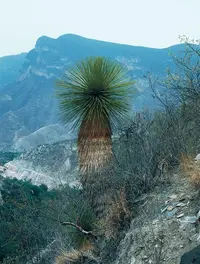
Queretaro yucca (Yucca queretaroensis) is a slow-growing, trunk-forming succulent shrub native to arid, rocky slopes in central Mexico. It develops a striking narrow crown of very thin, stiff, bluish-green leaves that create a fine-textured, almost grasslike sphere on top of a woody stem.
Mature plants can eventually branch and form small clumps, giving a sculptural, architectural look in dry gardens and container plantings. The species is drought tolerant and adapted to strong sun, wind, and poor, stony soils.
Its slow growth and need for excellent drainage make it somewhat challenging, but stable indoor conditions or dry outdoor climates help. Understanding how to care for Queretaro yucca focuses mainly on providing strong light, low moisture, and sharply draining soil.

Care Difficulty
Moderate Care

Light Preference
Full Sun

Water Requirements
Low Water

Temperature Preference
Warm Climate

Hardiness Zone
8–11

Soil Texture
Sandy, Loamy, Rocky

Soil pH
Slightly acidic (6.5–7.0), Slightly alkaline (7.0–7.5)

Soil Drainage
Well-drained

Fertilization
Minimal (feed rarely)
Scan your plant to receive care tips personalized for your specific plant
Available on iOS and Android
This species thrives in strong light that mimics its native high-desert habitat.
Yucca queretaroensis is highly drought-tolerant and must dry well between waterings.
This yucca prefers warm, dry conditions but handles a broad temperature range when established.
This species handles low humidity well, so humidity management is rarely critical indoors.
Yucca queretaroensis needs very sharply draining, mineral-based soil to prevent root and stem rot.
This species can be grown successfully in containers if the pot is set up for fast drainage and stability.
This desert species needs very light feeding, as Yucca queretaroensis is adapted to poor, rocky soils.
Pruning Yucca queretaroensis is mainly cosmetic and for safety, not for controlling rapid growth.
Container-grown plants and young landscape specimens benefit from thoughtful, infrequent repotting or transplanting.
Propagation of Yucca queretaroensis is possible but slow, so it is usually done on established, healthy plants.
Mature outdoor plants are quite cold tolerant when kept dry, but young or potted specimens need some winter attention.

Plant Health Check
Not sure what's wrong with your plant? Check your plant's health inside the app.
This species is naturally restricted to a very small area of steep limestone canyons in the state of Querétaro, Mexico, where it grows on near-vertical, rocky slopes exposed to intense sun and drying winds.
The very narrow, fibrous leaves often weather away to leave distinctive persistent leaf bases and leaf “skeletons” along the trunk, giving older plants a rough, shaggy appearance that differs from most other yucca species.
In habitat this plant grows extremely slowly on cliffs and rocky outcrops, with individuals often remaining trunkless or with only short stems for many years because of the harsh, nutrient-poor conditions.

In the wild, many individuals of this species are thought to be long-lived relicts that have survived for decades on almost bare rock, making it one of the more extreme cliff-dwelling yuccas known from central Mexico.
Brown tips or edges usually result from underwatering, low humidity, salt buildup from fertilizer, or root damage. Check soil moisture, flush the pot occasionally, and trim only the dry parts without cutting into healthy tissue.
Keep your plants happy and healthy with plant identification, disease detection, and easy care guidance.

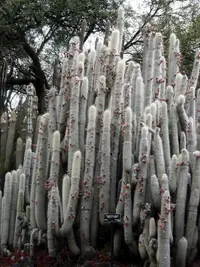
Silver torch cactus
Cleistocactus strausii
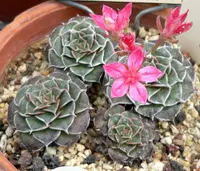
chihuahua flower
Graptopetalum bellum
 POPULAR
Bristle Haworthia
Haworthia cooperi
Venezuelan treebine
Cissus rotundifolia
blue sansevieria
Dracaena hanningtonii
Aeonium valverdense
Aeonium valverdense
 POPULAR
Coppertone Stonecrop
Sedum adolphi
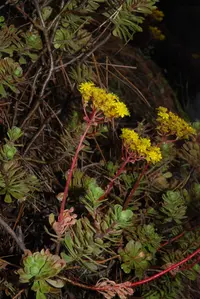
Aeonium spathulatum
Aeonium spathulatum