Aeonium spathulatum Care

Aeonium spathulatum

About Aeonium spathulatum

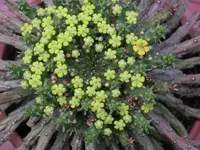
Aeonium spathulatum is a small, shrubby succulent from the Canary Islands, valued for its branching habit and clusters of spoon-shaped leaves. It forms many slender stems topped with compact rosettes, giving a fine, airy look compared to larger aeoniums.

This species prefers bright light, low to moderate moisture, and sharply draining soil, which reflects its dry, rocky native habitats. Once established, it is relatively forgiving of brief neglect, but sensitive to prolonged cold and excess water. Understanding how to care for Aeonium spathulatum mainly involves protecting it from frost and root rot.

In mild climates it suits rock gardens and dry borders, while in cooler regions it performs well in containers that can be moved under cover for winter protection.

Main Plant Requirements

Care Difficulty

Moderate Care

Light Preference

Full Sun

Water Requirements

Low Water

Temperature Preference

Warm Climate

Hardiness Zone

9–11

Soil Texture

Sandy, Loamy, Rocky

Soil pH

Slightly acidic (6.5–7.0), Neutral (7.0)

Soil Drainage

Well-drained

Fertilization

Minimal (feed rarely)

Get Personalized Care Plan

Scan your plant to receive care tips personalized for your specific plant

Available on iOS and Android

How to Care for the Aeonium spathulatum

This succulent prefers bright conditions with some protection from intense midday sun.

  • Provide 4–6 hours of direct morning sun with bright, filtered light or light shade in the afternoon to prevent scorching.
  • In very hot, inland areas, give Aeonium spathulatum dappled shade from roughly 11 a.m. to 3 p.m. to reduce leaf burn and stress.
  • Watch for pale, stretched stems as a sign of too little light and for crisp, brown leaf edges as a sign of excessive sun exposure.

Watering should respect its shallow roots and succulent leaves, which store moisture efficiently.

  • Allow the top 3–5 cm of soil to dry fully before watering, then soak thoroughly so excess drains away from the root zone.
  • During active growth and cooler seasons, expect to water more often, reducing frequency in summer dormancy and in winter rains outdoors.
  • Yellowing, mushy leaves and a sour soil smell indicate overwatering, while wrinkled, limp leaves and very light pots indicate underwatering.

Stable, mild temperatures support compact growth and reduce stress for this species.

  • Aim for 60–75°F (16–24°C) for best growth, with good air movement to limit rot and fungal problems.
  • Protect from frost; brief dips to 30–32°F (-1–0°C) may damage leaves, and prolonged exposure below 30°F (-1°C) can kill the plant.
  • In heat above 90°F (32°C), provide afternoon shade and avoid hot, reflective surfaces, as the plant may slow growth and drop older leaves.

This succulent handles typical indoor humidity easily, so moisture in the air is rarely a concern.

Aeonium spathulatum prefers a sharply draining, mineral-based growing medium that dries quickly between waterings.

  • Use a gritty mix such as 50–70% inorganic material (pumice, perlite, coarse sand) blended with 30–50% lean potting soil.
  • Aim for a slightly acidic to neutral pH around 6.0–7.0, which suits most tap water and standard mixes.
  • Increase drainage and aeration by using large-particle components (3–6 mm) and avoiding fine peat that compacts when dry.
  • Avoid heavy, water-retentive, clay-rich or pure compost mixes that stay wet for more than 2–3 days after watering.

This compact succulent is well suited to container growing outdoors or in bright, sheltered spots.

  • Choose a wide, shallow pot to match its fibrous, surface-leaning roots and discourage water pooling at depth.
  • Use unglazed terracotta if extra evaporation is needed in cooler or wetter climates to prevent prolonged media saturation.
  • Place the container where wind exposure is limited, as its branching, top-heavy habit can tip lightweight pots unless sheltered.

Light feeding supports compact growth without making Aeonium spathulatum lush and weak.

  • Use a balanced liquid fertilizer (around 10-10-10 or 20-20-20) diluted to 25–50% strength on moist soil.
  • Feed every 4–6 weeks during active growth in spring and early summer only.
  • Avoid organic compost mixes that hold excess moisture, which can rot succulent roots.
  • Stop feeding in late summer and through winter dormancy to prevent soft, cold-sensitive growth.

Thoughtful pruning keeps Aeonium spathulatum neat and encourages branching rosettes.

  • Prune in late winter to early spring, just before strong active growth resumes.
  • Remove dead, shriveled, or damaged rosettes and stems using clean, sharp snips or scissors.
  • Thin crowded branches to improve airflow and light penetration, shaping a balanced, compact plant.
  • Cut just above a node to stimulate side shoots and denser foliage, avoiding large cuts during hot drought periods.

Container-grown plants benefit from occasional repotting to maintain healthy, firm rosettes.

  • Check for roots circling the pot, water running straight through, or stalled growth as signs to repot Aeonium spathulatum.
  • Repot every 2–3 years in late winter to early spring, before the main growth flush.
  • Choose a shallow container only 2–3 cm wider, using a gritty cactus or succulent mix for fast drainage.
  • Water lightly after repotting, keep in bright but indirect light for 7–10 days, and avoid heavy feeding until recovery is clear.

Stem cuttings are the most practical method for multiplying this succulent shrub.

  • Take 5–10 cm tip or side stem cuttings in late spring to early summer when growth is active.
  • Allow cut surfaces to callus for 2–5 days in a dry, shaded place to reduce rot risk.
  • Insert cuttings into a dry, gritty succulent mix and keep in bright, indirect light with 60–70°F temperatures.
  • Mist substrate very lightly until roots form in 3–6 weeks, then shift to normal succulent watering and brighter light.

This succulent is only lightly frost tolerant and benefits from simple winter precautions in cold regions.

  • Aeonium spathulatum is safest above 30–32°F; brief light frost may mark leaves but can damage soft tips.
  • Move containers indoors or to a cool, bright, frost-free area in USDA zones colder than 9.
  • Keep soil almost dry in winter, watering sparingly to prevent shriveling but avoiding prolonged wetness in cold conditions.
  • In mild climates, use a thin gravel mulch to keep the crown dry and reduce freeze–thaw stress around the roots.

Care Tips

Rotate for symmetry

Turn the pot 90° every 1–2 weeks during active growth so rosettes develop evenly and stems do not lean permanently toward the light source when growing Aeonium spathulatum.

Seasonal rest adjustment

In very hot, dry summers, allow a partial rest period by moving the plant to bright shade and slightly reducing water so the fine branching structure does not desiccate at the tips.

Support leggy stems

If older, branched stems become top-heavy, stake them loosely with soft ties or plant them in a shallow, heavy container to prevent the plant from tipping or snapping at the base.

Rejuvenate by cuttings

Every 2–3 years, take tip cuttings from the healthiest rosettes, let them callus for several days, then re-root them in fresh substrate to keep the plant compact and vigorous.

Pest scouting routine

Inspect leaf bases and stem joints every 2–3 weeks for early signs of mealybugs or scale, and if found, dab them with isopropyl alcohol on a cotton swab before populations expand along the many fine branches.

Common Pests and Diseases

Mealybugs

This pest feeds on sap in leaf rosettes and along stems, often appearing as white cottony clusters in tight crevices. Symptoms include stunted growth, sticky honeydew, and sooty mold developing on the sugary residue.

Solution

Isolate the plant, then remove visible mealybugs with a cotton swab dipped in 70% isopropyl alcohol and rinse the foliage gently after treatment. For heavier infestations, repeat alcohol swabbing weekly and use a labeled insecticidal soap or neem oil spray, focusing on rosette centers and undersides of leaves while improving airflow and avoiding overhead watering late in the day.

Aeonium leaf aphids

These insects cluster along young stems and between rosette leaves, especially during cool, active growth periods, sucking sap and causing distorted new leaves. Symptoms include sticky honeydew, curling foliage, and attraction of ants that farm the aphids.

Solution

Spray the plant with a firm stream of water to dislodge aphids, then treat remaining clusters with insecticidal soap or a light horticultural oil, ensuring full coverage of undersides and tight rosette centers. Manage nearby ant activity and repeat treatments every 5–7 days until new growth appears clean and free of sticky residue.

Soft scale

This pest appears as small dome-shaped or oval bumps on stems and older leaves, often brown, gray, or tan, and does not move when touched. Symptoms include yellowing foliage, reduced vigor, and honeydew that can support sooty mold growth on surrounding surfaces.

Solution

Gently scrape or wipe off individual scales with a soft cloth or cotton swab dipped in 70% isopropyl alcohol, taking care not to damage tender stems. Follow with a series of horticultural oil or neem oil sprays at 7–10 day intervals to target young crawlers, and keep the plant in bright, dry conditions with good air circulation.

Botrytis blight

This disease thrives in cool, humid conditions and on crowded rosettes, causing soft, water-soaked spots that develop gray fuzzy mold on leaves and stems. Symptoms include rapid collapse of affected tissue and spotting on petals if the plant is flowering.

Solution

Remove and discard all affected leaves and stem sections, then increase light and airflow around the plant and avoid wetting the rosettes when watering. Allow the soil surface and foliage to dry quickly, space plants so rosettes do not touch, and in persistent cases use a labeled fungicide for ornamental succulents, following instructions carefully as part of broader Aeonium spathulatum care instructions.

Edema

Symptoms include corky, blister-like spots or rough patches on leaves caused by the plant taking up more water than it can transpire, often after sudden moisture changes in cool, low-light conditions. Affected leaves may look scarred but usually stay firm and attached.

Solution

Adjust watering so the soil dries more thoroughly between waterings, especially in cool seasons, and avoid sudden heavy soakings after a dry period. Provide brighter light, good airflow, and a fast-draining succulent mix, and remove only the most damaged leaves while focusing on stable moisture and light levels to prevent new lesions.

Interesting Facts

Natural cliff specialist

This species often grows on steep, rocky slopes and cliff faces in its native Canary Islands, anchoring its roots into small rock crevices where organic matter accumulates.

Tiny, woody rosettes

Unlike many larger Aeonium species, it forms numerous small rosettes on branching, woody stems, giving mature plants a fine, almost bonsai-like structure.

Yellow spring flower clusters

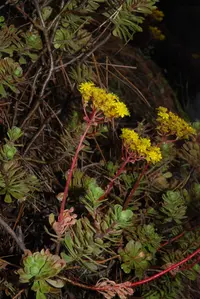
It produces loose, branched clusters of small yellow, star-shaped flowers in late winter to spring, which are important nectar sources for local pollinating insects in its native habitat.

FAQs about Aeonium spathulatum

This species becomes leggy when light is insufficient or too one-sided. Stems elongate toward the brightest source and rosettes shrink. Rotate the pot regularly and move it to a brighter location, then lightly prune to reshape.

Grow Healthy Plants with Botan Care

Keep your plants happy and healthy with plant identification, disease detection, and easy care guidance.

Botan plant care app — identify plants on mobile

Explore More Plants