blue sansevieria Care (Dracaena hanningtonii)

Also known as: sword sansevieria, oldupai, East African wild sisal
blue sansevieria

About blue sansevieria

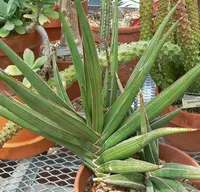
Blue sansevieria, also known as Dracaena hanningtonii or dwarf sansevieria, is a compact, succulent-type houseplant with thick, upright, boat-shaped leaves. The foliage is usually blue-green to gray-green with a hard, leathery texture.

In its native habitat in East Africa, it grows in rocky, arid areas and survives long dry periods. This background makes it very tolerant of neglect, irregular watering, and indoor conditions.

It is slow-growing, forms dense clumps, and stays relatively low, which suits small spaces and container culture. Bright, indirect light and a freely draining, gritty soil mix support healthy growth. For those learning how to care for blue sansevieria, its toughness and low maintenance needs make it a forgiving option.

Main Plant Requirements

Care Difficulty

Easy Care

Light Preference

Bright Indirect Light

Water Requirements

Low Water

Temperature Preference

Tropical / Frost Sensitive

Hardiness Zone

10–11

Soil Texture

Sandy, Loamy, Organic-rich

Soil pH

Acidic (5.5–6.5), Slightly acidic (6.5–7.0)

Soil Drainage

Well-drained

Fertilization

Minimal (feed rarely)

Get Personalized Care Plan

Scan your plant to receive care tips personalized for your specific plant

Available on iOS and Android

How to Care for the blue sansevieria

Dracaena hanningtonii prefers bright, indirect light and tolerates some direct sun if acclimated.

  • Provide 4–6 hours of bright, filtered light daily, such as near an east or bright north window or under light shade outdoors.
  • Tolerates partial shade, but in very low light growth slows and leaves may lose strong color; rotate the plant for even light exposure.
  • Avoid harsh midday sun, especially in summer, which can scorch leaves; morning sun is fine, and blue sansevieria benefits from slightly brighter light in winter.

Water Dracaena hanningtonii sparingly, allowing the soil to dry well between waterings.

  • Wait until the top 3–5 cm of soil is fully dry before watering; in warm growing seasons this may be every 10–21 days, depending on light and heat.
  • Use fast-draining soil and a pot or bed that does not hold standing water, since this species is prone to root rot if kept constantly moist.
  • In winter, extend drying time, watching for wrinkling or folding leaves as a sign of underwatering and yellowing, mushy leaves as a sign of overwatering.

This species prefers warm, stable conditions and does poorly in cold or frosty weather.

  • Aim for 65–85°F (18–29°C) for steady growth; short heat spikes up to 95°F (35°C) are tolerated if soil is dry and airflow is good.
  • Keep it above 50°F (10°C); below this, tissue damage and root stress increase, and growth almost stops.
  • Protect from frost and cold drafts; outdoors, move containers or cover plants when nights approach 40°F (4°C), and avoid placing them near heat vents or radiators.

This species handles low household humidity well and rarely needs special adjustment.

  • Best growth occurs around 30–50% humidity, similar to most heated or air-conditioned homes.
  • Blue sansevieria tolerates very dry air, but leaf tips may brown if placed near heating vents or strong drafts.
  • If air is extremely dry and leaves wrinkle or curl, move the plant away from hot air sources or place it near other plants to slightly raise local humidity.

Dracaena hanningtonii prefers a coarse, sharply draining mix that mimics dry, rocky soils.

  • Use a sandy, gritty mix such as 50% cactus potting mix with 25% perlite and 25% pumice or coarse sand for strong root health.
  • Aim for slightly acidic to neutral pH, roughly 6.0–7.0, which suits most commercial cactus mixes without extra adjustment.
  • Increase aeration by avoiding fine peat-heavy mixes that compact; instead, add mineral components like pumice or small lava rock to create stable air pockets.
  • Do not use dense garden soil or moisture-retentive blends that stay wet for days, since prolonged saturation promotes root and rhizome rot.

This species is very suitable for container growing both indoors and outdoors in warm climates.

  • Choose a pot only 2–5 cm wider than the root mass so the dense, shallow roots fill it evenly and excess mix does not stay wet.
  • Select a heavy terracotta or ceramic container to counterbalance the stiff, upright leaves and reduce tipping risk.
  • Ensure wide, unobstructed drainage holes and elevate the pot slightly on feet or spacers so water clears quickly after each watering.

Dracaena hanningtonii benefits from light, controlled feeding rather than heavy fertilization.

  • Use a balanced liquid fertilizer (around 10-10-10 or 20-20-20) diluted to 25–50% strength during active growth.
  • Feed every 4–6 weeks in spring and summer; stop or reduce to 1 light feed in fall if growth continues.
  • Avoid fertilizing in winter when growth is slow or absent, especially for blue sansevieria indoor care.
  • Choose slow-release granules or a small amount of compost only for very depleted potting mix, and never on dry roots.

Pruning needs for Dracaena hanningtonii are minimal and mostly cosmetic.

  • Best time for any pruning is late spring to summer, when the plant is actively growing.
  • Remove dead, damaged, or shriveled leaves at the base using clean, sharp scissors or pruners.
  • Trim overly crowded or rubbing leaves to maintain a compact, symmetrical rosette shape.
  • Disinfect tools before and after cutting to reduce the risk of disease entering leaf bases.

This species prefers snug pots and infrequent disturbance, so repot only when necessary.

  • Look for roots circling the pot, pushing through drainage holes, or very slow growth as signs it needs repotting.
  • Plan to repot every 3–5 years in spring, moving to a pot just 2–5 cm wider with drainage holes.
  • Use a gritty, fast-draining mix (cactus or succulent soil) and handle the thick roots gently to limit damage.
  • Water lightly after repotting, then allow the mix to dry almost completely to reduce root stress and rot risk.

Dracaena hanningtonii is most often propagated by division or leaf cuttings under warm, bright conditions.

  • Best season is late spring to early summer, when roots and new shoots form more reliably.
  • Divide clumps during repotting, ensuring each division has healthy roots and at least one growing point.
  • Take leaf or rhizome sections, let cut surfaces callus for 1–2 days, then plant in barely moist, gritty mix.
  • Maintain 70–80°F, bright indirect light, and high air movement while keeping the medium just slightly moist for rooting.

This species is frost-tender and needs protection in regions with cold winters.

  • Keep temperatures above 50°F; sustained exposure below this can damage leaves and roots.
  • Move container plants indoors before first frost, placing them in bright, indirect light.
  • Water sparingly in winter, allowing soil to dry almost fully between waterings to prevent root rot.
  • In mild climates, use a thick mulch layer around outdoor plants to insulate the root zone from brief cold snaps.

Care Tips

Rotate For Symmetry

Quarter‑turn the pot every 4–6 weeks so the stiff leaves receive light from different angles and the rosette develops evenly instead of leaning toward one side.

Stabilize Heavy Plants

Once the plant becomes top‑heavy, choose a wider, heavier pot and top‑dress with 1–2 cm of clean gravel to keep the rosette stable and prevent the rigid leaves from tipping the container.

Leaf Cleanliness Check

Wipe the leaves every 1–2 months with a barely damp, soft cloth to remove dust, then inspect closely for early signs of scale or spider mites along the leaf edges and bases.

Controlled Clump Division

When offsets crowd the pot, divide the clump only during active growth, keeping at least 2–3 healthy leaves and a firm root section per division to reduce transplant shock and support steady regrowth.

Winter Light Adjustment

In winter, move the plant slightly closer to the brightest window or use a small LED grow light for a few hours daily to compensate for shorter days and keep leaf color strong while growing blue sansevieria.

Common Pests and Diseases

Spider mites

This pest feeds on leaf sap, leading to fine speckling, dull gray-green leaves, and very thin webbing between stiff leaves. Symptoms include slow decline and increased leaf brittleness, especially in warm, dry indoor air.

Solution

Rinse leaves thoroughly under a strong, lukewarm shower, directing water into leaf crevices, then allow the plant to dry in bright, indirect light. If mites persist, wipe leaves with a cloth dipped in a solution of insecticidal soap or neem oil every 5–7 days for 3–4 cycles and raise humidity slightly without keeping the soil wet.

Mealybugs

These insects appear as small white cottony clusters tucked in leaf axils and between the thick leaves, where they suck sap and excrete sticky honeydew. Symptoms include slow growth, slight leaf yellowing near feeding sites, and possible sooty mold on the honeydew.

Solution

Remove visible insects with a cotton swab dipped in 70% isopropyl alcohol, focusing on tight leaf junctions. After mechanical removal, apply insecticidal soap or neem oil spray to all leaf surfaces and repeat every 7–10 days until no new insects appear, isolating the plant from others during treatment.

Soft scale

These insects form small, rounded, tan to brown bumps along the leaves and stems, often near the leaf base where the rosette is dense. This pest produces honeydew, which can attract ants and lead to black sooty mold on leaf surfaces.

Solution

Gently scrape or wipe off individual scales with a soft cloth or fingernail, then wash leaves with a mild insecticidal soap solution. Repeat treatments every 7–10 days for several weeks and improve light and air circulation to support plant resilience as part of general Dracaena hanningtonii plant care.

Leaf spot

This disease causes small, water-soaked or dark brown spots on the stiff leaves, sometimes with a yellow halo and a slightly sunken center. Symptoms include scattered lesions that can merge if humidity stays high or water sits on leaves for long periods.

Solution

Remove and discard heavily spotted leaves and avoid overhead watering so leaves stay mostly dry. Improve airflow, keep the foliage clean, and if spots continue to spread, use a copper-based or broad-spectrum fungicide labeled for foliage houseplants, following label directions carefully.

Bacterial leaf streak

This disease appears as narrow, elongated, water-soaked streaks or irregular patches that may turn tan or dark brown and sometimes ooze slightly when very wet. Symptoms include localized tissue collapse along streaks and progression from older to younger leaves if conditions remain warm and humid.

Solution

Promptly remove and discard affected leaves and ensure cutting tools are disinfected with 70% alcohol or a 10% bleach solution before and after use. Keep water off the foliage, allow the soil surface to dry between waterings, increase air movement around the plant, and avoid high-nitrogen fertilization until new, clean growth stabilizes.

Interesting Facts

Distinct cylindrical leaves

This species has stiff, nearly cylindrical leaves that grow upright from a basal rosette, an adaptation that reduces surface area and helps limit water loss in arid habitats.

Native to East Africa

The plant is native to dry regions of East Africa, especially Kenya and surrounding areas, where it grows in rocky, well-drained soils with intense sun and seasonal drought.

CAM photosynthesis use

Like many succulents, it uses Crassulacean Acid Metabolism (CAM), a photosynthetic pathway where stomata open mainly at night to reduce water loss while still allowing carbon dioxide uptake.

Botan icon

Did you know?

The fibrous leaves of this species have traditionally been used in parts of East Africa to produce strong rope and twine, reflecting its tough leaf structure and high fiber content.

FAQs about blue sansevieria

Brown leaf tips usually come from underwatering, very low humidity, or salt buildup from fertilizer. Soft brown patches often indicate overwatering and root rot. Check roots, remove damaged parts, adjust watering, and flush the potting mix occasionally.

Grow Healthy Plants with Botan Care

Keep your plants happy and healthy with plant identification, disease detection, and easy care guidance.

Botan plant care app — identify plants on mobile

Explore More Plants