Kalanchoe synsepala Care

Kalanchoe synsepala

About Kalanchoe synsepala

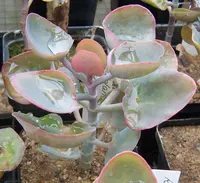
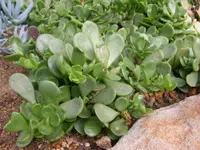
Kalanchoe synsepala is a compact succulent from Madagascar, valued for its fleshy leaves and ability to form spreading rosettes and trailing stems. It is sometimes grown in hanging pots, where its offsets can dangle over the edge and root when they touch soil.

This species prefers bright, indirect light and dry, fast-draining soil, which matches its rocky, arid native habitats. Once established, it is relatively forgiving of irregular watering and short dry spells, so many growers find it straightforward to care for Kalanchoe synsepala.


Main Plant Requirements

Care Difficulty

Easy Care

Light Preference

Partial Sun

Water Requirements

Low Water

Temperature Preference

Tropical / Frost Sensitive

Hardiness Zone

10–11

Soil Texture

Sandy, Loamy, Rocky

Soil pH

Slightly acidic (6.5–7.0), Neutral (7.0)

Soil Drainage

Well-drained

Fertilization

Minimal (feed rarely)

Get Personalized Care Plan

Scan your plant to receive care tips personalized for your specific plant

Available on iOS and Android

How to Care for the Kalanchoe synsepala

This succulent prefers bright conditions with some protection from harsh midday sun.

  • Provide 4–6 hours of direct morning sun or late-afternoon sun, plus bright indirect light for the rest of the day, especially in spring and summer.
  • Tolerates light partial shade, but in too little light stems stretch, leaves lose color, and flowering decreases, so move closer to a brighter window or open site outdoors.
  • In very strong afternoon sun, especially in hot summers, use sheer curtains or light shade to prevent leaf scorch or dry, brown patches on Kalanchoe synsepala.

This species stores water in its leaves and prefers drying slightly between waterings.

  • Allow the top 2–4 cm of soil to dry before watering, then soak the root zone thoroughly and let excess water drain away completely.
  • In spring and summer, expect to water more often as growth is active; in fall and winter, extend the drying period and water less as evaporation and growth slow.
  • Watch for soft, yellowing, or translucent leaves and a sour smell as signs of overwatering, while limp, wrinkled leaves and very light pots indicate underwatering or extended drought.

This plant favors warm, frost-free conditions typical of many subtropical succulents.

  • Ideal growth occurs at 65–80°F (18–27°C), where Kalanchoe synsepala maintains compact growth and recovers well from minor stress.
  • Protect from temperatures below 40°F (4°C); brief dips may cause leaf damage, and freezing at 32°F (0°C) or lower usually kills tissue.
  • In hot weather above 90°F (32°C), provide light shade and good airflow, and avoid dark surfaces that overheat the root zone, especially in exposed patios or balconies.

This species handles typical indoor humidity well and rarely needs special adjustment.

  • Target 30–50% humidity; avoid persistently damp, stagnant air around foliage.
  • Dry indoor air is usually tolerated, but very hot, dry drafts can crisp leaf edges.
  • Wilting with soft, pale leaves usually indicates excess humidity plus poor air movement rather than dryness.
  • If air feels very still, increase airflow with a fan instead of using pebble trays or humidifiers.

Use a fast-draining, mineral-rich mix that mimics dry, rocky native conditions.

  • Choose a sandy or gritty mix with plenty of inorganic particles so water drains in seconds, not minutes.
  • Blend roughly 50–60% cactus mix with 20–30% coarse perlite or pumice and 10–20% horticultural sand or fine gravel.
  • Keep organic matter low; a small amount of compost or coco coir is enough to bind particles without making the mix spongy.
  • Avoid dense peat, clay-heavy garden soil, or any mix that stays wet longer than 2–3 days, which can quickly cause root rot in Kalanchoe synsepala.

This compact succulent is very suitable for container growing.

  • Select a pot only 2–4 cm wider than the root mass to prevent unused, soggy substrate around the roots.
  • Use a low, wide container to support the spreading habit and reduce the risk of the plant tipping over as offsets develop.
  • Choose unglazed terracotta when extra evaporation is needed, or a thicker, heavier ceramic pot in windy outdoor spots for stability.

This succulent benefits from light feeding but grows acceptably in lean, well-drained soil.

  • Use a balanced liquid fertilizer (around 10-10-10 or 20-20-20) diluted to 25–50% strength for Kalanchoe synsepala in active growth.
  • Feed every 4–6 weeks in spring and summer, only on moist soil to avoid root burn.
  • Skip or reduce feeding to 1 light application in fall; do not fertilize in deep winter dormancy.
  • Avoid rich compost or heavy slow-release pellets that hold excess moisture around the roots.

Pruning helps maintain compact shape and encourages fresh growth and flowering.

  • Carry out light pruning in late winter to early spring before strong new growth starts on Kalanchoe synsepala.
  • Use clean, sharp scissors or snips to remove dead, damaged, or leggy stems at their base.
  • Pinch soft tips after flowering to encourage branching and a denser rosette and stem structure.
  • Cut spent flower stalks back to the first healthy leaves to direct energy into new foliage and offsets.

This species prefers infrequent repotting and a stable, well-drained environment.

  • Check for roots circling the pot, pushing through drainage holes, or clear slowing of growth as signs it needs a larger container.
  • Repot every 2–3 years in late winter or early spring, using a cactus/succulent mix and a pot only 2–3 cm wider.
  • Gently loosen outer roots, keep the root ball mostly intact, and water lightly after potting to limit stress.
  • Keep the plant in bright, indirect light and slightly drier soil for 7–10 days after repotting to support recovery.

This succulent is commonly multiplied from offsets and stem cuttings rather than seed.

  • Take offsets or 5–8 cm stem cuttings from healthy Kalanchoe synsepala in spring or early summer.
  • Allow cut surfaces to dry and callus for 1–3 days to reduce rot risk before planting.
  • Set cuttings into a barely moist, fast-draining cactus mix and keep in bright, indirect light at 70–80°F.
  • Water sparingly until roots form, then gradually increase light and resume normal succulent watering.

This plant is frost-tender and needs protection in climates with cold winters.

  • Move containers indoors before temperatures fall below 40°F; aim for a bright windowsill with cool, dry air.
  • Avoid frost exposure, as leaves and stems are damaged near 32°F and may collapse.
  • Water sparingly in winter, letting the mix dry almost completely between waterings to prevent rot.
  • In frost-free mild climates, a gritty, raised bed and a thin gravel mulch help keep the crown dry in cool weather.

Care Tips

Manage offshoot rosettes

Periodically check for rosettes forming at the end of stolons and either let them hang decoratively or rest them on nearby pots or shelves, where they will quickly root and create fuller displays without repotting the mother plant.

Root divisions correctly

When separating offsets, use a clean, sharp blade, let the cut surfaces dry for 1–2 days until callused, then plant in a shallow, wide container to accommodate their naturally spreading habit.

Prevent rot in trays

If grown in shallow dishes or bowl planters, raise the root zone slightly on a thin layer of coarse grit or small stones so excess water drains away from the crown and lower leaves.

Seasonal light adjustment

Move the plant slightly farther from south- or west-facing windows in summer to reduce leaf scorch, then bring it closer again in late fall and winter to maintain compact rosettes and avoid weak, stretched growth.

Inspect leaf undersides

During routine caring for Kalanchoe synsepala, regularly turn over a few leaves to check for early signs of mealybugs or scale insects, and spot-treat with a cotton swab dipped in 70% isopropyl alcohol before infestations spread.

Common Pests and Diseases

Mealybugs

This pest feeds on leaf and stem sap and often hides in the tight rosettes and where offsets attach to the mother plant. Symptoms include white cottony clusters, sticky honeydew, and slow, distorted growth.

Solution

Isolate the plant, then dab visible insects with cotton swabs dipped in 70% isopropyl alcohol and repeat weekly until no new clusters appear. Rinse the foliage gently, improve air circulation around the rosettes, and use a labeled insecticidal soap on all plant surfaces, including the undersides of leaves and between offsets.

Aphids

These insects cluster on young flower stalks and leaf bases, sucking sap and causing curling, yellowing, and misshapen new growth. Sticky honeydew and sooty mold can develop on affected parts.

Solution

Physically remove colonies by rinsing stems and rosettes under a gentle stream of water, then treat with insecticidal soap or a neem oil product labeled for succulents. Reduce excess nitrogen fertilization, which encourages soft, aphid-prone growth, and monitor new flower stalks regularly for early colonies when caring for Kalanchoe synsepala.

Soft scale

This pest appears as small, tan to brown bumps on stems and the undersides of leaves, where it feeds on sap. Symptoms include sticky residue, declining vigor, and yellowing leaves on older stems.

Solution

Scrape or wipe off individual scales with a soft cloth or cotton swab dipped in 70% isopropyl alcohol, then thoroughly inspect stems and leaf undersides. Follow with repeated applications of horticultural oil or insecticidal soap, making sure to coat stems where scale insects anchor, and maintain good light and ventilation to support recovery.

Powdery mildew

This disease produces white, powdery patches on leaves, especially on crowded rosettes and in humid, stagnant air. Symptoms include dull, discolored foliage and reduced vigor, particularly on shaded or overwatered plants.

Solution

Increase light and airflow around the plant, thin out very crowded offsets, and avoid overhead watering so leaves dry quickly. Remove heavily affected leaves and apply a sulfur-based or potassium bicarbonate fungicide labeled for ornamentals, ensuring the product is safe for succulents.

Leaf spot

This disease causes small, sunken brown or black spots on leaves that can coalesce into larger irregular lesions. Symptoms include weakened leaves that may yellow and drop prematurely under prolonged high humidity or repeated overhead watering.

Solution

Remove and discard affected leaves, then water at the soil level so foliage stays dry and space plants so air can move freely around them. If spotting continues, apply a copper-based fungicide according to label directions and keep the plant in bright, well-ventilated conditions to reduce further infection.

Interesting Facts

Detachable hanging rosettes

This species produces long stolons that end in small rosettes which can hang in the air and eventually detach, allowing the plant to spread vegetatively without seed.

Leaf color responses

Its thick, spoon-shaped leaves often develop purple to reddish margins when grown in strong light, a response linked to protective pigments called anthocyanins that help shield tissues from excess sun.

Rocky habitat specialist

In its native Madagascar, this succulent typically grows on rocky slopes and outcrops, anchoring into shallow crevices where fast drainage and intense light favor its survival.

FAQs about Kalanchoe synsepala

Lack of flowering usually comes from insufficient light, overly rich or frequently fertilized soil, or no rest period. Shorter day length and cooler, drier conditions for several weeks often trigger bud formation in this species.

Grow Healthy Plants with Botan Care

Keep your plants happy and healthy with plant identification, disease detection, and easy care guidance.

Botan plant care app — identify plants on mobile

Explore More Plants