Use gritty top-dressing
Apply a 0.5–1 in layer of coarse gravel or pumice on the soil surface to dry the crown faster, reduce rot risk, and keep detached glochids from sticking to your hands during repotting.

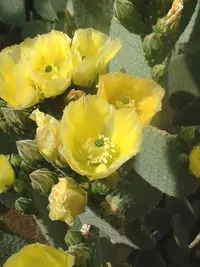
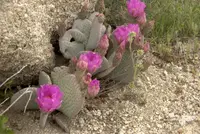
Blind pricklypear (Opuntia rufida) is a shrubby cactus from arid regions of northern Mexico and Texas, adapted to full sun and dry conditions. It forms spreading clumps of flat, oval pads covered with dense, short glochids rather than long spines.
These tiny barbed bristles detach easily and can irritate skin, so handling requires care. The plant produces showy yellow to orange flowers followed by small fruits, adding seasonal interest.
It stays relatively compact in containers, which makes it popular for desert-style gardens and xeric plantings. To care for blind pricklypear, provide strong light, very well-draining soil, and infrequent watering to avoid root problems.

Care Difficulty
Easy Care

Light Preference
Full Sun

Water Requirements
Low Water

Temperature Preference
Tropical / Frost Sensitive

Hardiness Zone
9–11

Soil Texture
Sandy, Loamy, Rocky

Soil pH
Slightly acidic (6.5–7.0), Slightly alkaline (7.0–7.5)

Soil Drainage
Well-drained

Fertilization
Minimal (feed rarely)
Scan your plant to receive care tips personalized for your specific plant
Available on iOS and Android
Opuntia rufida thrives in bright, direct sun typical of desert and semi-desert habitats.
Opuntia rufida prefers deep, infrequent watering that mimics desert rainfall patterns.
This cactus favors warm, arid conditions and copes well with heat when kept dry.
This desert cactus prefers dry air and rarely needs humidity adjustment indoors.
This species needs a very fast-draining, mineral-heavy soil that dries quickly between waterings.
This cactus is well suited to container growing when the pot controls excess moisture and supports its spreading pads.
This desert cactus needs only light feeding, as blind pricklypear is adapted to nutrient-poor soils.
Pruning Opuntia rufida is mainly for safety, size control, and removing damaged tissue.
Container plants and young landscape clumps benefit from occasional repotting or transplanting to maintain stable growth.
New plants are most often produced from pad cuttings, with seeds used less frequently.
This cactus is moderately cold-tolerant but benefits from some winter management in colder climates.

Plant Health Check
Not sure what's wrong with your plant? Check your plant's health inside the app.
This species usually lacks long central spines and instead carries dense clusters of tiny barbed bristles called glochids, which detach very easily and can irritate skin and eyes more than many larger cactus spines.
The characteristic rusty to chocolate-brown glochids create a distinct spotted look on the green pads, which led to common names like blind pricklypear and cow blinder in its native range in Texas and northern Mexico.
Unlike many columnar desert cacti, this plant forms low, many-branched shrubs that can create thickets, offering shelter and shade to small desert animals and helping stabilize sandy or rocky soils.

In its native Chihuahuan Desert habitats, this species is considered a hazard to livestock because the easily detached glochids can lodge in animals’ eyes and eyelids, reportedly causing severe irritation and even blindness, which is the origin of its common names.
Lack of flowers usually comes from insufficient light, too much nitrogen fertilizer, or a plant that is still immature. Cold winter rest and strong sun in the growing season are both important triggers for reliable blooming.
Keep your plants happy and healthy with plant identification, disease detection, and easy care guidance.