Deep root training
In the first 2–3 years, water less often but in larger volumes so moisture penetrates 40–60 cm deep, which encourages a strong taproot and improves long-term drought tolerance.

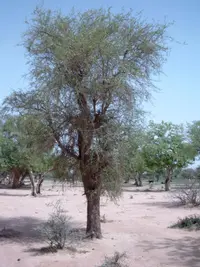
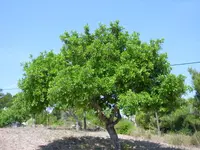
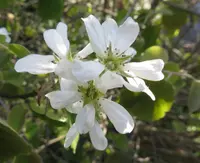
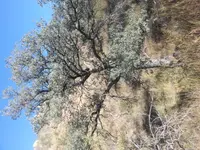
Desert date, Balanites aegyptiaca, is a tough, drought-tolerant tree native to arid and semi-arid regions of Africa and the Middle East. It often grows as a small, thorny tree with a rounded, irregular crown and small, paired leaves that drop in very dry periods. The tree produces yellow-green flowers and oval fruits, which are important for local wildlife and traditional uses. It tolerates extreme heat, poor soils, and long dry spells, which makes it resilient but slow-growing in cultivation. Those who want to care for desert date should know it prefers full sun, sharply drained soil, and generally dry conditions between deep waterings.

Care Difficulty
Moderate Care

Light Preference
Full Sun

Water Requirements
Low Water

Temperature Preference
Tropical / Frost Sensitive

Hardiness Zone
10–12

Soil Texture
Sandy, Loamy, Rocky

Soil pH
Neutral (7.0), Alkaline (7.5–8.5)

Soil Drainage
Well-drained

Fertilization
Minimal (feed rarely)
Scan your plant to receive care tips personalized for your specific plant
Available on iOS and Android
This drought-adapted tree needs strong light and extended sun to grow well.
This species is highly drought tolerant and prefers infrequent, deep watering once established.
This desert-adapted tree favors sustained heat and has limited tolerance to cold.
Humidity is rarely a limiting factor for desert date, which is adapted to arid conditions.
Soil for Balanites aegyptiaca should be very well-drained, lean, and gritty to mimic arid native habitats.
This species can be grown in containers if the pot is stable and designed to stay dry between waterings.
This tough, dryland tree needs modest feeding in containers or poor soils, but established plants in the ground often manage without extra fertilizer.
Pruning Balanites aegyptiaca is mainly used to remove problem wood and guide a strong, accessible crown.
This species is usually field-grown, so management focuses more on careful transplanting of young trees than frequent repotting.
New Balanites aegyptiaca plants are mostly raised from seed, which needs the right preparation and warmth to germinate well.
This drought-adapted tree is very sensitive to frost and needs protection in regions with cold winters.

Plant Health Check
Not sure what's wrong with your plant? Check your plant's health inside the app.
This tree maintains active photosynthesis during extreme drought by using deep taproots that reach groundwater and by shedding many leaves to reduce water loss while keeping small, functional foliage on newer shoots.
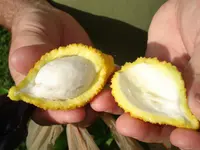
Its bitter, olive-like fruits have a fleshy pulp that is eaten locally in parts of Africa and the Middle East, while the seeds contain an oil-rich kernel used for food, soap, and lamp fuel.
The stiff, Y-shaped thorns along its branches help protect foliage and young shoots from large herbivores such as camels and goats in semi-arid savanna habitats.

Archaeobotanical evidence shows that desert date fruits and seeds have been used by humans in the Nile Valley for several thousand years, with remains recovered from ancient Egyptian sites indicating long-term use as a famine and dry-season food resource.
Yes, this species is usually propagated from seed. Nick or lightly sand the hard seed coat, then soak seeds 12–24 hours in warm water before sowing in a warm, bright spot for more reliable germination.
Keep your plants happy and healthy with plant identification, disease detection, and easy care guidance.