Deep root training
During the first 3–4 years, water less often but for a longer duration to encourage deep root growth, placing the hose at the drip line so roots extend outward and down rather than staying shallow near the trunk.

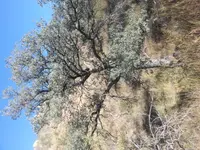
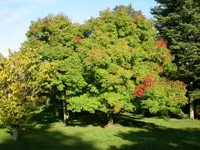
Mexican blue oak, Quercus oblongifolia, is an evergreen oak tree native to arid and semi-arid regions of the southwestern United States and northern Mexico. It typically forms a medium-sized tree with a rounded crown.
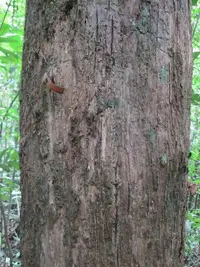
Its leaves are small, leathery, and blue-green, giving the canopy a soft, silvery look, especially in bright light. The bark is relatively smooth when young, becoming more textured with age.
This species is adapted to dry, rocky slopes and seasonal drought, which makes it relatively tolerant of heat and poor soils. Once basic needs are understood, it is straightforward to care for Mexican blue oak in low-maintenance landscapes.
It generally prefers full sun, good drainage, and moderate to low moisture, performing best where roots are not kept constantly wet.

Care Difficulty
Moderate Care

Light Preference
Full Sun

Water Requirements
Low Water

Temperature Preference
Warm Climate

Hardiness Zone
8–10

Soil Texture
Sandy, Loamy, Rocky

Soil pH
Slightly acidic (6.5–7.0), Slightly alkaline (7.0–7.5)

Soil Drainage
Well-drained

Fertilization
Minimal (feed rarely)
Scan your plant to receive care tips personalized for your specific plant
Available on iOS and Android
This evergreen oak prefers strong light and thrives in open, sunny positions.
This drought-tolerant tree prefers deep, infrequent watering in well-drained soil.
This species is adapted to warm, arid to semi-arid climates with mild winters.
This species tolerates relatively dry air but grows best with moderate ambient humidity.
Quercus oblongifolia prefers mineral, well-drained soils that avoid prolonged saturation.
This oak can be grown in containers for a limited period, mainly as a young specimen or for patio use.
Quercus oblongifolia is adapted to lean soils and usually needs only light, targeted feeding in cultivation.
Pruning Quercus oblongifolia is mainly structural and corrective rather than frequent shaping.
This oak is usually grown in the ground, so care focuses on careful transplanting rather than frequent repotting.
Propagation of Quercus oblongifolia is typically done from seed and is moderately slow but straightforward with patience.
This species is relatively cold hardy in its native range and usually needs minimal winter intervention once established.

Plant Health Check
Not sure what's wrong with your plant? Check your plant's health inside the app.
The leaves have a bluish to bluish‑gray cast caused by a waxy coating and fine surface structure that reflect light, which helps reduce water loss and heat load in its hot, dry native habitats.
This oak is native to scattered mountain ranges of the US–Mexico borderlands, where it forms part of so‑called sky island woodlands separated by surrounding desert and grassland, contributing to high local biodiversity.
Unlike many temperate oaks, this species keeps its leaves year‑round while still producing typical oak acorns, providing consistent cover and seasonal food for birds, mammals, and insects in semi‑arid ecosystems.

Some botanists consider this oak part of a species complex that blurs morphological boundaries with closely related blue‑leaved oaks, and hybridization in the wild can make field identification challenging even for specialists.
This species is moderately slow-growing, typically adding 20–30 cm of height per year once established. Growth is faster in deep, well-drained soil with consistent moisture during the first years and reduced competition from nearby plants.
Keep your plants happy and healthy with plant identification, disease detection, and easy care guidance.