Greek Juniper Care (Juniperus excelsa)

Also known as: Grecian Juniper, Crimean Juniper
Greek Juniper

About Greek Juniper

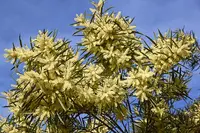
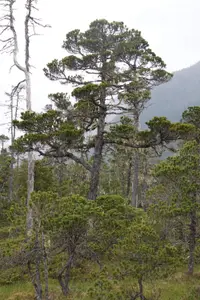
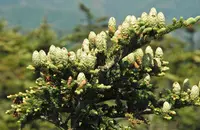
Greek juniper, Juniperus excelsa, is a long-lived coniferous tree or large shrub from dry, rocky slopes in the eastern Mediterranean and parts of western Asia. It typically forms a tall, upright shape with dense, bluish-green scale-like foliage and small, berry-like cones.

This species is adapted to poor, stony soils and low to moderate moisture, which generally makes it robust in cultivation once established. It prefers full sun and good drainage, so it suits dry gardens and exposed sites.

Because it grows slowly and tolerates drought and wind, many gardeners find it relatively low-maintenance when they understand how to care for Greek Juniper.

Main Plant Requirements

Care Difficulty

Easy Care

Light Preference

Full Sun

Water Requirements

Low Water

Temperature Preference

Cold Hardy

Hardiness Zone

5–8

Soil Texture

Sandy, Loamy, Rocky

Soil pH

Slightly acidic (6.5–7.0), Slightly alkaline (7.0–7.5)

Soil Drainage

Well-drained

Fertilization

Minimal (feed rarely)

Get Personalized Care Plan

Scan your plant to receive care tips personalized for your specific plant

Available on iOS and Android

How to Care for the Greek Juniper

This sun-loving conifer needs long, bright exposure to stay dense and healthy.

  • Provide 6–8 hours of direct sun daily; full sun is best for strong growth and compact form.
  • Tolerates light partial shade, especially in hot climates, but too much shade causes sparse, weak shoots and duller foliage in Greek Juniper.
  • In very hot regions, aim for morning sun and light afternoon shade to reduce needle scorch and moisture stress, especially on newly planted trees.

This species prefers dry to moderately moist conditions and is sensitive to excess water.

  • Allow soil to dry so the top 3–5 cm are fully dry before deep watering, encouraging a deep root system in Juniperus excelsa.
  • In the first 1–2 growing seasons, water after prolonged dry spells; once established, water only during extended drought or visible wilting.
  • Use sharply draining, gritty or sandy soil; signs of overwatering include yellowing, dropping foliage and soft roots, while extreme underwatering leads to browning tips.

This hardy conifer tolerates a wide temperature range once established.

  • Optimal growth occurs around 60–80°F (16–27°C), though healthy, established trees function well outside this range in many climates.
  • Juniperus excelsa withstands significant cold, often down to about 0°F (−18°C) or lower, with mature plants generally more cold-hardy than young ones.
  • Heat tolerance is good if soil drains well; during prolonged periods above 90°F (32°C), ensure no waterlogging and avoid reflective surfaces that intensify heat around roots.

Humidity is rarely critical for Juniperus excelsa, which prefers dry to moderately dry air.

Juniperus excelsa thrives in mineral, fast-draining soil that mimics rocky slopes.

  • Use gritty sandy or sandy-loam soil with low to moderate organic matter, not peat-heavy mixes.
  • Aim for slightly alkaline to neutral pH around 7.0–8.0, adding crushed limestone if soil is acidic.
  • Improve drainage and aeration with coarse sand, fine gravel, and pine bark, keeping particles relatively large.
  • Avoid compacted, water-retentive clay or soils that stay wet longer than 1–2 days after watering.

This species can be grown in containers if the pot is prepared for strong, woody root growth and long-term stability.

  • Choose a deep, heavy container that resists tipping as the shrub becomes tall and wind-exposed.
  • Fill the pot with a very free-draining, gritty mix so water passes through rapidly without pooling at the base.
  • Elevate the container slightly on feet or blocks to keep drainage holes clear and prevent water from collecting under the pot.

Juniperus excelsa grows well in lean soils and needs only light, infrequent feeding in cultivation.

  • Use a balanced slow-release fertilizer (around 10-10-10) or a thin layer of well-aged compost in early spring.
  • Apply once per year during active growth; avoid mid-summer and late-fall applications.
  • Use about half the label rate for trees or shrubs to prevent lush, weak growth.
  • Do not feed in winter; Greek Juniper rests and excess nutrients can stress roots.

Juniperus excelsa tolerates light pruning to maintain structure and remove problem growth.

  • Carry out pruning in late winter to early spring before new growth starts.
  • Remove dead, diseased, rubbing, or storm-damaged branches back to healthy wood.
  • Thin congested inner branches slightly to improve airflow without exposing bare patches.
  • Use clean, sharp bypass pruners or loppers and avoid cutting back into old, leafless wood.

This species is usually landscape-grown, so focus on careful transplanting rather than frequent repotting.

  • Transplant young Juniperus excelsa plants in early spring or early fall when temperatures are mild.
  • Look for circling roots in containers or stalled growth as signals the plant needs a larger site or pot.
  • Move only every few years, keeping a wide, intact root ball and disturbing roots as little as possible.
  • Water deeply before and after transplanting, then mulch 5–8 cm to limit moisture loss and temperature swings.

Juniperus excelsa is most often propagated by semi-hardwood cuttings or seeds under controlled conditions.

  • Take semi-hardwood cuttings in late summer, 8–12 cm long, from healthy, non-flowering shoots.
  • Dip cut ends in rooting hormone and insert into a sharp-draining, low-organic medium such as sand-perlite.
  • Maintain bright, indirect light, high humidity, and bottom warmth around 70–75°F for several months.
  • For seed, use fresh, cleaned seed and provide cold stratification in moist substrate for improved germination.

This juniper is cold hardy and usually needs minimal winter care in the ground in temperate climates.

  • In colder regions, apply a 5–8 cm mulch layer around the root zone, keeping it away from the trunk.
  • For young or exposed plants, use a breathable burlap screen to reduce drying winter winds.
  • Container-grown plants benefit from moving to a sheltered, unheated area where roots stay just above freezing.

Care Tips

Wind exposure management

Site plants where they receive good air movement but are shielded from the strongest prevailing winter winds using a fence, hedge, or large rocks to reduce desiccation and branch breakage.

Single-leader training

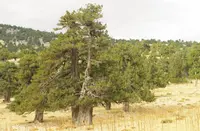
In the first 3–5 years, select one strong upright stem as the central leader and remove or shorten competing leaders in late winter to build a stable, tree-like structure that resists splitting as it matures.

Root flare inspection

When planting or checking established specimens, ensure the root flare (where the trunk widens at the base) is just above soil level and remove excess mulch around the trunk to prevent rot and girdling roots.

Salt and pollution tolerance

In urban or roadside sites, gently hose foliage in early spring to rinse off winter de-icing salts and dust, which helps the needles function better and reduces long-term stress.

Targeted pest monitoring

From spring through mid-summer, inspect inner and lower branches monthly for scale insects and spider mites using a hand lens, and address problems early with horticultural oil labeled for conifers to maintain healthy foliage when growing Greek Juniper.

Common Pests and Diseases

Cedar-apple rust

This disease causes orange to rust-brown spots on needles and small twig swellings, and can lead to thinning foliage over time.

Solution

Remove and destroy heavily infected twigs, improve spacing and airflow around plants, and avoid planting susceptible apple or crabapple varieties nearby; in areas with severe pressure, apply a registered copper or myclobutanil fungicide at bud break and repeat according to label during wet spring weather as part of broader Juniperus excelsa plant care.

Juniper tip blight

This disease leads to browning and dieback of young shoot tips, often starting on lower branches and progressing inward.

Solution

Prune out and dispose of blighted shoot tips during dry weather, disinfect pruning tools between cuts, reduce overhead watering, and if the problem recurs each spring, use a labeled fungicide (such as thiophanate-methyl or copper) on new growth just as it begins to extend.

Juniper scale

This pest appears as tiny white to gray, oyster-shaped bumps on needles and twigs, causing needle yellowing, thinning foliage, and overall decline.

Solution

Prune out heavily infested branches, encourage natural predators by avoiding broad-spectrum insecticides, and target the crawler stage with a horticultural oil or insecticidal soap spray in late spring, ensuring thorough coverage of inner branches.

Juniper spider mites

These insects are actually tiny arachnids that cause fine stippling, dull or bronzed foliage, and in heavy infestations, light webbing on inner branches.

Solution

Spray foliage forcefully with water to knock mites off and reduce dust around the plant, then, if needed, use horticultural oil or insecticidal soap applied to both inner and outer foliage, repeating as directed while monitoring with a white paper shake test.

Phomopsis canker

This disease produces sunken, discolored lesions on stems and can cause branch dieback, especially on stressed or wounded plants.

Solution

Cut out affected branches several inches below visible cankers, disposing of all debris, avoid mechanical injury and water stress, and in high-risk sites consider preventative fungicide applications to new growth in spring while improving overall vigor through appropriate watering and mulching.

Interesting Facts

High-mountain specialist

This species is native to dry, rocky mountains from the Balkans to the eastern Mediterranean and typically grows between about 800–2,200 m, where many broadleaf trees cannot survive long term.

Key forest builder

In parts of Turkey, Lebanon, and the Caucasus, this juniper forms extensive open woodlands and mixed forests, providing structure, shade, and shelter for many drought-adapted plants and animals.

Remarkable drought tolerance

It has a deep, wide-spreading root system and tough, small leaves that reduce water loss, which allows it to persist on arid, stony slopes with very thin soils.

Botan icon

Did you know?

Old individuals of this species can live for many centuries, and some documented trees in the eastern Mediterranean region are estimated, based on growth ring studies, to be several hundred years old, making them among the longest-lived conifers in their native mountain habitats.

FAQs about Greek Juniper

This species is evergreen, keeping foliage year-round rather than dropping leaves seasonally. Older inner needles may shed and brown naturally, but the plant maintains a permanent green canopy when kept in suitable outdoor conditions.

Grow Healthy Plants with Botan Care

Keep your plants happy and healthy with plant identification, disease detection, and easy care guidance.

Botan plant care app — identify plants on mobile

Explore More Plants