


Strategic Offshoot Removal
Remove and replant offsets only once they have at least 3–4 mature leaves and visible roots, which reduces stress on the parent rosette and improves establishment of the pup in its new pot.

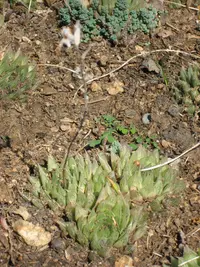
Glassrim haworthia, Haworthia mucronata, is a small, clustering succulent known for its soft, pointed, translucent green leaves that form tight rosettes. The leaf tips often appear glassy, which gives the plant its common name.
This species is native to arid regions of South Africa, where it grows in rocky soils and often shelters between stones. Its compact size and slow growth make it well suited to windowsills and small indoor spaces.
It is considered an easy plant for beginners, as it tolerates some neglect and adapts well to indoor conditions. To care for Glassrim Haworthia, provide bright, indirect light, a porous, fast-draining soil, and infrequent but thorough watering.

Care Difficulty
Easy Care

Light Preference
Bright Indirect Light

Water Requirements
Low Water

Temperature Preference
Tropical / Frost Sensitive

Hardiness Zone
10–11

Soil Texture
Sandy, Loamy, Rocky

Soil pH
Acidic (5.5–6.5), Slightly acidic (6.5–7.0)

Soil Drainage
Well-drained

Fertilization
Minimal (feed rarely)
Scan your plant to receive care tips personalized for your specific plant
Available on iOS and Android
This compact succulent prefers bright, gentle light rather than intense, all-day sun.
This species stores water in its leaves and needs infrequent but thorough watering.
This succulent prefers moderate warmth and avoids both frost and extreme heat.
This species handles typical indoor humidity well and rarely needs special adjustment.
This succulent needs a sharply draining, mineral-heavy mix to keep roots dry between waterings.
This compact succulent is well suited to container growing.
Haworthia mucronata needs only light feeding to support steady growth in containers.
Haworthia mucronata requires minimal pruning, focused on hygiene and shape control rather than size reduction.
Container-grown Haworthia mucronata benefits from occasional repotting into fresh, sharply drained soil.
Haworthia mucronata is commonly propagated from offsets, with seeds used mainly by collectors or breeders.
Haworthia mucronata is not frost hardy and needs sheltered winter conditions in most temperate climates.

Plant Health Check
Not sure what's wrong with your plant? Check your plant's health inside the app.
This species develops soft, translucent leaf tips that act as light windows, allowing sunlight to penetrate deeper into the rosette so inner tissues can photosynthesize even when the plant grows partly shaded or between rocks.
In its natural range in South Africa, it often grows tucked into sandstone or shale crevices, where narrow gaps, gritty soil, and rock shade protect it from intense sun and rapid moisture loss.
During hot, dry periods in habitat, the rosettes can contract and sink deeper into the soil, with only the leaf tips exposed, which reduces water loss and protects living tissue from heat and UV.

Some wild forms of this species form dense, clumping colonies that can occupy the same rocky outcrop for many years, gradually expanding as individual rosettes offset rather than spreading by wind-dispersed seed.
Leaf tips usually brown from underwatering, strong sun, or low humidity. Entire leaves browning and shriveling often indicate prolonged drought or old age. Check roots, then adjust watering frequency and move away from intense direct light if needed.
Keep your plants happy and healthy with plant identification, disease detection, and easy care guidance.

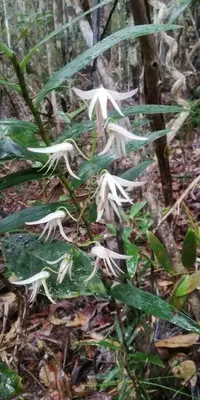
Dendrobium fractiflexum
Dendrobium fractiflexum
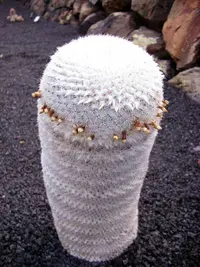
Mammillaria albilanata
Mammillaria albilanata
Polyscias repanda
Polyscias repanda

Haworthia
Haworthia 'Big Band'
 POPULAR
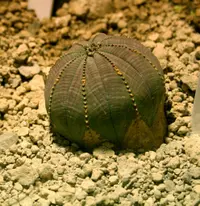
Baseball Plant
Euphorbia obesa
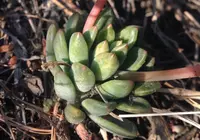
Echeveria amoena
Echeveria amoena
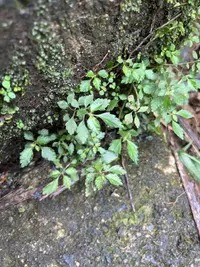
West Indian clearweed
Pilea inaequalis

kingcup cactus
Echinocereus triglochidiatus