BotaN logo

Spoonleaf Peperomia Care (Peperomia magnoliifolia)

Spoonleaf Peperomia

About Spoonleaf Peperomia

Spoonleaf peperomia (Peperomia magnoliifolia) is a compact tropical houseplant from Central and South America, where it grows on forest floors and tree trunks. It stays small and tidy, which suits windowsills, desks, and mixed plant shelves.

The plant has thick, spoon-shaped leaves that store water, giving it a succulent-like look and making it more forgiving of short dry spells. Stems are upright to slightly spreading, forming a dense clump over time.

Its slow growth and modest size make it suitable for small spaces and for people who prefer low-maintenance plants. Understanding how to care for Spoonleaf Peperomia mainly involves providing bright, indirect light, moderate watering, and a free-draining potting mix.

Main Plant Requirements

Care Difficulty

Easy Care

Light Preference

Bright Indirect Light

Water Requirements

Moderate Water

Temperature Preference

Tropical / Frost Sensitive

Hardiness Zone

11–12

Soil Texture

Loamy, Peaty, Organic-rich

Soil pH

Acidic (5.5–6.5), Slightly acidic (6.5–7.0)

Soil Drainage

Well-drained

Fertilization

Light (every 4–6 weeks)

Get Personalized Care Plan

Scan your plant to receive care tips personalized for your specific plant

Available on iOS and Android

How to Care for the Spoonleaf Peperomia

Peperomia magnoliifolia prefers bright, indirect light that mimics dappled forest conditions.

  • Provide 6–8 hours of bright, filtered light each day, such as near an east or north window or under light shade outdoors.
  • Tolerates partial shade, but growth becomes sparse and leaves smaller if light is too low; move slightly closer to the light source if stems stretch.
  • Protect Spoonleaf Peperomia from harsh midday or afternoon sun, which can scorch leaves; in summer, use sheer curtains or set back 1–2 m from strong windows.

Peperomia magnoliifolia prefers slightly dry conditions between thorough waterings.

  • Allow the top 2–4 cm of soil to dry before watering; check with a finger rather than using a fixed schedule.
  • In spring and summer, water more often as it actively grows; in fall and winter, reduce frequency as growth slows and soil dries more slowly.
  • Use a well-draining mix and ensure excess water can escape; yellowing, mushy leaves suggest overwatering, while limp, wrinkled leaves indicate underwatering.

This species thrives in warm, stable temperatures without sudden extremes.

  • Aim for 65–80°F (18–27°C) for best growth, with consistent conditions day to day.
  • Avoid exposure below 55°F (13°C); brief dips may stunt growth, and frost can permanently damage foliage.
  • In hot periods above 85°F (29°C), increase airflow and shade from intense sun to prevent leaf drop and heat stress.

This species handles typical indoor humidity but benefits from slightly moist air.

  • Aim for 40–60% humidity to match its native conditions and support steady leaf growth.
  • It tolerates short periods of drier air, but Spoonleaf Peperomia may show crisp leaf edges or dull, drooping foliage when too dry.
  • Increase humidity with a nearby open tray of water and stones, grouped plants, or a room humidifier rather than misting leaves directly.

Peperomia magnoliifolia prefers a loose, airy potting medium that drains quickly yet holds some moisture.

  • Use a mix such as 50–60% all‑purpose potting mix with 20–30% perlite and 10–20% fine bark to create a chunky, organic‑rich structure.
  • Ensure the soil drains freely so water runs through in seconds, preventing roots from staying waterlogged and reducing risk of rot.
  • Aim for slightly acidic to neutral pH, roughly 6.0–7.0, which standard houseplant mixes usually provide without adjustment.
  • Avoid heavy garden soil, high clay content, or compacted media; refresh compact soil with added perlite or bark to restore aeration around the roots.

This compact species is well suited to container growing.

  • Choose a shallow, wider pot that matches its surface‑spreading roots, which reduces unused wet soil at depth.
  • Select a pot material based on your watering habits; porous terracotta dries faster, while glazed ceramic retains moisture longer.
  • Ensure the container has large, unobstructed drainage holes so excess water exits quickly and does not collect at the base.

Peperomia magnoliifolia is a light feeder that benefits from modest nutrition during active growth.

  • Use a balanced, water-soluble fertilizer (such as 10-10-10 or 20-20-20) diluted to 1/4–1/2 strength.
  • Apply every 4–6 weeks in spring and summer when the plant is actively growing.
  • Avoid compost-heavy mixes that stay wet and instead use a well-drained potting substrate.
  • Stop or greatly reduce feeding in fall and winter when Spoonleaf Peperomia growth slows.

Peperomia magnoliifolia responds well to light pruning to maintain a compact, tidy form.

  • Best time is late winter to early spring, before strong new growth starts.
  • Use clean, sharp scissors or small pruning shears to avoid tearing stems.
  • Remove dead, damaged, yellowing, or overly crowded stems at the base to improve airflow.
  • Pinch back soft tips above a leaf node to encourage bushier, more branched growth.

This compact plant prefers slightly snug pots and only needs infrequent repotting.

  • Plan to repot every 2–3 years in spring, or when roots circle the pot or growth slows despite good care.
  • Choose a pot only 2–3 cm wider with drainage holes and a light, airy mix formulated for houseplants or succulents.
  • Water lightly the day before repotting to make root removal gentler and reduce stress.
  • After repotting, firm mix gently around roots, water once, then keep in bright, indirect light while it recovers.

Peperomia magnoliifolia is commonly propagated from stem or leaf cuttings under warm, stable conditions.

  • Take 5–8 cm stem cuttings with at least 2–3 leaves in spring or early summer.
  • Insert cuttings into a moist, well-drained mix and keep at 70–80°F with bright, indirect light.
  • Maintain high humidity around cuttings using a clear cover, but allow some air exchange to prevent rot.
  • Division of small clumps is also possible; separate gently to keep roots intact and replant immediately.

This tropical species is frost sensitive and needs indoor conditions during cold weather in most climates.

  • Move container plants indoors before temperatures drop below 55°F, keeping them away from drafts.
  • Maintain room temperatures around 65–75°F and avoid sudden temperature swings.
  • Reduce watering in winter so the soil dries slightly more between waterings, preventing cold, wet roots.
  • Provide as much bright, indirect light as possible indoors to limit leaf drop and weak, leggy growth.

Care Tips

Rotate For Symmetry

Turn the pot 90° every 2–3 weeks so the fleshy leaves develop evenly and the plant keeps a compact, balanced shape instead of leaning toward the light source.

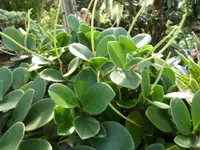
Use Low, Wide Pots

Choose a shallow, wide container to match its shallow root system, which reduces the risk of overwatering and supports a fuller, spreading canopy of foliage.

Leaf-Level Pest Checks

Inspect both upper and lower leaf surfaces every 2–3 weeks with a close visual check or magnifier, since the thick spoon-shaped leaves can hide early mealybug or scale infestations along the midrib and petiole.

Clean Leaves Gently

Wipe leaves with a barely damp, soft cloth instead of spraying heavily, which keeps stomata clear for gas exchange while avoiding excess moisture trapped in the leaf axils.

Plan For Slow Repotting

Repot only when roots circle the pot or the root ball lifts as a whole, as this species prefers slightly tight quarters and frequent repotting can slow growth when caring for Spoonleaf Peperomia.

Common Pests and Diseases

Mealybugs

This pest feeds on leaf and stem sap, often hiding in leaf axils and along the thick, spoon-shaped stems. Symptoms include white cottony clusters, sticky honeydew, and distorted new growth.

Solution

Isolate the plant, then dab visible insects with cotton swabs dipped in 70% isopropyl alcohol and gently wipe leaf undersides and stem joints. Repeat weekly until no new insects appear and, for ongoing Peperomia magnoliifolia care, keep foliage clean, avoid overfertilizing, and inspect regularly after watering.

Spider mites

These insects thrive on peperomia’s fleshy leaves in warm, dry air, causing fine stippling, dulling of leaf surfaces, and very thin webbing between petioles and stems. Symptoms include slowed growth and leaves that feel rough or dusty to the touch.

Solution

Rinse foliage thoroughly with lukewarm water, focusing on leaf undersides, then increase humidity around the plant and improve airflow. For persistent infestations, apply insecticidal soap or a horticultural oil spray every 7–10 days, making sure to cover all leaf surfaces.

Fungus gnats

This pest breeds in consistently damp potting mix and is attracted to the moisture-retentive substrates often used for spoonleaf peperomia. Symptoms include tiny black flies around the pot and slowed, weak growth from root stress in young or recently potted plants.

Solution

Allow the top 3–4 cm of soil to dry between waterings, then use yellow sticky traps to capture adults. If larvae are present, drench the soil with a biological control such as Bacillus thuringiensis israelensis (BTI) or repot into a fresh, airy mix with improved drainage.

Pythium root and stem rot

This disease develops in waterlogged, low-oxygen soil and affects the thick, succulent stems and shallow roots of this species. Symptoms include sudden wilt despite moist soil, blackened stem bases, and a sour or musty smell from the potting mix.

Solution

Discard severely affected plants; for early cases, unpot the plant, trim off all black or mushy tissue, and repot into a fresh, well-draining mix in a pot with drainage holes. After repotting, water lightly, keep at 70–80°F with good airflow, and avoid letting the plant sit in standing water.

Cercospora leaf spot

This disease causes small, dark, sometimes slightly sunken spots on the thick leaves that can merge into larger patches, especially in high humidity and low airflow. Symptoms include yellow halos around spots and premature leaf drop on lower or crowded leaves.

Solution

Remove and discard affected leaves and avoid wetting the foliage during watering. Improve spacing and air circulation around the plant, and if spotting continues, apply a copper-based or other labeled ornamental fungicide according to directions, ensuring thorough coverage of both leaf surfaces.

Interesting Facts

Natural forest epiphyte

In the wild, this species often grows as an epiphyte on tree branches in tropical forests of northern South America, anchoring in moss and debris rather than rooting in deep soil.

Spoon-shaped succulent leaves

Its thick, glossy, spoon-shaped leaves are adapted to store water, which helps it tolerate brief dry spells better than many other small tropical understory plants.

Climbing and trailing habit

Unlike many compact peperomias, it can develop somewhat elongated, semi-woody stems that may climb over surrounding vegetation or trail downward when grown in containers.

Botan icon

Did you know?

This species has been widely used as a parent in breeding ornamental peperomias, contributing its thick, glossy foliage and compact growth habit to several popular hybrid cultivars used in Spoonleaf Peperomia indoor care.

FAQs about Spoonleaf Peperomia

Yellow leaves usually come from excess moisture around the roots, compacted mix, or poor drainage. Less often, strong direct sun, cold drafts, or chronic underwatering cause yellowing. Check the potting mix, drainage holes, and recent watering pattern first.

Grow Healthy Plants with Botan Care

Keep your plants happy and healthy with plant identification, disease detection, and easy care guidance.

Botan plant care app — identify plants on mobile

Explore More Plants