Seasonal rest setup
Provide a drier, cooler rest period in fall–winter by moving the plant to a bright but slightly cooler spot and cutting back watering to slow growth and extend the rosette’s lifespan.

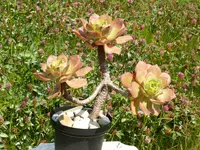
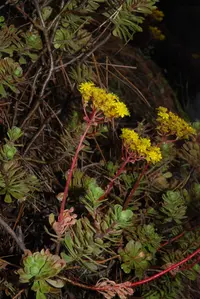
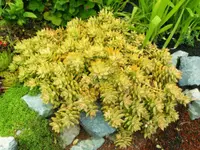
Aeonium valverdense is a small, branching succulent shrub from the Canary Islands, valued for its tight rosettes of fleshy, spoon-shaped leaves. It typically forms low, compact clumps that stay neat and architectural, making it suitable for rock gardens, containers, and collections of rare succulents.
In cultivation it prefers bright light, good air movement, and sharply draining, gritty soil to avoid root problems. Its slow to moderate growth rate and drought tolerance usually make Aeonium valverdense straightforward for growers who understand basic succulent needs.
Because it can react poorly to prolonged cold and excess moisture, it suits mild outdoor climates or bright indoor spots. Learning how to care for Aeonium valverdense mainly involves balancing light, temperature, and careful watering.

Care Difficulty
Moderate Care

Light Preference
Partial Sun

Water Requirements
Low Water

Temperature Preference
Warm Climate

Hardiness Zone
10–11

Soil Texture
Sandy, Loamy, Rocky

Soil pH
Slightly acidic (6.5–7.0), Neutral (7.0)

Soil Drainage
Well-drained

Fertilization
Minimal (feed rarely)
Scan your plant to receive care tips personalized for your specific plant
Available on iOS and Android
This drought-tolerant succulent needs bright light to maintain compact rosettes and strong color.
This species stores water in its leaves and prefers infrequent, deep watering in fast-draining soil.
This succulent grows best in mild, frost-free conditions with moderate seasonal variation.
This succulent handles dry indoor air well and rarely needs special humidity management.
Aeonium valverdense needs a sharply draining, mineral-rich mix to protect its roots from rot.
This species is well suited to container growing, especially in climates with cool or wet winters.
This compact succulent needs modest feeding, as Aeonium valverdense is adapted to nutrient-poor soils.
Pruning is mainly used to keep Aeonium valverdense compact, healthy, and well-shaped.
Container-grown plants benefit from occasional repotting to maintain root health and fresh substrate.
This species is commonly multiplied by stem rosettes and sometimes by seed under controlled conditions.
Cool, frost-free conditions are important for maintaining this succulent through winter in most climates.

Plant Health Check
Not sure what's wrong with your plant? Check your plant's health inside the app.
This species is naturally restricted to the small Canary Island of El Hierro, where it grows on cliffs and rocky slopes, making it a narrow-range island endemic with a very limited wild distribution.
Compared to many related species, it forms relatively small, tight rosettes with thick, spoon-shaped leaves that help reduce water loss in its exposed, windy coastal and montane habitats.
Like other Macaronesian aeoniums, it is primarily winter-growing and often slows or partially rests in the hottest, driest months, so most new leaves and stem extension occur during the cooler, moister season, which is important to understand for Aeonium valverdense care instructions.
Brown leaves usually result from intense sun scorch, prolonged drought, or old age of lower rosettes. Check for crispy edges from sunburn, completely shriveled leaves from lack of water, or mushy tissue indicating rot from excess moisture.
Keep your plants happy and healthy with plant identification, disease detection, and easy care guidance.